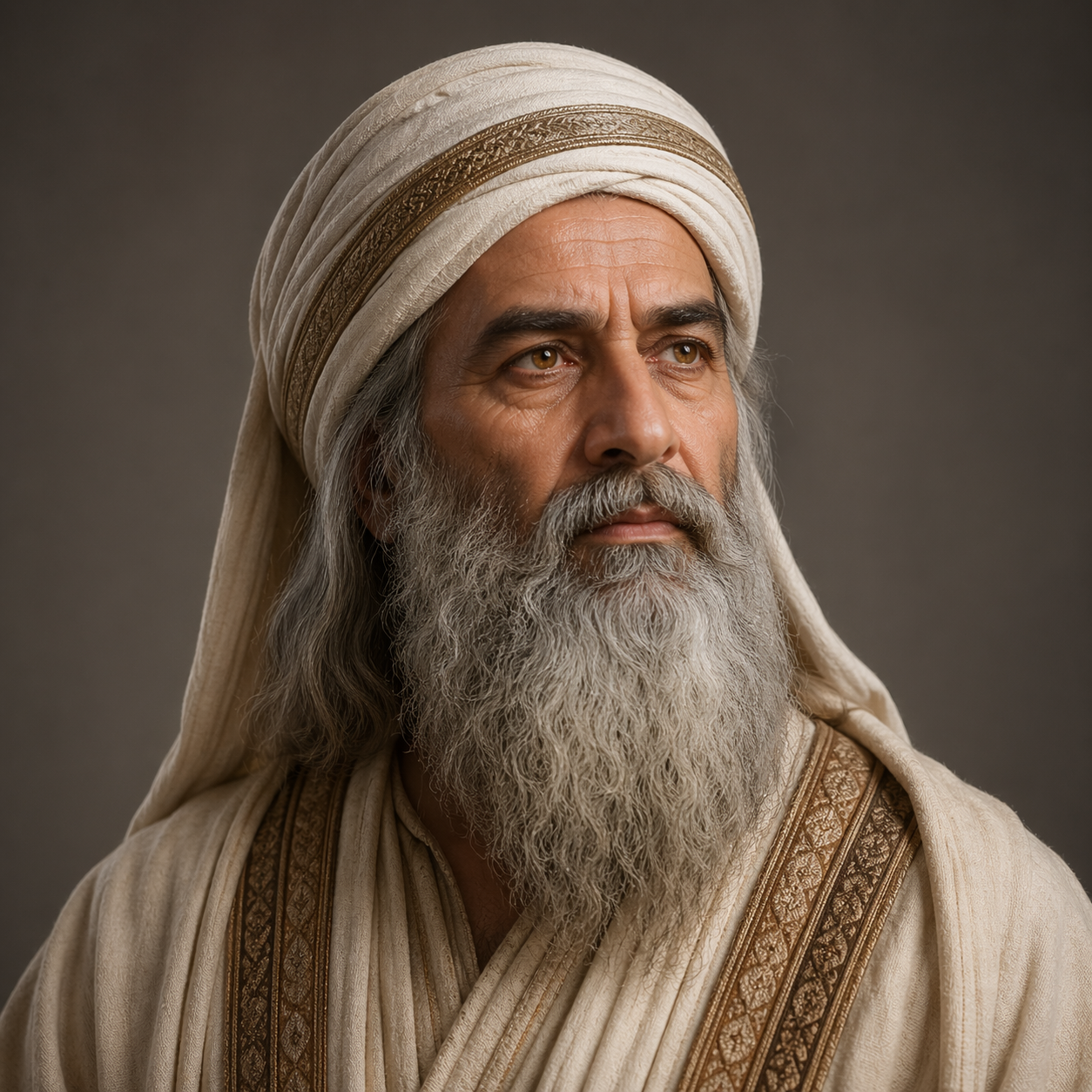
Zoroaster — "The universe is a grand tapestry. And sometimes, it gets a little tangled."
The universe is a grand tapestry. And sometimes, it gets a little tangled.
The universe is a grand tapestry. And sometimes, it gets a little tangled.
Click any product to generate a realistic preview. Up to 3 at a time.
* Initial load can take up to 90 seconds — revising the preview in another color is nearly instant.
"How shall I satisfy Thee, O Ahura Mazda?"
"The deceitful shall be destroyed, but the righteous shall attain the best existence."
"Suffer no anxiety, for he who is a sufferer of anxiety becomes regardless of enjoyment of the world and the spirit, and contraction happens to his body and soul."
"The Lie-demon shall be bound, and the Good Mind shall be unbound."
"Evil is connected to lie or drûj. The Avestan word drûj means literally 'a tangle of trickery, deceit and lies.' Evil is what is not original and real."
Iranian prophet who founded Zoroastrianism, the first major religion of cosmic dualism between good (Ahura Mazda) and evil (Angra Mainyu). Closely associated with The Buddha (near-contemporary Eastern moral-cosmological revolutionary). For an intellectual contrast, see Friedrich Nietzsche, German philosopher of 'beyond good and evil' — Nietzsche appropriated Zarathustra's name for Thus Spoke Zarathustra (1883) precisely to invert the original's moral cosmology — the historical Zoroaster founded the good-versus-evil framework Nietzsche's character announces the end of.
Found in 1 providers: grok
1 source checked
Reality is vast, interconnected, and woven from countless threads of events, choices, and consequences. Like any complex weave, it occasionally snarls into confusion, conflict, or hardship. The saying accepts that disorder is not a flaw in the design but an expected feature of something so intricate, encouraging patience when life becomes messy rather than panic or despair at temporary knots.
Zoroaster taught a cosmos structured by asha, the cosmic order weaving truth and righteousness through existence, constantly contested by druj, the lie and disorder. Tangles in the tapestry mirror his dualistic vision: Ahura Mazda's good creation periodically disrupted by Angra Mainyu's chaos. As a priest-prophet urging ethical choice, he framed human action as the thread that either straightens or snarls the weave.
Zoroaster lived in Bronze Age eastern Iran, roughly 1500–1000 BCE, among semi-nomadic Indo-Iranian tribes whose polytheistic ritual world was shadowed by cattle raids, tribal warfare, and harsh steppe conditions. Ordinary people experienced existence as precarious and contested. His reform reframed that turbulence cosmically, giving listeners a framework in which visible chaos was temporary tangling within a larger, ultimately triumphant moral order.
AI-generated insights based on extensive research and information for context. Factual errors? Email [email protected].
Your cart is empty