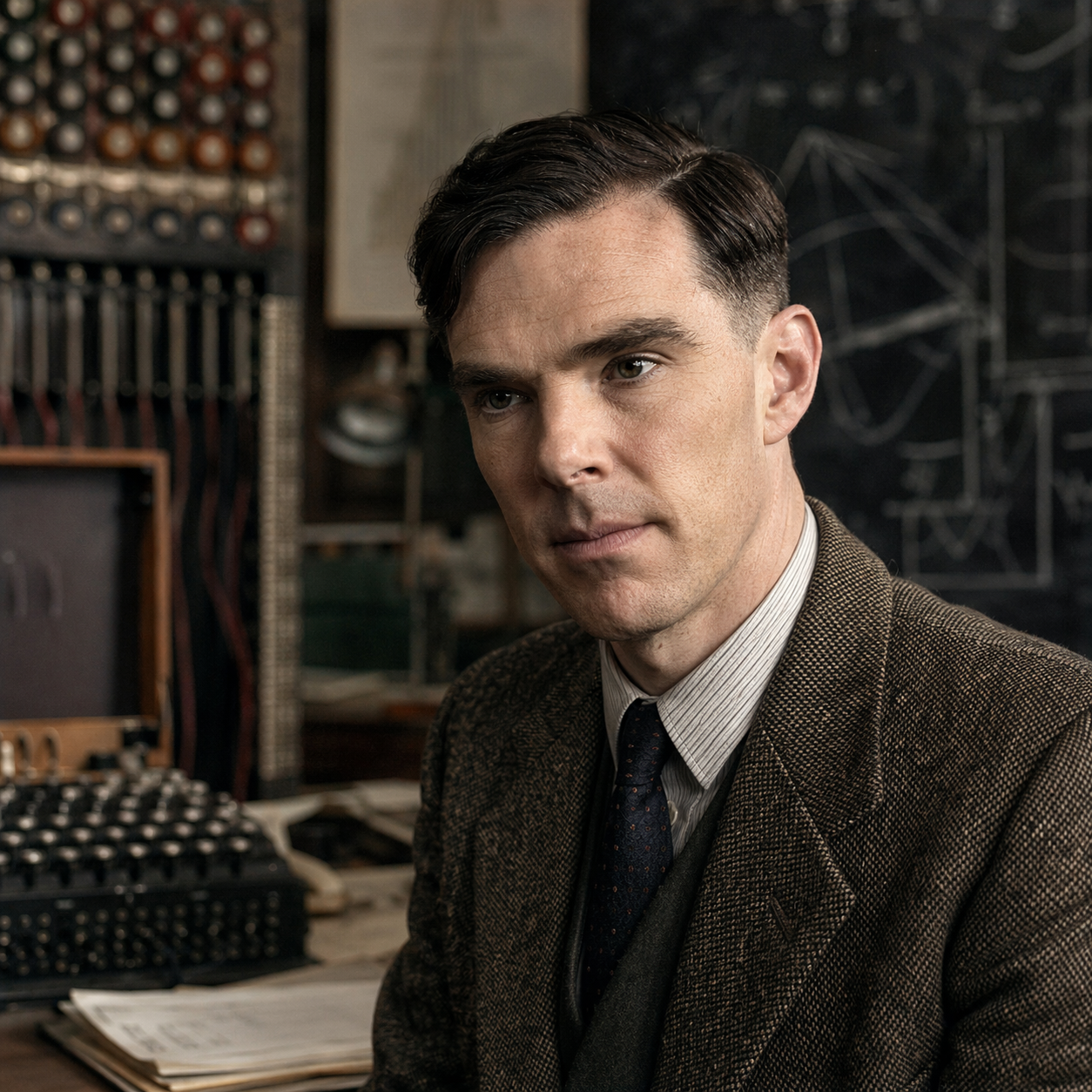
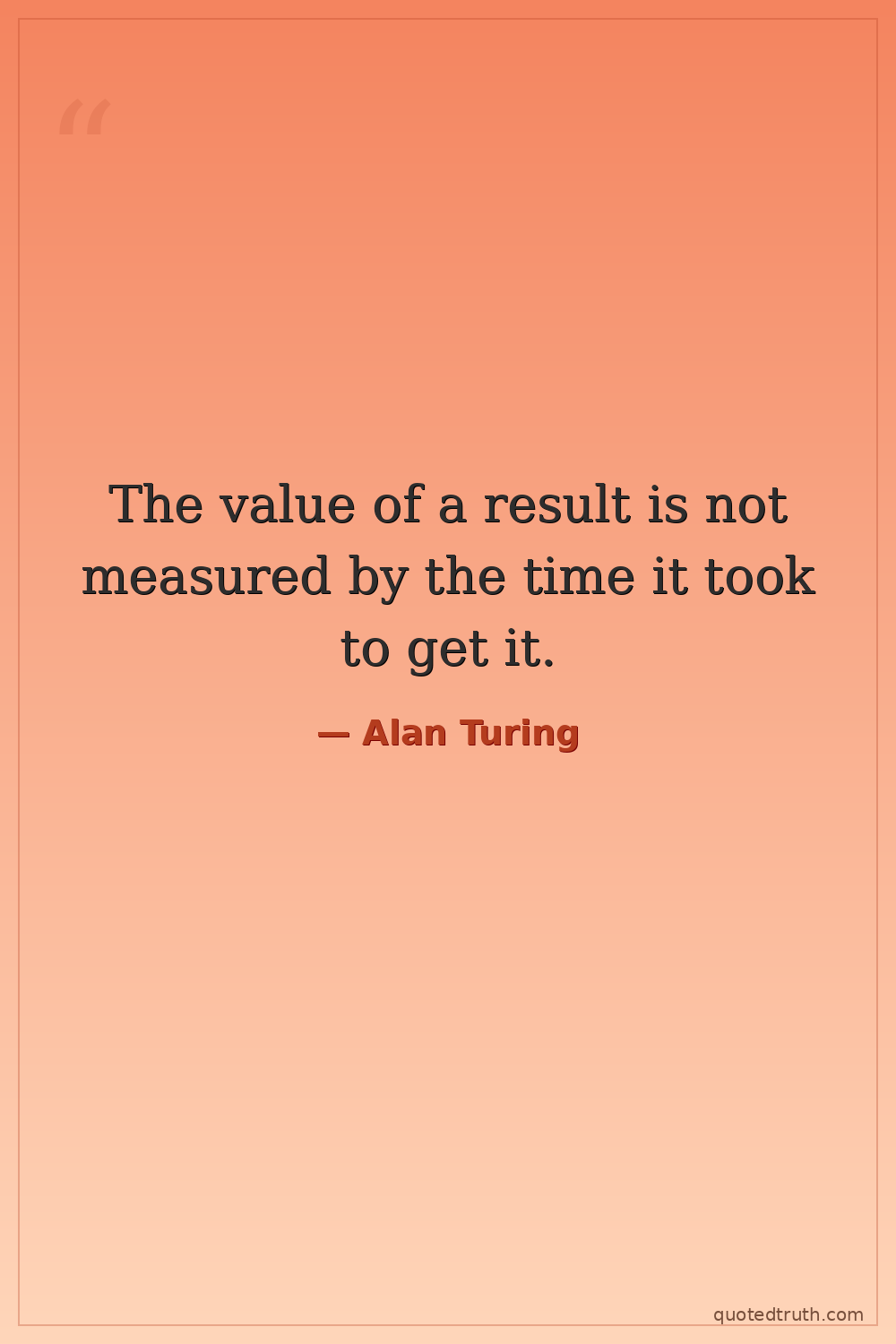
Alan Turing — "The value of a result is not measured by the time it took to get it."
The value of a result is not measured by the time it took to get it.
The value of a result is not measured by the time it took to get it.
Click any product to generate a realistic preview. Up to 3 at a time.
* Initial load can take up to 90 seconds — revising the preview in another color is nearly instant.
"The computer is a medium for thought."
"The process of education is an attempt to produce the kind of intelligence that we would like to have in our machines."
"The view that machines cannot give rise to surprises is due, I believe, to a fallacy to which philosophers and mathematicians are particularly subject. This is the assumption that as soon as a fact is…"
"It is not possible to produce a machine which will be intelligent in the same way that a human being is intelligent."
"Machines take me by surprise very often."
Found in 1 providers: grok
1 source checked
The quality or importance of an outcome has nothing to do with how long it took to achieve. A breakthrough reached in an instant is no less valuable than one developed over years. What matters is the impact, correctness, or usefulness of the result itself — not the effort or duration of the journey. Speed and value are independent variables; judging achievement by labor-time misses the point entirely.
Turing cracked the Nazi Enigma cipher during WWII not through brute force but through conceptual insight and mechanical elegance. His 1936 paper on computable numbers reshaped mathematics in a single publication. He cared whether a machine could think, not how long computation took. His Turing machine work prioritized logical sufficiency over procedural labor — a result's validity and transformative power mattered above all else.
The mid-20th century demanded fast, reliable results under the impossible pressure of WWII. Bletchley Park codebreakers worked against the clock — a decryption delivered hours late could cost thousands of lives. Yet postwar computing faced skeptics who dismissed machine output as inferior to human labor. Turing's era forced a reckoning: does the method — human or machine, slow or fast — define the worth of a solution?
AI-generated insights based on extensive research and information for context. Factual errors? Email [email protected].
Your cart is empty