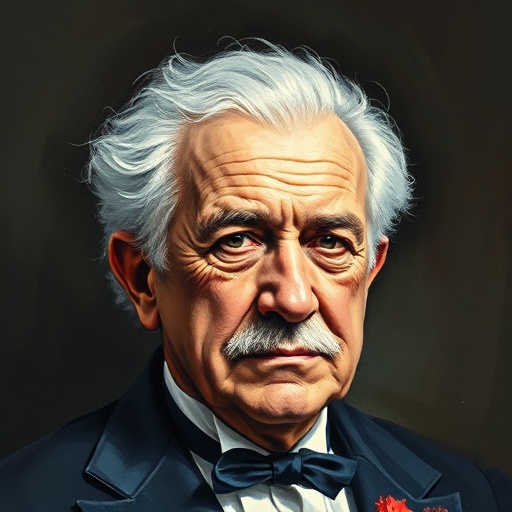
Thomas Edison — "The value of an idea lies in the using of it."
The value of an idea lies in the using of it.
The value of an idea lies in the using of it.
Click any product to generate a realistic preview. Up to 3 at a time.
* Initial load can take up to 90 seconds — revising the preview in another color is nearly instant.
"I am not a vegetarian. I eat meat, but I don't eat much meat. I eat very little meat."
"I never had a bad break in my life. I have had a lot of hard ones, but never a bad one."
"I am not a believer in the theory of evolution. I believe in the theory of creation. I believe that God created the world and everything in it."
"Anything that won't sell, I don't want to invent."
"What the mind of man can conceive and believe, it can achieve."
Found in 1 providers: grok
1 source checked
An idea by itself has no worth. Its real value only shows up when you actually put it into action. Thinking something clever, writing it down, or talking about it accomplishes nothing on its own. What matters is execution: building the thing, testing it, shipping it, and seeing whether it works in the real world. Until then, even the most brilliant concept is just potential, not value.
Edison embodied this principle. He held 1,093 U.S. patents not because he had more ideas than rivals, but because he relentlessly prototyped and commercialized them. His Menlo Park lab industrialized invention itself, turning concepts into marketable products like the phonograph, the practical incandescent bulb, and the electrical grid. He famously dismissed pure theory, insisting genius was one percent inspiration and ninety-nine percent perspiration, execution over ideation.
Edison worked during the Second Industrial Revolution, roughly 1870 to 1914, when American capitalism rewarded applied invention over abstract science. Patents, venture capital, and mass manufacturing were reshaping daily life with electricity, telephones, and railroads. Competing inventors like Tesla and Westinghouse raced to commercialize discoveries. Ideas without working prototypes and business models lost to those that shipped, making Edison's pragmatism not just a personal trait but the defining ethic of Gilded Age innovation.
AI-generated insights based on extensive research and information for context. Factual errors? Email [email protected].
Your cart is empty