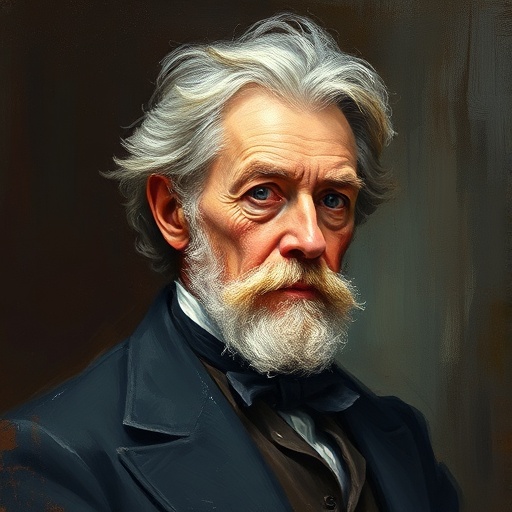
Michael Faraday — "The very best way to learn is to do."
The very best way to learn is to do.
The very best way to learn is to do.
Click any product to generate a realistic preview. Up to 3 at a time.
* Initial load can take up to 90 seconds — revising the preview in another color is nearly instant.
"I have in fact been a very lucky fellow; I have often said that I should be a very miserable creature if I could not feel that I was doing something for the good of other people."
"The greatest pleasure in life is to discover something new."
"I could trust a fact and always cross-examine an assertion."
"All this is a dream. Still, examine it by a few experiments."
"I am no poet, but if you think for yourselves, as I proceed, the facts will form a poem in your minds."
Attributed, reflecting his hands-on approach to science.
Date: Mid 19th Century (approx.)
EducationalFound in 1 providers: grok
1 source checked
Real understanding comes from hands-on practice, not just reading or listening. You can absorb theory for years, but skills and deep knowledge only take root when you actually attempt the work, make mistakes, and refine your approach through direct experience. Watching someone swim teaches you about swimming; getting in the water teaches you to swim. Action converts abstract information into genuine competence.
Faraday embodied this principle. Largely self-taught with only basic schooling, he apprenticed as a bookbinder, read the volumes he bound, and landed at the Royal Institution as Humphry Davy's lab assistant. He built his own apparatus, ran thousands of experiments, and discovered electromagnetic induction through relentless bench work rather than mathematical theorizing. His meticulous lab notebooks show a mind that trusted experiments over speculation.
Faraday worked in early-to-mid 1800s Britain, when science was transitioning from gentleman-amateur 'natural philosophy' to professional experimental disciplines. The Industrial Revolution demanded practical results, and the Royal Institution's public lectures made experimental demonstrations central to scientific communication. Formal physics training barely existed; discoveries came from hands-on tinkerers in cluttered laboratories. Faraday's experimental approach helped define what modern laboratory science would become.
AI-generated insights based on extensive research and information for context. Factual errors? Email [email protected].
Your cart is empty