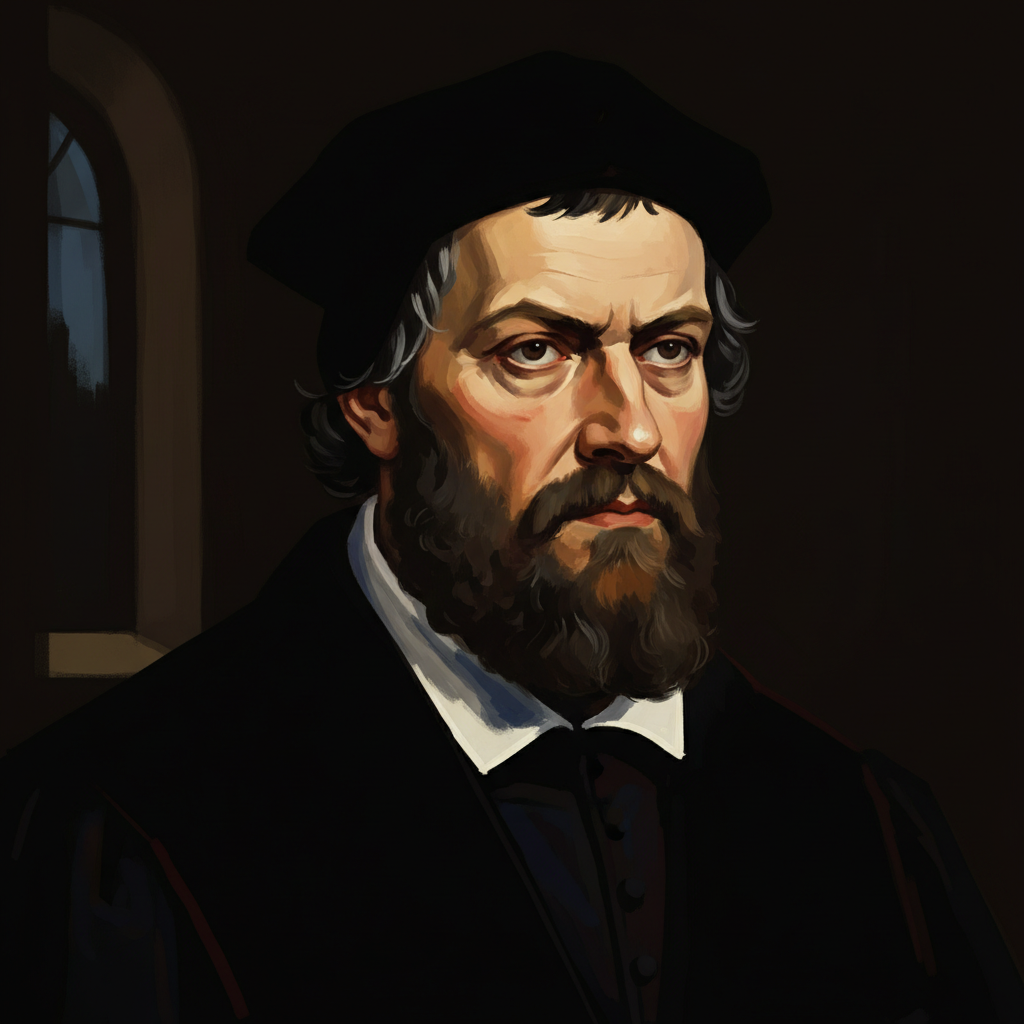
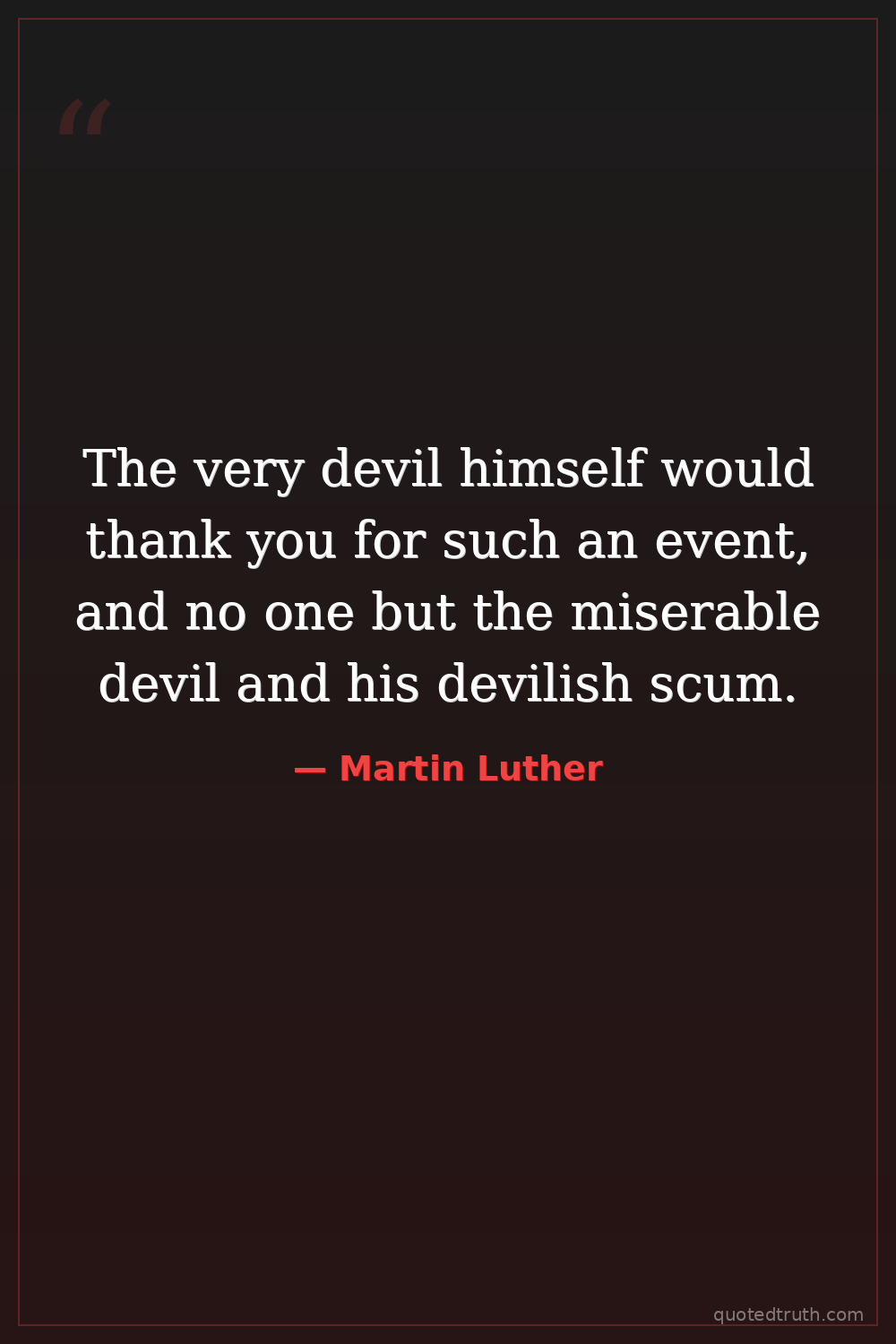
Martin Luther — "The very devil himself would thank you for such an event, and no one but the mis…"
The very devil himself would thank you for such an event, and no one but the miserable devil and his devilish scum.
The very devil himself would thank you for such an event, and no one but the miserable devil and his devilish scum.
Click any product to generate a realistic preview. Up to 3 at a time.
* Initial load can take up to 90 seconds — revising the preview in another color is nearly instant.
"The Pope is a mere tormentor of conscience."
"For the ass will have blows, and the populace will be ruled by force. God knew this well, and therefore he put a sword into the hand of the rulers, not a fox's tail."
"GOD OFTEN ACTS LIKE A MADMAN ... I look upon God no better than a scoundrel."
"Reason is the greatest enemy that faith has."
"I have so much to do today that I shall spend the first three hours in prayer."
German theologian whose 95 Theses (1517) launched the Protestant Reformation and broke the Catholic Church's monopoly on Western Christianity. Closely associated with Philipp Melanchthon (Lutheran systematizer) and John Calvin (later Reformer who built on Luther's break). For an intellectual contrast, see Pope Leo X, Renaissance pope (1513-1521) — Leo X's indulgence sales triggered Luther's break and Leo excommunicated him in 1521 — Luther's entire Reformation is structured as a direct answer to the indulgence-funded Vatican Leo represented.
Found in 1 providers: gemini
1 source checked
This is a harsh condemnation, declaring that only the devil and his wicked followers would welcome or celebrate a particular event. The speaker rejects the outcome completely, framing anyone who approves of it as morally corrupt and aligned with evil. It uses blistering religious invective to shame opponents, equating their satisfaction with demonic approval rather than engaging their arguments on their merits.
Luther was famous for savage rhetoric against perceived enemies, pouring scorn on the papacy, Jewish communities, peasants, and rival reformers with exactly this devil-and-scum vocabulary. A former Augustinian monk turned reformer, he viewed spiritual conflict as literal warfare with Satan. His pamphlets routinely branded opponents as agents of hell, reflecting both his volcanic temperament and his conviction that the Reformation was an apocalyptic battle over souls.
In early modern Europe, the Reformation shattered Western Christendom after 1517, triggering fierce pamphlet wars, peasant uprisings, and wars of religion. Belief in a personal, active devil was universal, and accusing enemies of satanic inspiration was standard polemic. Printing presses spread inflammatory tracts across Germany, and theological disputes carried real political and mortal stakes, so branding opponents as devilish scum was serious rhetorical combat, not mere insult.
AI-generated insights based on extensive research and information for context. Factual errors? Email [email protected].
Your cart is empty