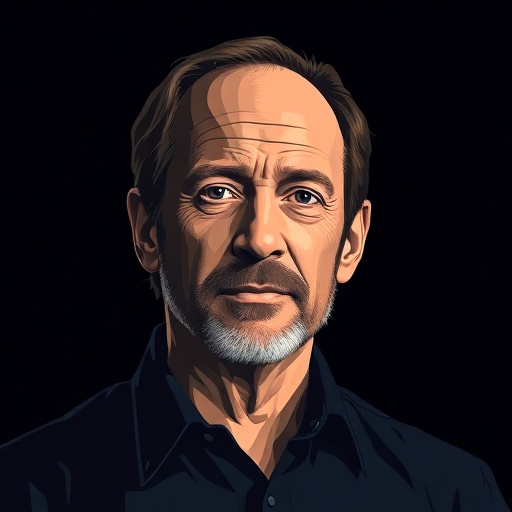
Tim Berners-Lee — "The web is a shared space."
The web is a shared space.
The web is a shared space.
Click any product to generate a realistic preview. Up to 3 at a time.
* Initial load can take up to 90 seconds — revising the preview in another color is nearly instant.
"Centralization of the web gives too much power to a few companies. This is dangerous."
"If you put everything on the web, then the world will be a better place. You will be a better person."
"I never thought the web would be used for things like social media."
"We need to reclaim the web from the powerful interests that are trying to control it."
"I’m worried about the future of the web, but I’m also optimistic."
British computer scientist who invented the World Wide Web at CERN in 1989 and founded the W3C, championing open web standards. Closely associated with Vint Cerf (TCP/IP co-creator and 'father of the internet') and Marc Andreessen (Mosaic browser creator and Netscape co-founder). For an intellectual contrast, see Mark Zuckerberg, Facebook (Meta) founder — Zuckerberg's walled-garden Facebook is the canonical contemporary opposite of Berners-Lee's open-web vision; Berners-Lee's Solid project and 'recapture the web' essays are explicitly written as a rebuttal to the platform-monopoly model Facebook pioneered.
Found in 1 providers: deepseek
1 source checked
The web is not owned by any single company, government, or individual. It belongs to everyone who uses it, like a public park or town square. Anyone can publish, read, link, and connect without asking permission. Its value comes from people contributing together, and decisions about how it works should reflect collective interests rather than the priorities of one powerful gatekeeper controlling access or content.
Berners-Lee invented the web at CERN in 1989 and deliberately released the underlying code royalty-free in 1993, refusing to patent it. He founded the W3C to keep standards open and later launched the Solid project and Contract for the Web to push back against platform monopolies. This sentence captures the principle that drove every one of those decisions: keep the web universal, decentralized, and available to all.
By the 2000s and 2010s, a handful of platforms—Google, Facebook, Amazon, Apple—had concentrated traffic, data, and advertising revenue, raising fears the open web was becoming a set of walled gardens. Net neutrality fights, surveillance revelations after Snowden, and growing concerns about misinformation and algorithmic control made Berners-Lee's reminder that the web is shared infrastructure, not private property, urgent and politically charged.
AI-generated insights based on extensive research and information for context. Factual errors? Email [email protected].
Your cart is empty