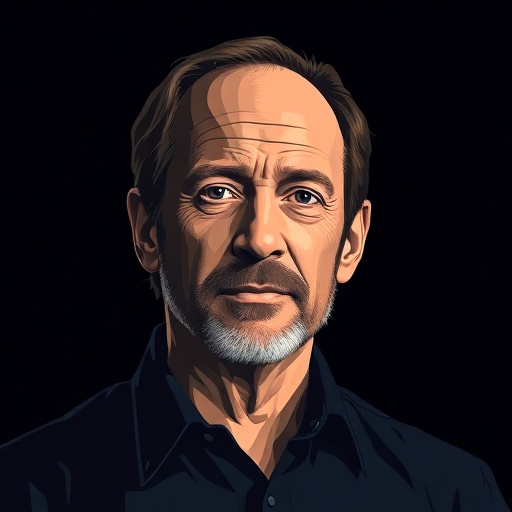
Tim Berners-Lee — "The web is a tool for democracy, but it can also be used for dictatorship."
The web is a tool for democracy, but it can also be used for dictatorship.
The web is a tool for democracy, but it can also be used for dictatorship.
Click any product to generate a realistic preview. Up to 3 at a time.
* Initial load can take up to 90 seconds — revising the preview in another color is nearly instant.
"The internet should be free from censorship."
"I never thought the web would be used for things like social media."
"The web is a platform for innovation."
"The web is not just a technology; it's a social construct. We need to think about its social implications."
"I’m not happy with the way some companies use the web to exploit people."
British computer scientist who invented the World Wide Web at CERN in 1989 and founded the W3C, championing open web standards. Closely associated with Vint Cerf (TCP/IP co-creator and 'father of the internet') and Marc Andreessen (Mosaic browser creator and Netscape co-founder). For an intellectual contrast, see Mark Zuckerberg, Facebook (Meta) founder — Zuckerberg's walled-garden Facebook is the canonical contemporary opposite of Berners-Lee's open-web vision; Berners-Lee's Solid project and 'recapture the web' essays are explicitly written as a rebuttal to the platform-monopoly model Facebook pioneered.
Found in 1 providers: deepseek
1 source checked
The same technology that empowers ordinary people to speak, organize, and access information can also be turned against them by governments or corporations to surveil, manipulate, and control. The web is not inherently good or bad; it is a neutral instrument whose impact depends entirely on who builds it, who governs it, and how citizens choose to use it. Freedom and oppression run on identical wires.
Berners-Lee invented the World Wide Web in 1989 at CERN and deliberately released it royalty-free so anyone could publish without permission. Through the W3C and his later Contract for the Web and Solid project, he has spent decades warning that platform monopolies, mass surveillance, and disinformation betray that founding promise. He champions decentralization, personal data ownership, and net neutrality as guardrails against the authoritarian uses he foresaw.
Berners-Lee's career spans the web's shift from open commons to surveillance economy. The Arab Spring showcased the democratic side; Snowden's 2013 revelations, Cambridge Analytica, China's Great Firewall, and the rise of algorithmic disinformation showcased the dictatorial side. Governments now routinely shut down internet access during protests, while a handful of platforms gatekeep global speech. His warning frames the central political question of the 21st-century internet.
AI-generated insights based on extensive research and information for context. Factual errors? Email [email protected].
Your cart is empty