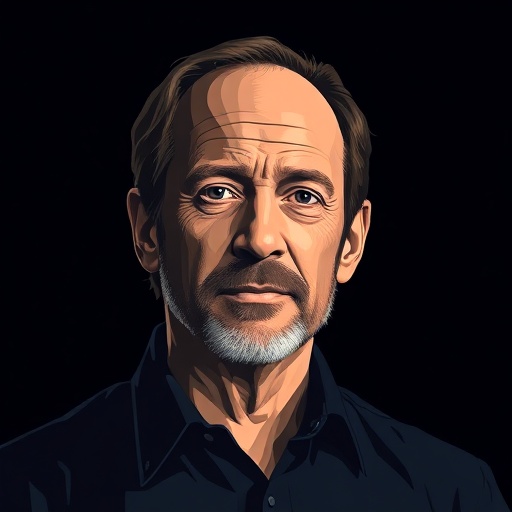
Tim Berners-Lee — "The web was designed to be decentralized, but it’s becoming more centralized."
The web was designed to be decentralized, but it’s becoming more centralized.
The web was designed to be decentralized, but it’s becoming more centralized.
Click any product to generate a realistic preview. Up to 3 at a time.
* Initial load can take up to 90 seconds — revising the preview in another color is nearly instant.
"The web is a living thing. It's constantly changing and growing."
"The web is a reflection of humanity. It can be beautiful, and it can be ugly."
"I'm not saying the web is all bad. It has done a lot of good. But it's also done a lot of harm."
"I'm worried about the fragmentation of the web, the way it's being broken up into different services."
"The web is a powerful tool, and with great power comes great responsibility."
British computer scientist who invented the World Wide Web at CERN in 1989 and founded the W3C, championing open web standards. Closely associated with Vint Cerf (TCP/IP co-creator and 'father of the internet') and Marc Andreessen (Mosaic browser creator and Netscape co-founder). For an intellectual contrast, see Mark Zuckerberg, Facebook (Meta) founder — Zuckerberg's walled-garden Facebook is the canonical contemporary opposite of Berners-Lee's open-web vision; Berners-Lee's Solid project and 'recapture the web' essays are explicitly written as a rebuttal to the platform-monopoly model Facebook pioneered.
Found in 1 providers: deepseek
1 source checked
The original vision for the internet was a distributed network where no single company or government controlled information flow, with anyone able to publish and connect freely. Instead, a handful of dominant platforms now mediate most online activity, hosting users' content, controlling their data, and dictating which voices get amplified. What began as an open commons increasingly resembles a small set of walled gardens owned by powerful gatekeepers.
Berners-Lee invented the World Wide Web at CERN in 1989 and gave it away royalty-free precisely so no entity could own it. He has spent decades defending that open architecture, founding the W3C, the Web Foundation, and the Solid project to return data ownership to individuals. This lament reflects his lifelong conviction that the web's power lies in permissionless participation, and his alarm that platform monopolies betray its founding design principles.
By the 2010s and 2020s, Google, Meta, Amazon, and Apple captured the bulk of search, social, commerce, and mobile traffic. Cambridge Analytica, algorithmic feeds, deplatforming debates, and antitrust suits made platform power a defining issue. Cryptocurrency, federated networks like Mastodon, and decentralized protocols emerged as countermovements, while regulators in the EU and US pursued the DMA, DSA, and breakup proposals to curb concentration that Berners-Lee never anticipated.
AI-generated insights based on extensive research and information for context. Factual errors? Email [email protected].
Your cart is empty