Pythagoras — "The wind is blowing. Worship the sound."
The wind is blowing. Worship the sound.
The wind is blowing. Worship the sound.
Click any product to generate a realistic preview. Up to 3 at a time.
* Initial load can take up to 90 seconds — revising the preview in another color is nearly instant.
"In no way neglect the health of your body; But give it drink and food in due measure, and also the exercise of which it has need."
"Educate the children and it won't be necessary to punish the men."
"Beatitude is the knowledge of the perfection of the numbers of the soul."
"The Pythagoreans regarded 10, which contains all the numbers, as the holiest number."
"Do only those things which will not harm thee, and deliberate before you act."
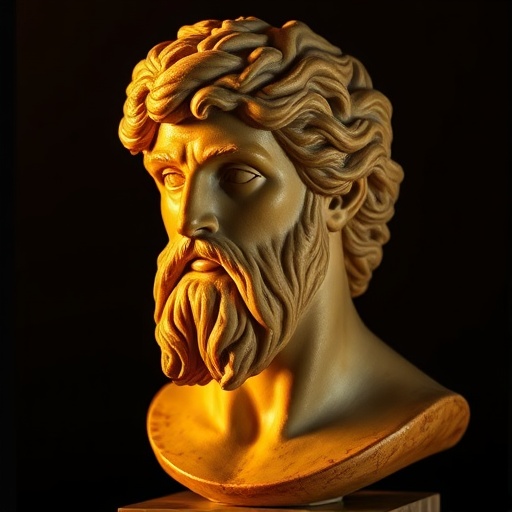
Greek philosopher and mathematician whose school in Croton combined geometry (the Pythagorean theorem), number-mysticism, and a religious-vegetarian way of life. Closely associated with Thales of Miletus (earlier pre-Socratic and the first philosopher). For an intellectual contrast, see Heraclitus, pre-Socratic Greek philosopher of flux — Heraclitus called Pythagoras 'the chief of swindlers' — among the founding insults of the philosophical-rivalry tradition. Their 'all is flux' vs 'all is number' poles still organize the philosophy of mathematics today (Platonist vs anti-realist).
Found in 1 providers: deepseek
1 source checked
The quote urges presence and reverence for natural phenomena as they occur. It suggests the divine is not abstract or distant but immediate — encountered in what's unfolding around you right now. Stop, listen, and treat the ordinary as sacred. It's a call to mindful attention: the transcendent doesn't require temples or rituals; it announces itself in the world's simplest, most ephemeral sensations.
Pythagoras founded a secretive religious brotherhood with strict rituals and mystical beliefs, as much spiritual leader as mathematician. His concept of the 'Music of the Spheres' held that celestial bodies emit sacred harmonies governed by mathematical ratios. Sound, for Pythagoras, was divine architecture. Worshipping its natural forms — wind, vibration — aligned perfectly with his belief that number and harmony were the universe's fundamental language.
In 6th-century BCE Greece, natural forces were understood as divine manifestations — wind was Aeolus's breath, thunder Zeus's voice. Pythagoras lived at the cusp between mythos and logos, when philosophers first sought rational explanations but sacred reverence for nature persisted. To command worship of wind's sound was culturally natural: the gods spoke through the world, and attentive listening was both piety and philosophy.
AI-generated insights based on extensive research and information for context. Factual errors? Email [email protected].
Your cart is empty