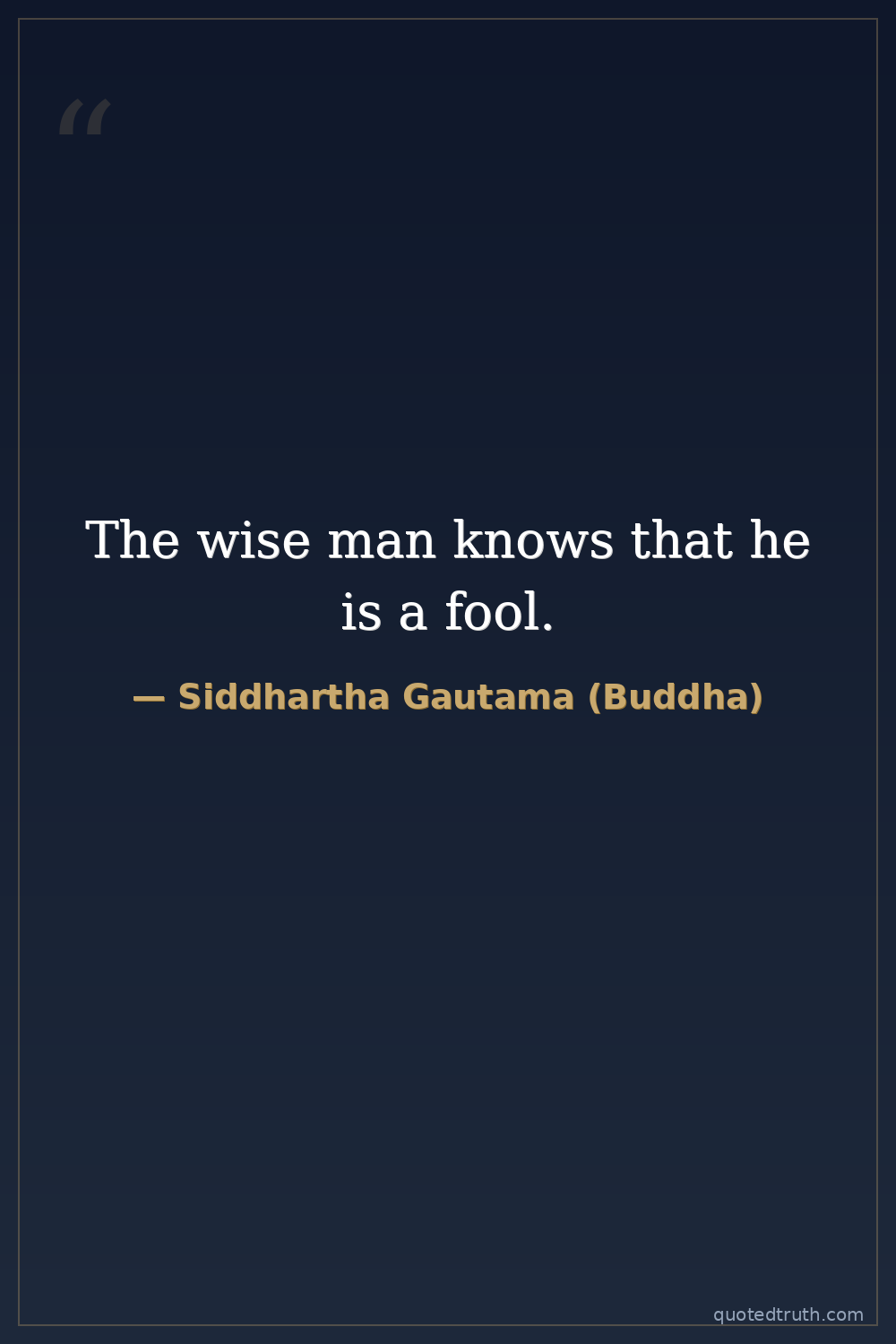
Siddhartha Gautama (Buddha) — "The wise man knows that he is a fool."
The wise man knows that he is a fool.
The wise man knows that he is a fool.
Click any product to generate a realistic preview. Up to 3 at a time.
* Initial load can take up to 90 seconds — revising the preview in another color is nearly instant.
"The wise ones who are intent on meditation, who delight in the peace of renunciation, such mindful ones, perfect in right understanding, cast off the net of Māra."
"A man is not called wise because he talks and talks again; but if he is peaceful, loving and fearless then he is in truth called wise."
"A jug fills drop by drop."
"An insincere and evil friend is more to be feared than a wild beast; a wild beast may wound your body, but an evil friend will wound your mind."
"May all beings be happy and safe, and may their hearts be filled with joy."
Attributed, often cited in various Buddhist texts and teachings.
Date: c. 5th century BCE
WisdomFound in 1 providers: grok
1 source checked
True wisdom begins with admitting how little you actually know. The person who thinks they have everything figured out has stopped learning, while the one who recognizes their own ignorance stays curious, humble, and open to correction. Claiming certainty is usually a sign of blind spots. Real intelligence is comfortable saying 'I don't know' and treating that gap as the starting point for growth rather than something to hide.
Siddhartha abandoned a sheltered palace life at 29 precisely because his inherited answers about suffering felt hollow. He spent six years testing teachers and extreme asceticism, rejecting each when it failed. His enlightenment under the Bodhi tree came through direct inquiry, not doctrine. He taught the 'beginner's mind' of open questioning and warned followers not to accept even his own words on authority, but to test them personally.
In 5th-century BCE northern India, Brahmin priests held a monopoly on sacred knowledge through memorized Vedic rituals, and caste birth determined wisdom. The Ganges plain was erupting with shramana wanderers challenging that orthodoxy. Siddhartha's claim that self-admitted ignorance outranked priestly certainty was radical, undercutting the entire authority structure and opening spiritual inquiry to merchants, outcasts, and women normally barred from the priestly learning class.
AI-generated insights based on extensive research and information for context. Factual errors? Email [email protected].
Your cart is empty