Kabir — "The world dies reading endless books, but none becomes wise. He alone is truly l…"
The world dies reading endless books, but none becomes wise. He alone is truly learned who reads the two-and-a-half letters of Love.
The world dies reading endless books, but none becomes wise. He alone is truly learned who reads the two-and-a-half letters of Love.
Click any product to generate a realistic preview. Up to 3 at a time.
* Initial load can take up to 90 seconds — revising the preview in another color is nearly instant.
"The wise man does not cling to anything, for he knows that everything is transient."
"Chalti chakki dekh kar, diya Kabira roye. Dui paatan ke beech mein, sabit bacha na koye. (Seeing the grinding mill, Kabir wept. Between the two stones, no one remains whole.)"
"Oh, how may I ever express that secret word? O how can I say He is not like this, and He is like that? If I say that He is within me, the universe is ashamed: If I say that He is without me, it is fal…"
"All know that the drop merges into the ocean, but few know that the ocean merges into the drop."
"The breath of all life is the Lord."
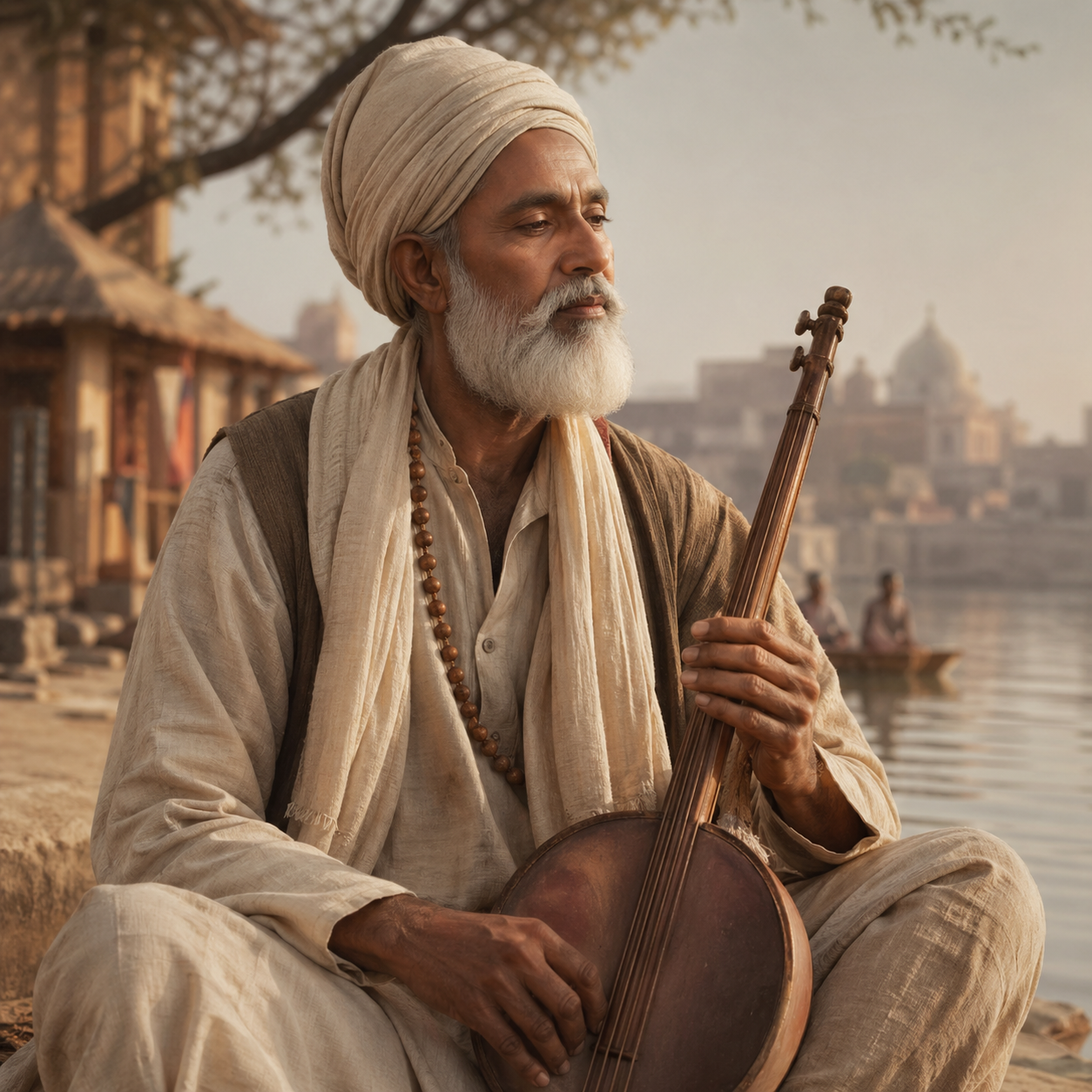
Indian mystic poet whose verses (preserved in the Sikh Guru Granth Sahib and the Hindu Bhakti tradition) attacked both Hindu and Islamic orthodoxy. Closely associated with Guru Nanak (founder of Sikhism, who incorporated Kabir's verses). For an intellectual contrast, see Brahmanical priesthood, the ritualistic Hindu establishment of his era — Kabir's poetry is the founding text of bhakti devotional rebellion against ritualistic Hinduism — his verses ridicule caste, ritual purity, and priestly mediation as religious theatre.
Challenging bookish knowledge and emphasizing the primacy of love for true wisdom, from his poetry (Dohas).
Date: 15th Century
EducationalFound in 1 providers: gemini
1 source checked
Your cart is empty