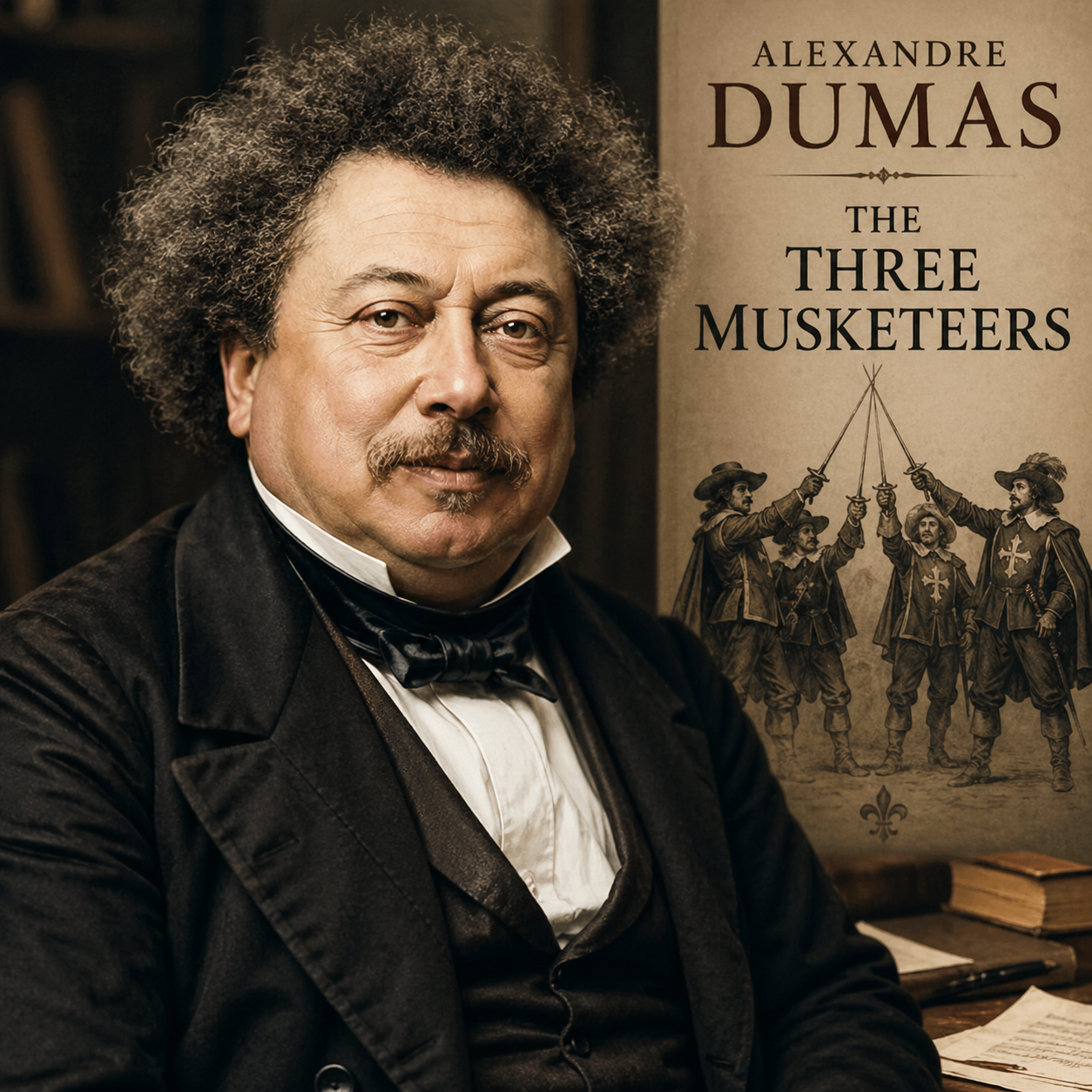
Alexandre Dumas — "The world is a comedy to those who think, a tragedy to those who feel."
The world is a comedy to those who think, a tragedy to those who feel.
The world is a comedy to those who think, a tragedy to those who feel.
Click any product to generate a realistic preview. Up to 3 at a time.
* Initial load can take up to 90 seconds — revising the preview in another color is nearly instant.
"What is history? An agreed-upon fable."
"It is not the eye that sees, but the soul."
"It is clear that the more a man has, the more he wants; and the more he wants, the more he suffers."
"Great is truth. Fire cannot burn it nor water drown it."
"All for one, and one for all."
French Romantic novelist whose The Three Musketeers (1844) and The Count of Monte Cristo (1844-46) defined the historical-adventure novel and were translated into more languages than any other French author. Closely associated with Victor Hugo (French Romantic peer and Les Misérables author). For an intellectual contrast, see Gustave Flaubert, French realist novelist (1821-1880) — Flaubert's Madame Bovary (1856) replaced Dumas's swashbuckling adventure with psychological-realist detail — Flaubert's three-month searches for the right adjective are the precise opposite of Dumas's serial-installment plot-machine. French literature pivoted from Romantic to Realist in a single generation, with Dumas and Flaubert as the cleanest poles.
Often attributed to Horace Walpole, but sometimes associated with Dumas as well. Caution advised.
Date: N/A
GeneralFound in 1 providers: grok
1 source checked
Your cart is empty