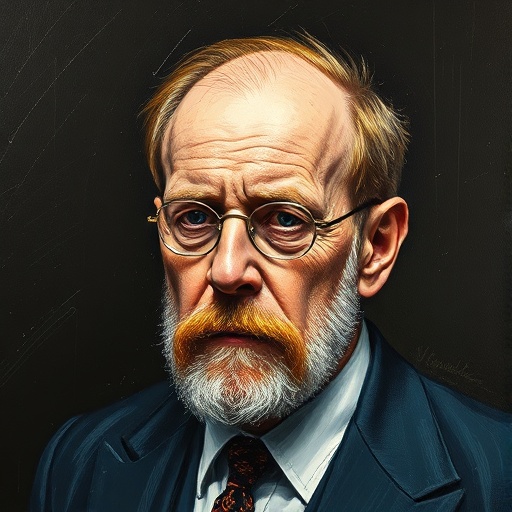
Werner Heisenberg — "There are things that are so serious that you can only joke about them."
There are things that are so serious that you can only joke about them.
There are things that are so serious that you can only joke about them.
Click any product to generate a realistic preview. Up to 3 at a time.
* Initial load can take up to 90 seconds — revising the preview in another color is nearly instant.
"Natural science does not simply describe and explain nature; it is part of the interplay between nature and ourselves."
"The path to paradise begins in hell."
"If we want to describe what happens in an atomic event, we must realize that the word 'happens' can apply only to the observation, not to the state of affairs between two observations."
"The decision for a definite result is taken only when the measurement is made."
"The smallest units of matter are not physical objects in the ordinary sense; they are forms, structures or—in Plato's sense—Ideas."
Found in 1 providers: gemini
1 source checked
Some realities are so weighty, painful, or absurd that direct discussion fails. Humor becomes the only honest way to approach them, because a joke can hold contradiction and dread at once without collapsing under the load. Laughter creates enough distance to look at the thing without flinching, while still acknowledging its gravity. Solemn language would either understate the horror or drown in it, but a joke lets truth slip past defenses.
Heisenberg founded quantum mechanics and formulated the uncertainty principle, which itself overturned classical certainty with paradox. He led Nazi Germany's nuclear program, a role that shadowed him for life and forced him to discuss unspeakable choices obliquely. A physicist who spent decades wrestling with measurement, interpretation, and moral ambiguity, he understood that the deepest problems resist plain statement and that wit was sometimes the only intellectually honest register available.
Heisenberg lived through two world wars, the rise of Nazism, the Holocaust, the atomic bomb, and the Cold War nuclear standoff. Postwar Germany processed collective guilt while physicists confronted having built weapons capable of ending civilization. The Copenhagen circle around Bohr cultivated irony and paradox as scientific habits. In a century where straightforward speech about Auschwitz, Hiroshima, or annihilation felt obscene or inadequate, dark humor became a recognized European coping idiom among intellectuals.
AI-generated insights based on extensive research and information for context. Factual errors? Email [email protected].
Your cart is empty