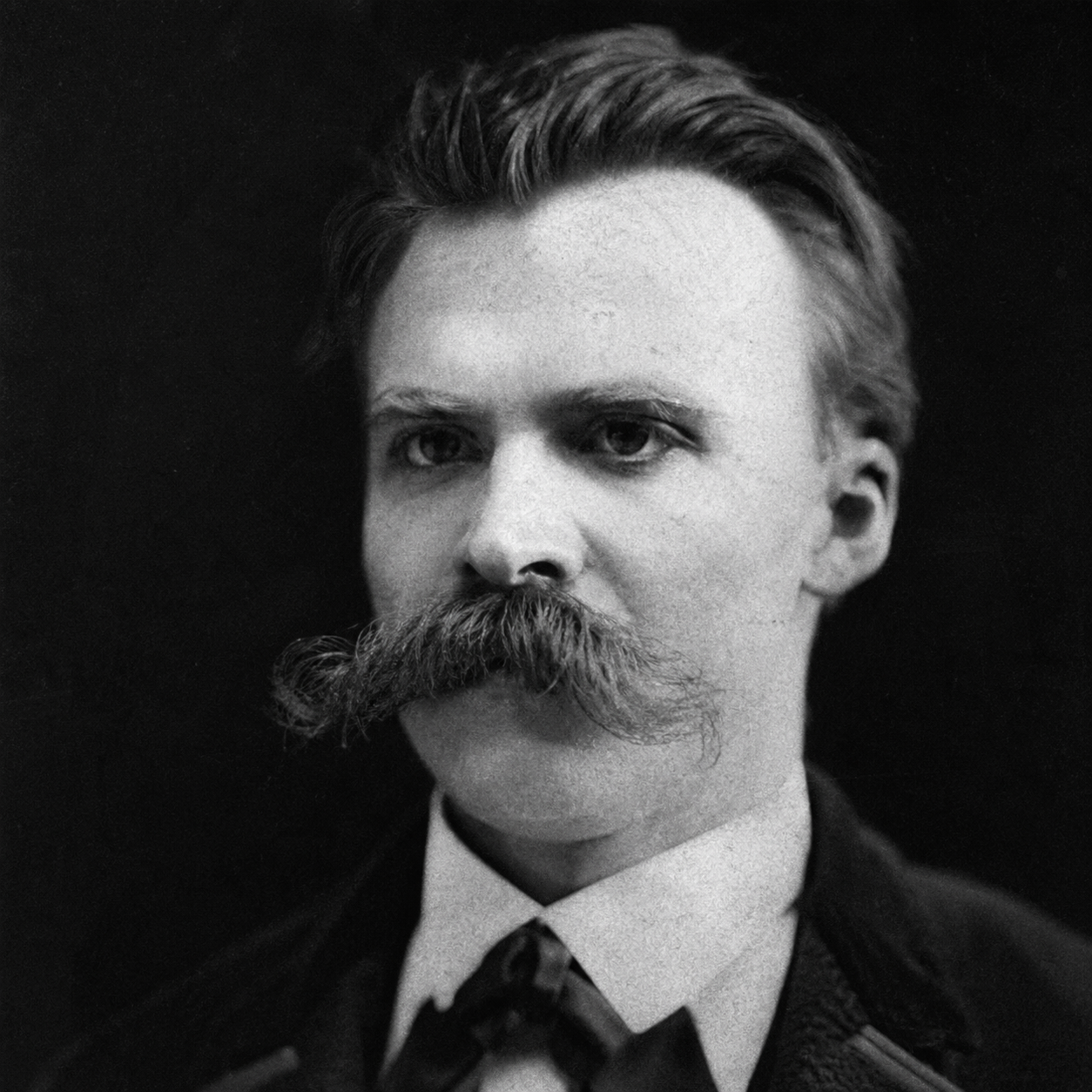
Friedrich Nietzsche — "There is always some madness in love. But there is also always some reason in ma…"
There is always some madness in love. But there is also always some reason in madness.
There is always some madness in love. But there is also always some reason in madness.
Click any product to generate a realistic preview. Up to 3 at a time.
* Initial load can take up to 90 seconds — revising the preview in another color is nearly instant.
"But the worst enemy you can meet will always be yourself; you lie in wait for yourself in caverns and forests."
"The will to a system is a lack of integrity."
"Whatever is profound loves masks."
"In individuals, insanity is rare; but in groups, parties, nations and epochs, it is the rule."
"In heaven all the interesting people are missing."
German philosopher of 'God is dead,' ressentiment, and the will to power, who attacked Christian moral psychology at its foundations. Closely associated with Arthur Schopenhauer (his early intellectual father, later broken with). For an intellectual contrast, see Søren Kierkegaard, Danish Christian existentialist of the leap of faith — both diagnosed modern despair, but Kierkegaard's answer was Christ and Nietzsche's was the death of God — the two existentialist roads taken from the same starting point.
The standard scholarly entry points to Friedrich Nietzsche's work: Walter Kaufmann (Princeton, the postwar Nietzsche rehabilitator) — Nietzsche: Philosopher, Psychologist, Antichrist (1950); Brian Leiter (University of Chicago Law School) — Nietzsche on Morality (2002); Maudemarie Clark (UC Riverside, Emerita) — Nietzsche on Truth and Philosophy (1990). These are the works graduate seminars cite when teaching Friedrich Nietzsche.
Found in 1 providers: gemini
1 source checked
Your cart is empty