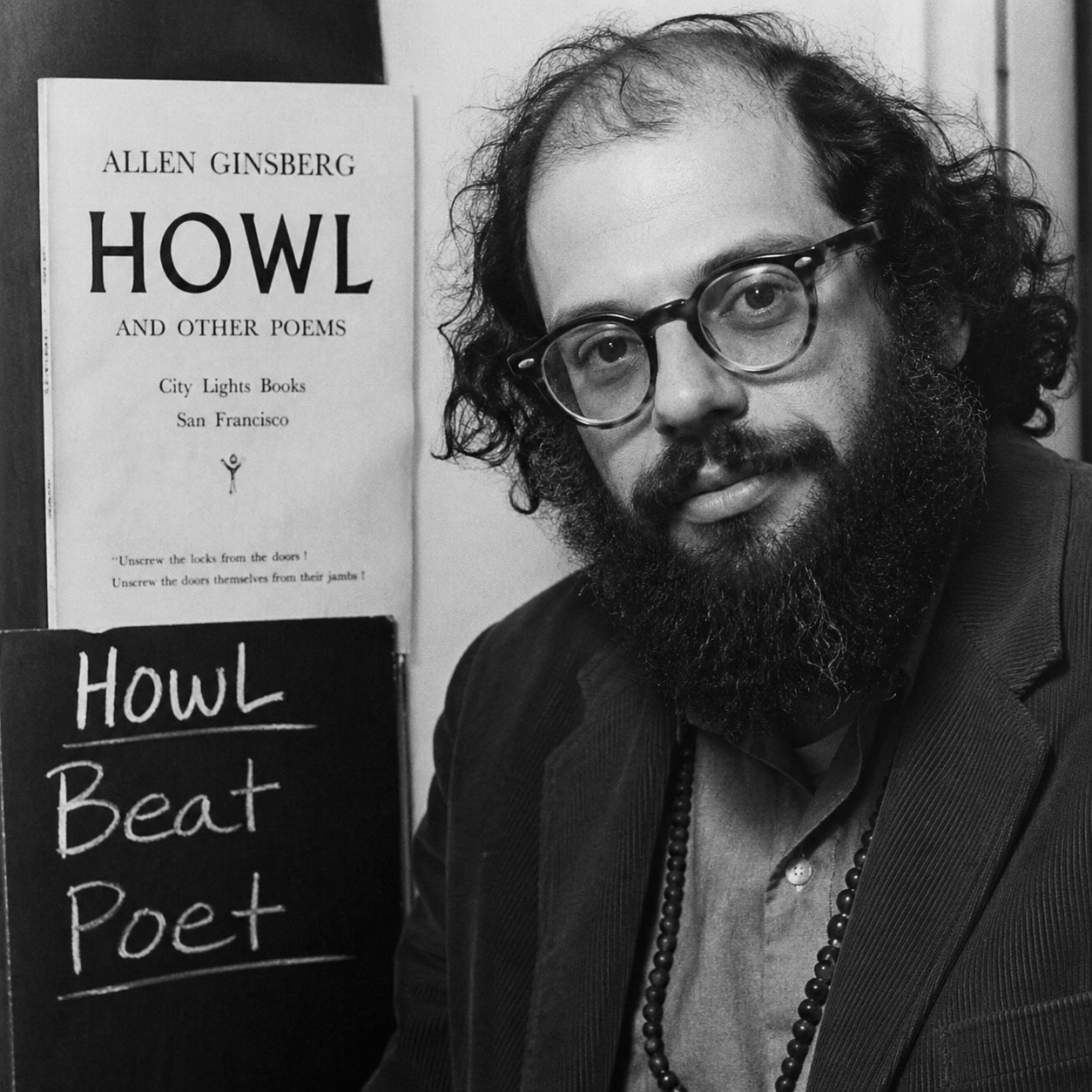
Allen Ginsberg — "There, rest. No more suffering for you. I know where you've gone, it's good."
There, rest. No more suffering for you. I know where you've gone, it's good.
There, rest. No more suffering for you. I know where you've gone, it's good.
Click any product to generate a realistic preview. Up to 3 at a time.
* Initial load can take up to 90 seconds — revising the preview in another color is nearly instant.
"If I look at my work, I think the most important thing is the honesty."
"We are all vulnerable together, the sane and the mad, and in the end we will all experience madness in at least some secret or small way."
"I'm a spiritual person, but I'm not a religious person."
"America is ruled by a gang of capitalist thugs."
"I'm a great believer in the power of the word, and the power of the image, and the power of the sound."
American Beat poet whose Howl (1956) faced an obscenity trial and became a counterculture manifesto. Closely associated with Jack Kerouac (Beat novelist, On the Road) and William S. Burroughs (fellow Beat, Naked Lunch). For an intellectual contrast, see T.S. Eliot, high-modernist poet of The Waste Land — Ginsberg's open-line confessional Beat verse was a deliberate rejection of Eliot's allusive academic formalism — the two halves of mid-century American poetry.
Found in 1 providers: gemini
1 source checked
Your cart is empty