Siddhartha Gautama (Buddha) — "To abstain from all evil, to cultivate the good, and to purify one's mind — this…"
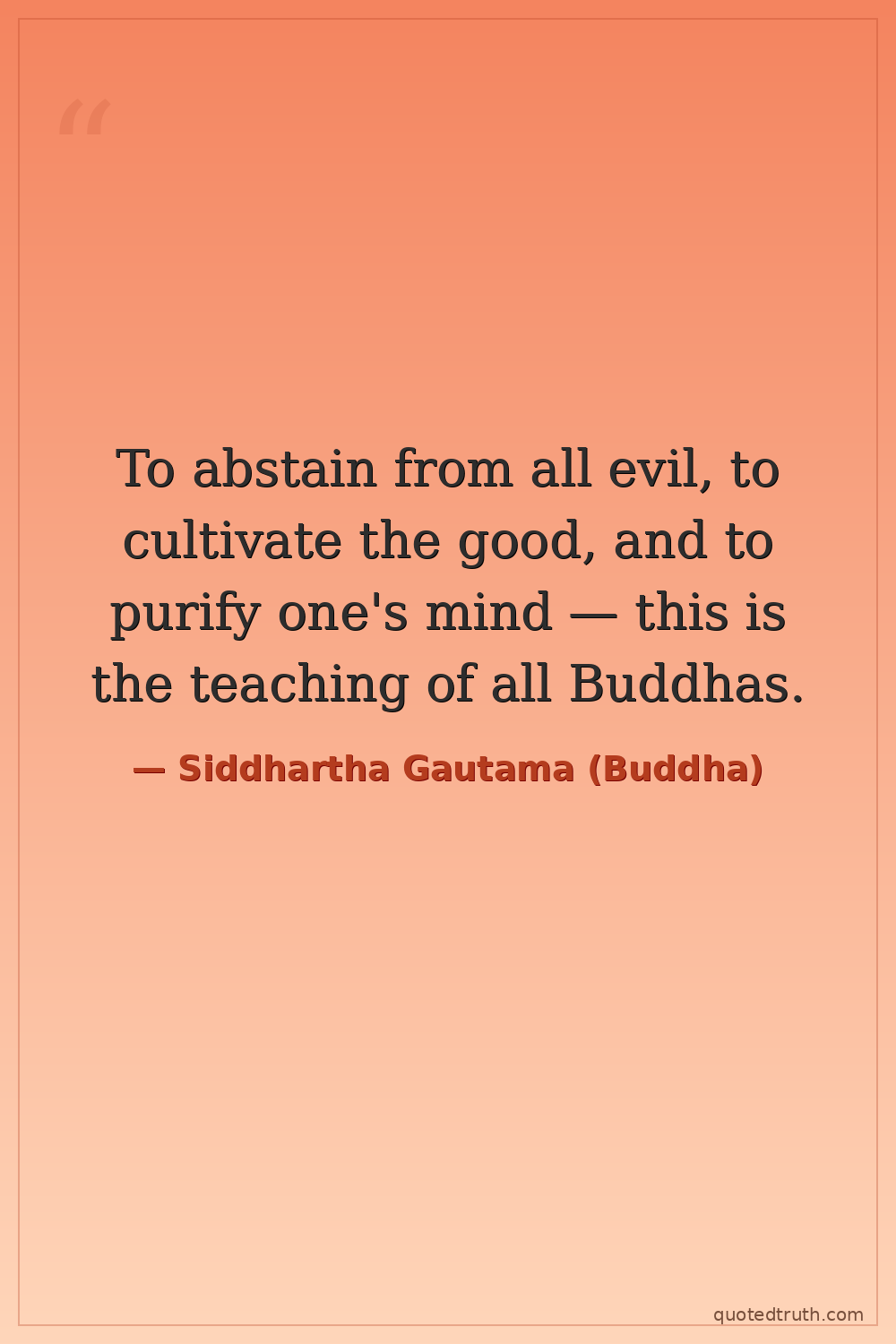
To abstain from all evil, to cultivate the good, and to purify one's mind — this is the teaching of all Buddhas.
To abstain from all evil, to cultivate the good, and to purify one's mind — this is the teaching of all Buddhas.
Click any product to generate a realistic preview. Up to 3 at a time.
* Initial load can take up to 90 seconds — revising the preview in another color is nearly instant.
"The greatest prayer is patience."
"Give, even if you only have a little."
"Beware of your thoughts; they become words. Beware of your words; they become actions. Beware of your actions; they become habits. Beware of your habits; they become character. Beware of your characte…"
"One day you will realize that a mind that is always peaceful and content is the greatest wealth that you can ever possess."
"Virtue is persecuted more by the wicked than it is loved by the good."
Dhammapada, Chapter 14, Verse 183 (often called the 'Ovadapatimokkha Gatha')
Date: c. 5th century BCE
GeneralFound in 2 providers: grok,gemini
2 sources checked
This saying compresses ethical living into three steps: stop doing harmful things, actively do beneficial things, and work on your inner life through mental discipline. Morality alone is not enough, and neither is meditation by itself. Real transformation requires all three working together. The outer behavior and the inner mind shape each other, and training both is what every awakened teacher across time has pointed toward as the actual path.
Siddhartha abandoned palace luxury, tried extreme asceticism, then rejected both extremes for a middle path grounded in ethics, meditation, and wisdom. This verse from the Dhammapada mirrors the threefold training he taught for forty-five years: sila (conduct), samadhi (concentration), and panna (insight). By saying 'all Buddhas,' he framed his teaching not as personal invention but as a universal pattern any awakened teacher rediscovers, consistent with his claim to have walked an ancient path.
In 5th-century BCE northern India, competing sramana movements debated ritual sacrifice, caste-based purity, fatalism, and harsh self-mortification. Brahmanical religion emphasized external rites; Jain and Ajivika ascetics punished the body. Siddhartha's formula rejected both ritualism and extreme asceticism by relocating purity from caste, offerings, or bodily suffering into intentional action and mental cultivation accessible to anyone. This democratizing move fit a period of urbanization, trade, and new seekers questioning inherited Vedic authority along the Ganges plain.
AI-generated insights based on extensive research and information for context. Factual errors? Email [email protected].
Your cart is empty