Martin Luther — "To be sure, I would not execute a Jew; I would not even allow him to be a farmer…"
To be sure, I would not execute a Jew; I would not even allow him to be a farmer, but I would drive him out of the country.
To be sure, I would not execute a Jew; I would not even allow him to be a farmer, but I would drive him out of the country.
Click any product to generate a realistic preview. Up to 3 at a time.
* Initial load can take up to 90 seconds — revising the preview in another color is nearly instant.
"The hair on my head is a fine work of art, but it is not necessary for salvation."
"A man should not lie with his wife before she has been three nights in bed."
"A simple layman armed with Scripture is to be believed above a pope or a cardinal without it."
"You must say my sins are not mine; they are not in me at all; they are the sins of another; they are Christ's and none of my business."
"You are the worst rascal of all the rascals on earth!"
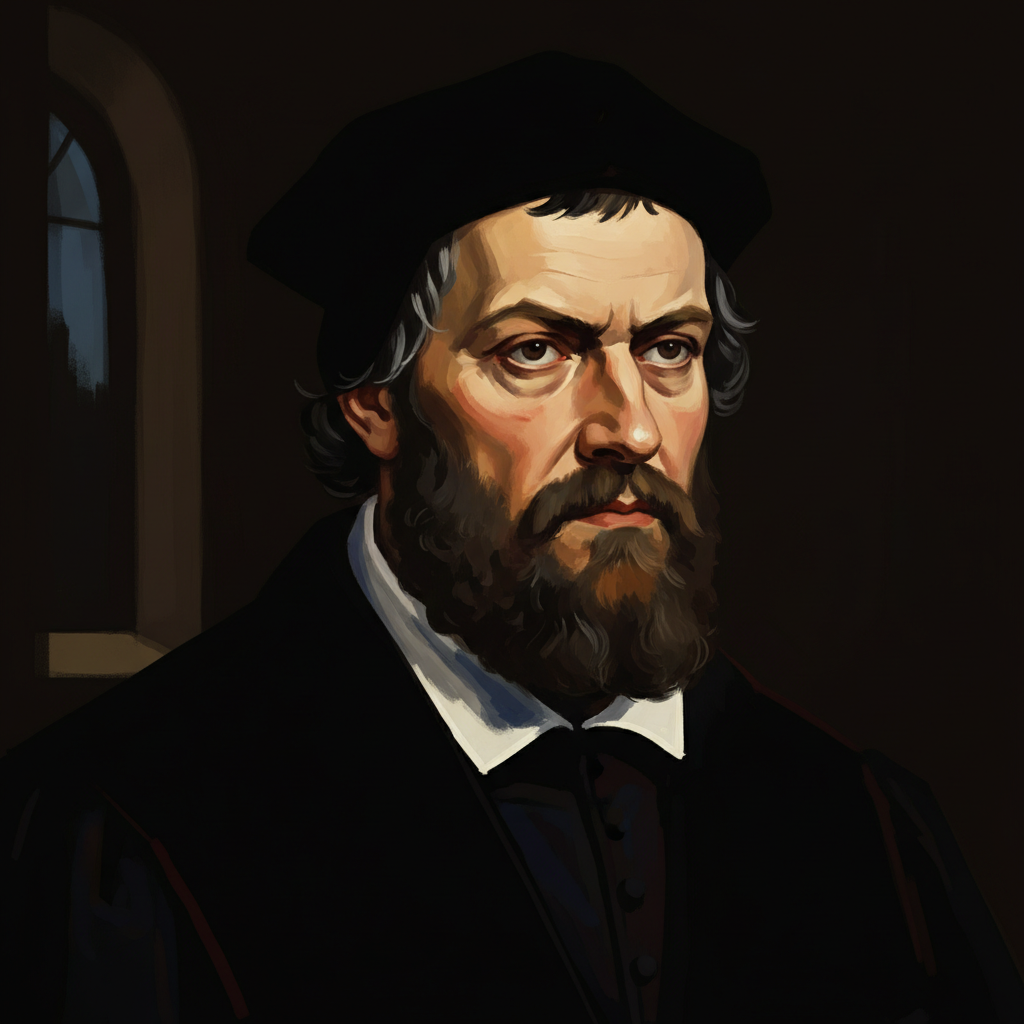
German theologian whose 95 Theses (1517) launched the Protestant Reformation and broke the Catholic Church's monopoly on Western Christianity. Closely associated with Philipp Melanchthon (Lutheran systematizer) and John Calvin (later Reformer who built on Luther's break). For an intellectual contrast, see Pope Leo X, Renaissance pope (1513-1521) — Leo X's indulgence sales triggered Luther's break and Leo excommunicated him in 1521 — Luther's entire Reformation is structured as a direct answer to the indulgence-funded Vatican Leo represented.
Found in 1 providers: grok
1 source checked
Luther is saying he would not kill Jewish people, but he would strip them of livelihoods like farming and expel them from the country entirely. He frames forced exile and economic exclusion as a restrained alternative to execution. In modern terms, it is an explicit call for ethnic cleansing through deportation and denial of work, presented as mercy because it stops short of murder.
Luther, the German monk who launched the Protestant Reformation in 1517, grew bitterly hostile toward Jews late in life after they refused conversion. His 1543 treatise On the Jews and Their Lies urged burning synagogues, seizing property, banning teaching, and expelling Jewish communities. This quote reflects that final-period antisemitism, which clashed with his earlier, gentler 1523 writings and later fueled German religious prejudice for centuries.
In early modern 1540s Europe, Jews were already confined to ghettos, barred from guilds and most trades, and subject to expulsions from England, Spain, and many German cities. Reformation upheaval intensified scapegoating as Protestants and Catholics competed for legitimacy. Princes routinely used expulsion edicts as policy, and Luther's words gave theological cover to rulers already inclined to exile Jewish populations from their territories.
AI-generated insights based on extensive research and information for context. Factual errors? Email [email protected].
Your cart is empty