John Wesley — "To candid, reasonable men, I am not afraid to lay open what has been the course …"
To candid, reasonable men, I am not afraid to lay open what has been the course of my life.
To candid, reasonable men, I am not afraid to lay open what has been the course of my life.
Click any product to generate a realistic preview. Up to 3 at a time.
* Initial load can take up to 90 seconds — revising the preview in another color is nearly instant.
"I desire to have but one thing in view, to please God."
"I am not afraid of dying. I have no more fear of death than I have of lying down to sleep."
"The greatest enemy to human happiness is the love of money."
"What a work has God wrought in our day!"
"I am as much a High-Churchman as ever I was. And I hope to live and die so."
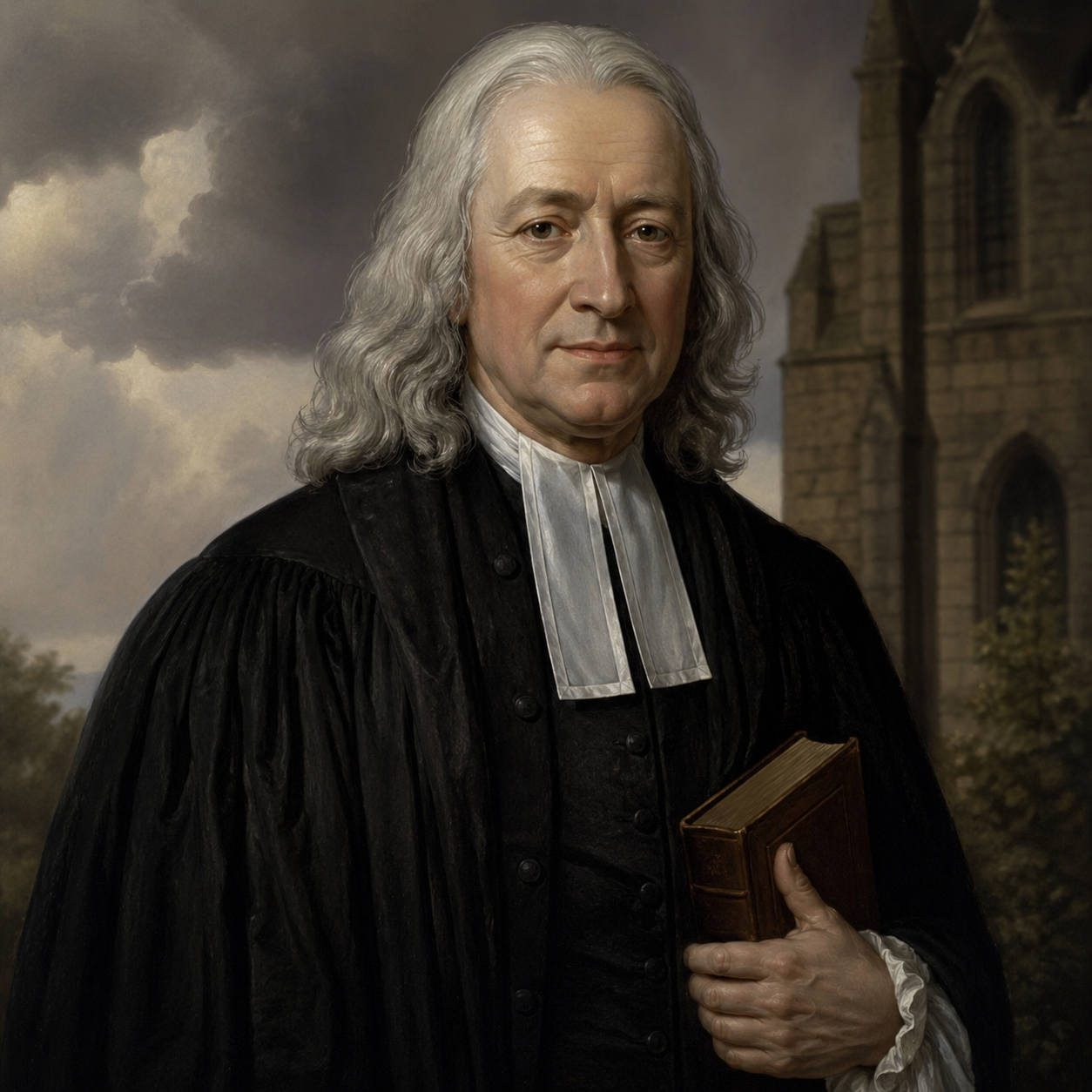
English Anglican cleric and founder of Methodism, whose open-air preaching and class-meeting structure created the largest 18th-century evangelical revival. Closely associated with Charles Wesley (his hymn-writing brother) and George Whitefield (early co-revivalist, later doctrinal opponent). For an intellectual contrast, see George Whitefield, Calvinist evangelical revivalist — Whitefield's predestinarian Calvinism vs Wesley's free-grace Arminian theology split the early Methodist movement permanently in the 1739-41 break. The founding evangelical Calvinist-Arminian schism — the two parallel evangelical traditions American Christianity descends from.
Found in 1 providers: grok
1 source checked
Wesley is declaring radical transparency — he's willing to share the full account of his life with anyone open-minded and fair enough to consider it honestly. He's not concealing failures, doubts, or struggles. It's an invitation to honest scrutiny, a confident assertion that he has nothing to hide from those who will examine him with reason rather than prejudice or hostility.
Wesley kept meticulous journals for over 50 years and published them widely — his life was literally an open book. Constantly accused of fanaticism and irregular ministry by the Anglican establishment, his consistent response was to invite examination of his conduct and motives. This transparency extended to his spiritual failures, including his pre-conversion struggles with assurance of faith before the transformative Aldersgate experience of 1738.
In 18th-century England, Wesley operated amid the Enlightenment's premium on reason and evidence, alongside widespread suspicion of religious 'enthusiasm' — emotional piety was branded irrational and socially dangerous. The Anglican establishment viewed Methodist field preaching as subversive disorder. Wesley's appeal to 'candid, reasonable men' strategically deployed Enlightenment language to legitimize Methodism, arguing his methods and character could withstand rational inspection in an era that prized exactly that standard.
AI-generated insights based on extensive research and information for context. Factual errors? Email [email protected].
Your cart is empty