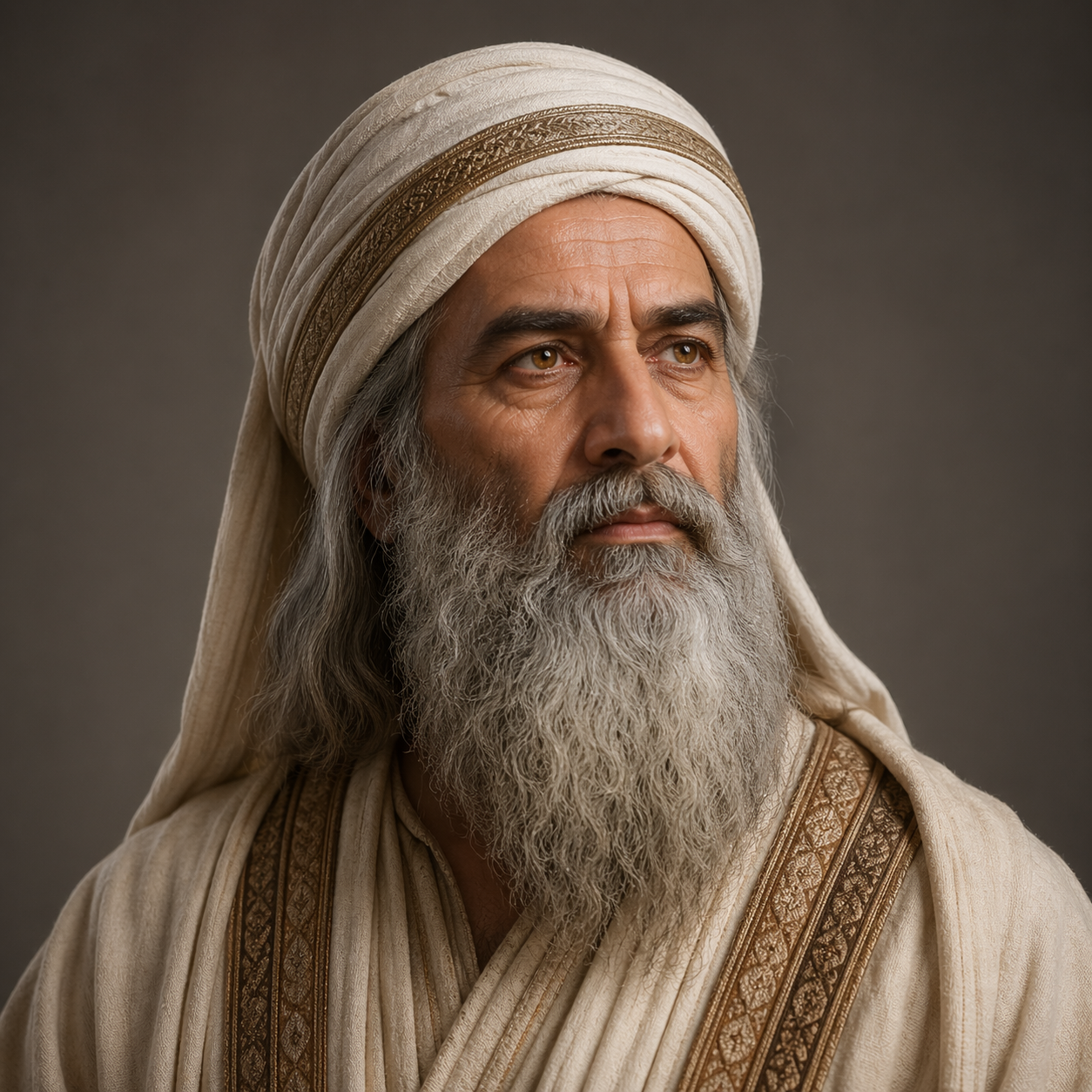
Zoroaster — "To him who causes pain to the righteous, there shall be pain at the end."
To him who causes pain to the righteous, there shall be pain at the end.
To him who causes pain to the righteous, there shall be pain at the end.
Click any product to generate a realistic preview. Up to 3 at a time.
* Initial load can take up to 90 seconds — revising the preview in another color is nearly instant.
"The evil shall be cast into darkness, but the righteous shall walk in light."
"Contemplate the beams of fire with a most pious mind. Every one, both men and women, ought to-day to choose his creed."
"The wicked shall perish, but the righteous shall rejoice."
"Through the best righteousness, we shall see Thee, O Mazda, and through the best thought, we shall approach Thee."
"Be kind to all beings. Especially those who bring you food."
Iranian prophet who founded Zoroastrianism, the first major religion of cosmic dualism between good (Ahura Mazda) and evil (Angra Mainyu). Closely associated with The Buddha (near-contemporary Eastern moral-cosmological revolutionary). For an intellectual contrast, see Friedrich Nietzsche, German philosopher of 'beyond good and evil' — Nietzsche appropriated Zarathustra's name for Thus Spoke Zarathustra (1883) precisely to invert the original's moral cosmology — the historical Zoroaster founded the good-versus-evil framework Nietzsche's character announces the end of.
Found in 1 providers: grok
1 source checked
Anyone who harms a good, honest person will eventually suffer harm themselves. The wrong you inflict on the innocent comes back to you, either in this life or in what follows. It is a moral warning that cruelty toward the virtuous is never truly free, because the universe is structured so that harmful actions return to their source and settle accounts with the person who set them in motion.
Zoroaster built his entire teaching around asha, the cosmic order of truth and righteousness, and its opposite druj, the lie. As a reforming priest who broke from older Iranian polytheism, he preached personal moral accountability and a final judgment where each soul crosses the Chinvat Bridge. This saying mirrors his core conviction that righteous people stand under divine protection and that Ahura Mazda ensures wrongdoers eventually reap consequences.
Zoroaster lived in ancient Iran, likely between 1500 and 1000 BCE, among Bronze Age pastoral tribes dominated by warrior raids, cattle theft, and blood feuds where the strong routinely crushed the weak. Older polytheistic cults emphasized ritual offerings over ethics. By insisting that harming the righteous brought certain punishment, Zoroaster introduced a radically moral cosmos, laying groundwork that later shaped Jewish, Christian, and Islamic ideas of judgment.
AI-generated insights based on extensive research and information for context. Factual errors? Email [email protected].
Your cart is empty