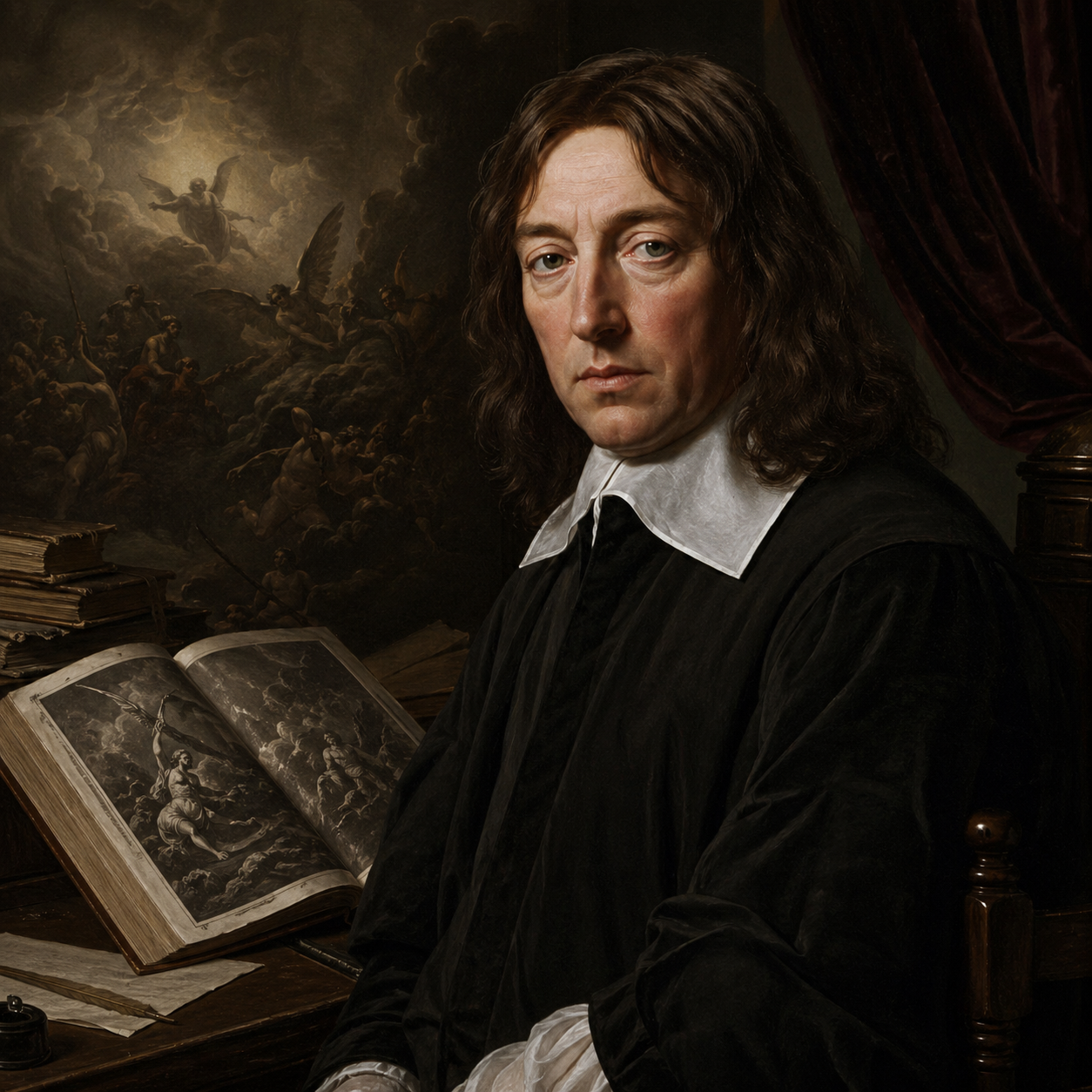
John Milton — "To measure things by things, and not by names."
To measure things by things, and not by names.
To measure things by things, and not by names.
Click any product to generate a realistic preview. Up to 3 at a time.
* Initial load can take up to 90 seconds — revising the preview in another color is nearly instant.
"God made man to rule, and not to be ruled by others."
"To be weak is miserable, Doing or suffering."
"Truth is compared in Scripture to a streaming fountain; if her waters flow not in a perpetual progression, they sicken into a muddy pool of conformity and tradition."
"Darkness visible."
"Hence, loathed Melancholy, Of Cerberus and blackest midnight born, In Stygian cave forlorn 'Mongst horrid shapes, and shrieks, and sights unholy!"
English poet whose Paradise Lost (1667) is the canonical English epic, written while blind during the Restoration after his service to Cromwell's Commonwealth. Closely associated with Andrew Marvell (Commonwealth poet and friend who protected Milton at the Restoration). For an intellectual contrast, see King Charles II's Restoration court, the courtly, sexually-libertine, theater-reopened world of 1660s London — Milton wrote Paradise Lost as a defeated Republican; the Restoration culture around him celebrated everything his Commonwealth had banned. The cleanest 'losing side writes the masterpiece' moment in English literature — Paradise Lost's Satan is freighted with the political defeat of the regicides Milton served.
Your cart is empty