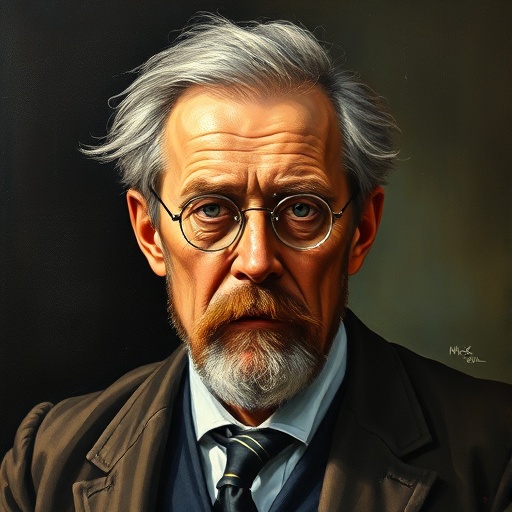
Max Planck — "Truth never triumphs—its opponents just die out."
Truth never triumphs—its opponents just die out.
Truth never triumphs—its opponents just die out.
Click any product to generate a realistic preview. Up to 3 at a time.
* Initial load can take up to 90 seconds — revising the preview in another color is nearly instant.
"The pursuit of knowledge is an endless journey."
"There is no matter as such. All matter originates and exists only by virtue of a force."
"The greatest joy of a scientist is to see a new truth emerge."
"I was never a revolutionary. I just wanted to do something useful."
"The human spirit is capable of reaching for the stars."
Often attributed as a more concise version of his 'new scientific truth' quote.
Date: Attributed
Life & DeathFound in 1 providers: grok
1 source checked
New ideas rarely win arguments by convincing critics. Instead, the old guard holding onto outdated views eventually passes away, and younger people who grew up with the new thinking replace them. Progress happens through generational turnover, not persuasion. People are too invested in their established beliefs to abandon them, so real change waits for a new generation to inherit the field with fresh assumptions already baked in.
Planck lived this firsthand. His 1900 quantum hypothesis shattered classical physics, yet senior physicists resisted it for decades. Even Planck himself, deeply conservative and trained in 19th-century thermodynamics, struggled to accept the radical implications his own equations demanded. He watched Einstein, Bohr, and Heisenberg build quantum mechanics while older colleagues dismissed it. The insight came from a man who reluctantly started a revolution and saw acceptance arrive only as his generation retired.
Planck wrote this reflecting on early 20th-century physics, when quantum theory and relativity overturned Newtonian certainties that had reigned for 200 years. German academia was rigidly hierarchical, and established professors controlled journals, appointments, and prestige. Two world wars, the rise of Nazism, and the exodus of Jewish physicists reshaped science. Planck witnessed institutional inertia firsthand—watching brilliant ideas stall against entrenched authority until the authorities themselves aged out of relevance.
AI-generated insights based on extensive research and information for context. Factual errors? Email [email protected].
Your cart is empty