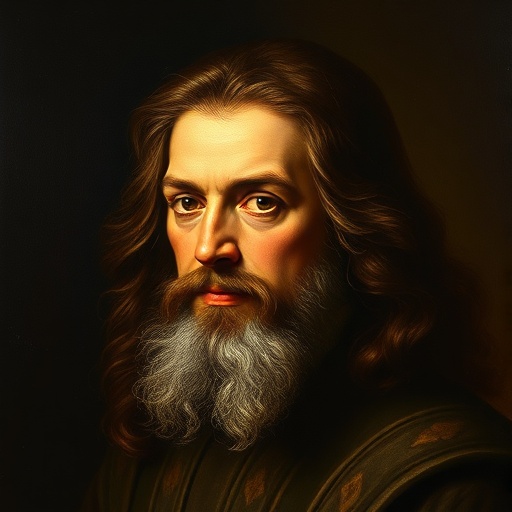
Leonardo da Vinci — "Truth was the only daughter of time."
Truth was the only daughter of time.
Truth was the only daughter of time.
Click any product to generate a realistic preview. Up to 3 at a time.
* Initial load can take up to 90 seconds — revising the preview in another color is nearly instant.
"The memory of all that is past is as nothing in comparison with the knowledge of what is to come."
"The more subtle we are, the more we are deceived."
"The eye is the first organ that comes into contact with the light."
"An average human looks without seeing, listens without hearing, touches without feeling, eats without tasting, moves without physical awareness, inhales without awareness of odour or fragrance, and ta…"
"The painter who draws merely by practice and by eye, without any reason, is like a mirror which copies everything placed in front of it without understanding."
Found in 1 providers: grok
1 source checked
Truth doesn't emerge from argument, authority, or tradition — it surfaces gradually through patient observation over time. What seems true initially often proves incomplete or wrong; only sustained inquiry and accumulated evidence reveal what is actually real. This is a call for intellectual patience: resist premature conclusions, stay open to revision, and trust that ideas tested across years carry more weight than those merely asserted.
Leonardo spent decades on single problems — dissecting over 30 corpses to map human anatomy, filling thousands of notebook pages while publishing almost nothing. He routinely abandoned works when new questions emerged, believing understanding required more time. Self-educated and skeptical of received wisdom, he trusted direct observation over textual authority. His entire career embodied this belief: genuine knowledge accumulates slowly, tested against nature, never rushed to conclusion.
Leonardo lived during the Renaissance, when classical authority — Aristotle, Galen, Ptolemy — was beginning to crack under empirical scrutiny. Church doctrine defined truth institutionally, while humanists recovered ancient texts and scholars began demanding evidence over scripture. Gutenberg's press spread ideas faster than ever, yet most knowledge still rested on inherited texts, not observation. Asserting that time, not authority, births truth was a quietly radical empirical claim.
AI-generated insights based on extensive research and information for context. Factual errors? Email [email protected].
Your cart is empty