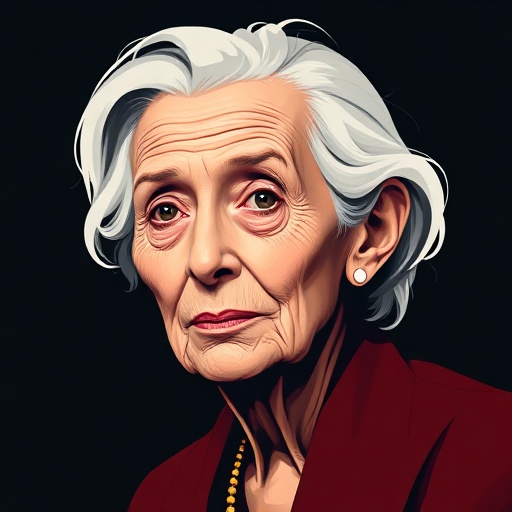
Jane Goodall — "We are all interconnected. What we do to the Earth, we do to ourselves."
We are all interconnected. What we do to the Earth, we do to ourselves.
We are all interconnected. What we do to the Earth, we do to ourselves.
Click any product to generate a realistic preview. Up to 3 at a time.
* Initial load can take up to 90 seconds — revising the preview in another color is nearly instant.
"We need to teach our children to be compassionate, and to care about all living things."
"I've been fortunate to spend my life among animals, and they've taught me so much about what it means to be human."
"My early mentors were animals. They taught me patience, observation, and how to listen."
"My mission is to create a world where people live in harmony with nature."
"We must never give up hope. We must continue to fight for what is right."
British primatologist who in 1960 began the longest-running wild primate study at Gombe Stream, transforming our understanding of chimpanzees. Closely associated with Dian Fossey (mountain-gorilla researcher) and Birutė Galdikas (orangutan researcher; together with Goodall and Fossey one of Louis Leakey's 'Trimates'). For an intellectual contrast, see Walter Palmer, American dentist who killed Cecil the Lion in Zimbabwe in 2015 — Palmer represents the trophy-hunting tradition Goodall's life's work has been organized against — the colonial-era hunter-naturalist worldview that treated primates and big game as specimens or trophies, which Goodall's Roots & Shoots and Jane Goodall Institute exist specifically to displace.
Found in 1 providers: grok
1 source checked
Humans are not separate from nature — we depend on the same ecosystems, water, soil, and air as every other species. Damaging the environment through pollution, deforestation, or climate change ultimately harms human health, food security, and survival. The logic is circular: nature sustains us, so destroying it means destroying the foundation of our own existence. Responsibility for the planet is inseparable from responsibility for ourselves.
Goodall spent over 60 years studying chimpanzees at Gombe Stream, Tanzania, where she witnessed firsthand how deforestation shattered primate communities and human livelihoods alike. Her research showed chimps share roughly 98.7% of human DNA, dissolving the barrier between us and them. She founded the Jane Goodall Institute and Roots & Shoots to translate that scientific understanding into conservation action, embodying the belief that protecting wildlife means protecting humanity.
Goodall rose to prominence during a transformative environmental era: Rachel Carson's Silent Spring sparked ecological awareness in 1962, the first Earth Day launched in 1970, and climate science gained urgency through the Rio Summit and Kyoto Protocol. By the 2000s–2020s, accelerating deforestation, biodiversity collapse, and COVID-19's links to habitat destruction made her message urgent. Her interconnection thesis moved from fringe environmentalism to mainstream scientific consensus during her lifetime.
AI-generated insights based on extensive research and information for context. Factual errors? Email [email protected].
Your cart is empty