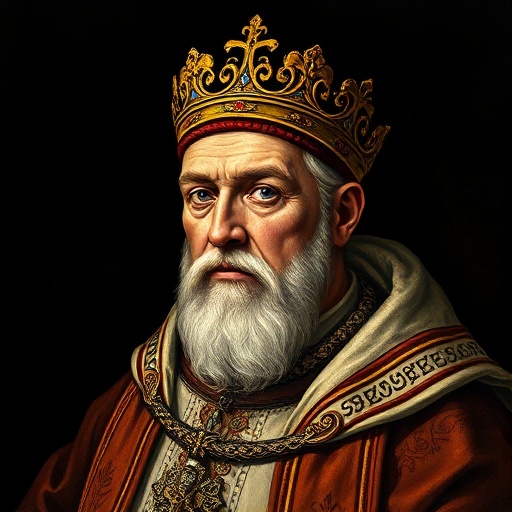
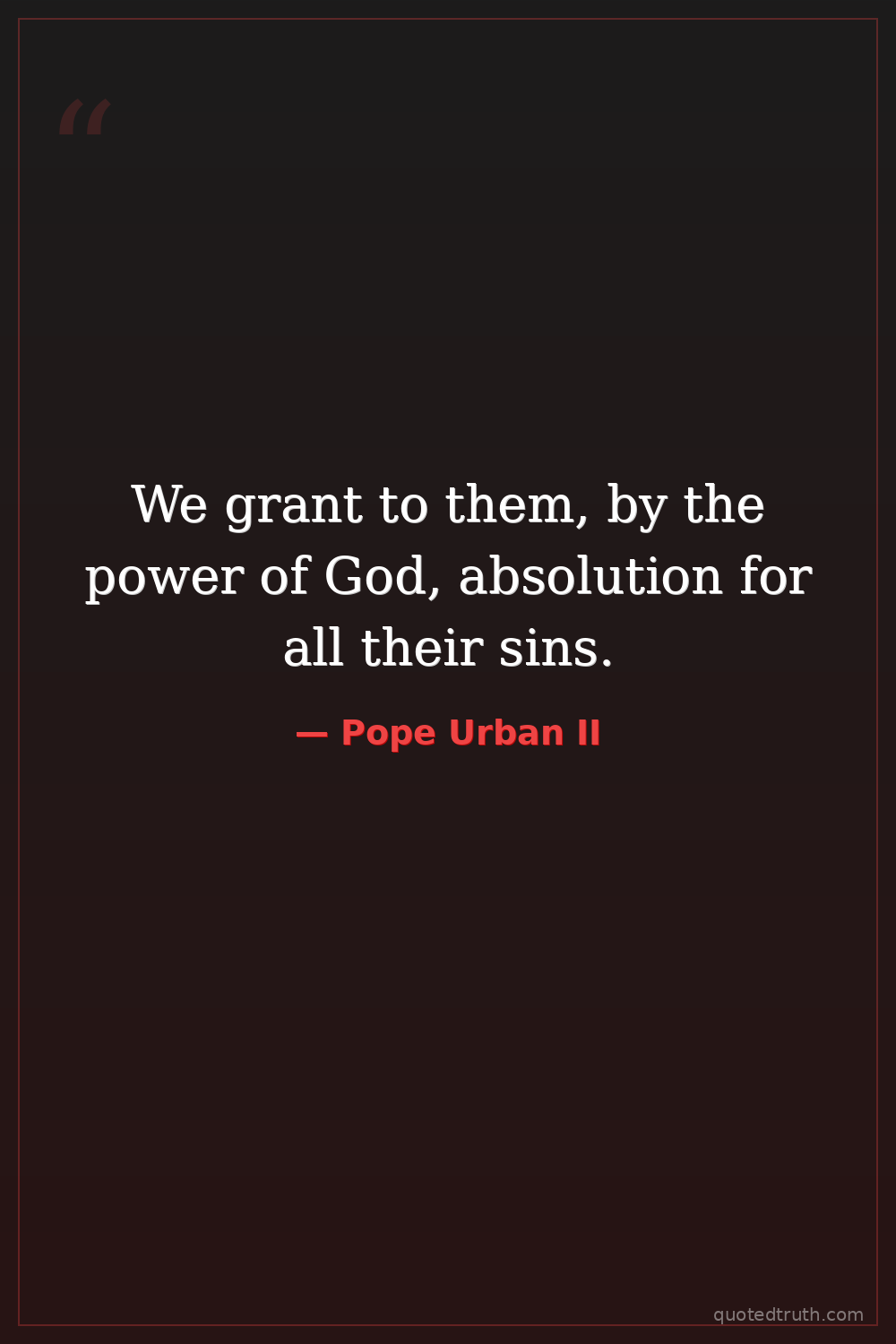
Pope Urban II — "We grant to them, by the power of God, absolution for all their sins."
We grant to them, by the power of God, absolution for all their sins.
We grant to them, by the power of God, absolution for all their sins.
Click any product to generate a realistic preview. Up to 3 at a time.
* Initial load can take up to 90 seconds — revising the preview in another color is nearly instant.
"Let those who have been accustomed to make private war against the faithful carry on an approved war against the infidels."
"Let no one, on account of his love for his wife or children, hesitate to set out."
"All who are going to go into battle should wear the sign of the cross on their garments."
"This royal city, therefore, situated at the center of the world, is now held captive by His enemies… From you especially she asks succor, because, as we have already said, God has conferred upon you a…"
"For the land which you inhabit, shut in on all sides by the seas and surrounded by the mountain peaks, is too narrow for your large population."
Pope (1088-1099) whose Council of Clermont speech (November 1095) launched the First Crusade — the founding event of nine centuries of Christian-Muslim military conflict. Closely associated with Pope Gregory VII (his predecessor on papal-imperial reform). For an intellectual contrast, see Saladin, Kurdish-Muslim Sultan of Egypt and Syria (1138-1193) — Saladin recaptured Jerusalem in 1187, undoing the First Crusade Urban II launched 92 years earlier. Saladin's chivalrous treatment of Christian prisoners became the canonical Muslim counter-image to Crusader brutality. The cleanest before/after pairing of the Crusades' moral arc.
Found in 1 providers: grok
1 source checked
A declaration that participants in the Crusade receive complete forgiveness for all past sins — a spiritual clean slate. In modern terms, it's a promise that joining the holy war erases your entire moral debt to God. The claim is radical: that earthly violence, when sanctioned by the Church, earns divine pardon. It converts military service into a path to salvation, making death in battle spiritually equivalent to martyrdom.
Urban II, a Cluniac monk turned reformist pope, was deeply versed in penance theology and papal authority. At Clermont in 1095, he deployed this plenary indulgence as the theological engine of the First Crusade. His monastic roots gave him precise command of Church doctrine on sin and absolution; he strategically weaponized that doctrine as military recruitment, promising Crusaders martyrdom rather than judgment — a pitch only a pope with his doctrinal background could credibly make.
Medieval Christianity treated sin as a crushing burden requiring formal penance — pilgrimages, fasting, corporal suffering. Knights were trapped in a contradiction: their profession required violence, yet violence was sinful. By 1095, Seljuk Turks had seized Byzantine territories and threatened Christian pilgrimage routes to Jerusalem. Urban's absolution dissolved that contradiction entirely, reframing Christian warfare as sacred service. It transformed a class of violent men into eager holy warriors, making the Crusade both theologically coherent and socially explosive.
AI-generated insights based on extensive research and information for context. Factual errors? Email [email protected].
Your cart is empty