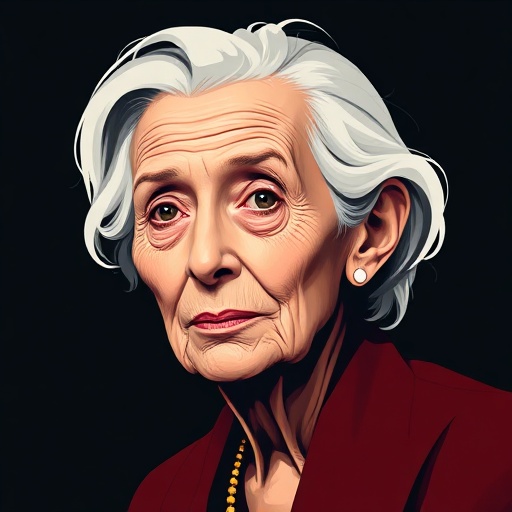
Jane Goodall — "We need to teach our children to respect nature."
We need to teach our children to respect nature.
We need to teach our children to respect nature.
Click any product to generate a realistic preview. Up to 3 at a time.
* Initial load can take up to 90 seconds — revising the preview in another color is nearly instant.
"We have so much to learn from the animals, if we would only listen."
"The greatest danger to our future is apathy."
"We have so much to learn from the natural world. If we just open our eyes and listen."
"The chimpanzees taught me that it's important to be patient, to observe, and to listen."
"We need to reconnect with nature. We need to remember that we are part of it, not separate from it."
British primatologist who in 1960 began the longest-running wild primate study at Gombe Stream, transforming our understanding of chimpanzees. Closely associated with Dian Fossey (mountain-gorilla researcher) and Birutė Galdikas (orangutan researcher; together with Goodall and Fossey one of Louis Leakey's 'Trimates'). For an intellectual contrast, see Walter Palmer, American dentist who killed Cecil the Lion in Zimbabwe in 2015 — Palmer represents the trophy-hunting tradition Goodall's life's work has been organized against — the colonial-era hunter-naturalist worldview that treated primates and big game as specimens or trophies, which Goodall's Roots & Shoots and Jane Goodall Institute exist specifically to displace.
Found in 1 providers: grok
1 source checked
Environmental stewardship must be deliberately taught—it isn't instinctive. If children grow up without a genuine connection to the natural world, they become adults who treat ecosystems as expendable. Teaching respect for nature means cultivating empathy toward living things, understanding ecological interdependence, and forming habits that prioritize conservation over convenience. The next generation's choices will determine whether biodiversity survives, making childhood education the most strategic lever for long-term environmental health.
Goodall spent decades at Gombe Stream watching chimpanzee families she knew individually, then witnessed their habitat systematically destroyed. That loss drove her to found Roots & Shoots in 1991, a global youth program now active in 60+ countries, channeling her conviction that young people are the most powerful agents of conservation change. Her entire post-Gombe career has been built on the premise that inspiring children creates the environmental advocates adulthood demands.
Goodall's conservation advocacy intensified as the late 20th century brought accelerating rainforest loss, the 1992 Rio Earth Summit, and growing awareness of species extinction rates. Simultaneously, rapid urbanization and rising screen time were severing children's everyday contact with nature—a trend researchers began calling 'nature-deficit disorder.' UN biodiversity conventions and climate frameworks highlighted that environmental outcomes depended entirely on whether younger generations would inherit values their predecessors had failed to act on.
AI-generated insights based on extensive research and information for context. Factual errors? Email [email protected].
Your cart is empty