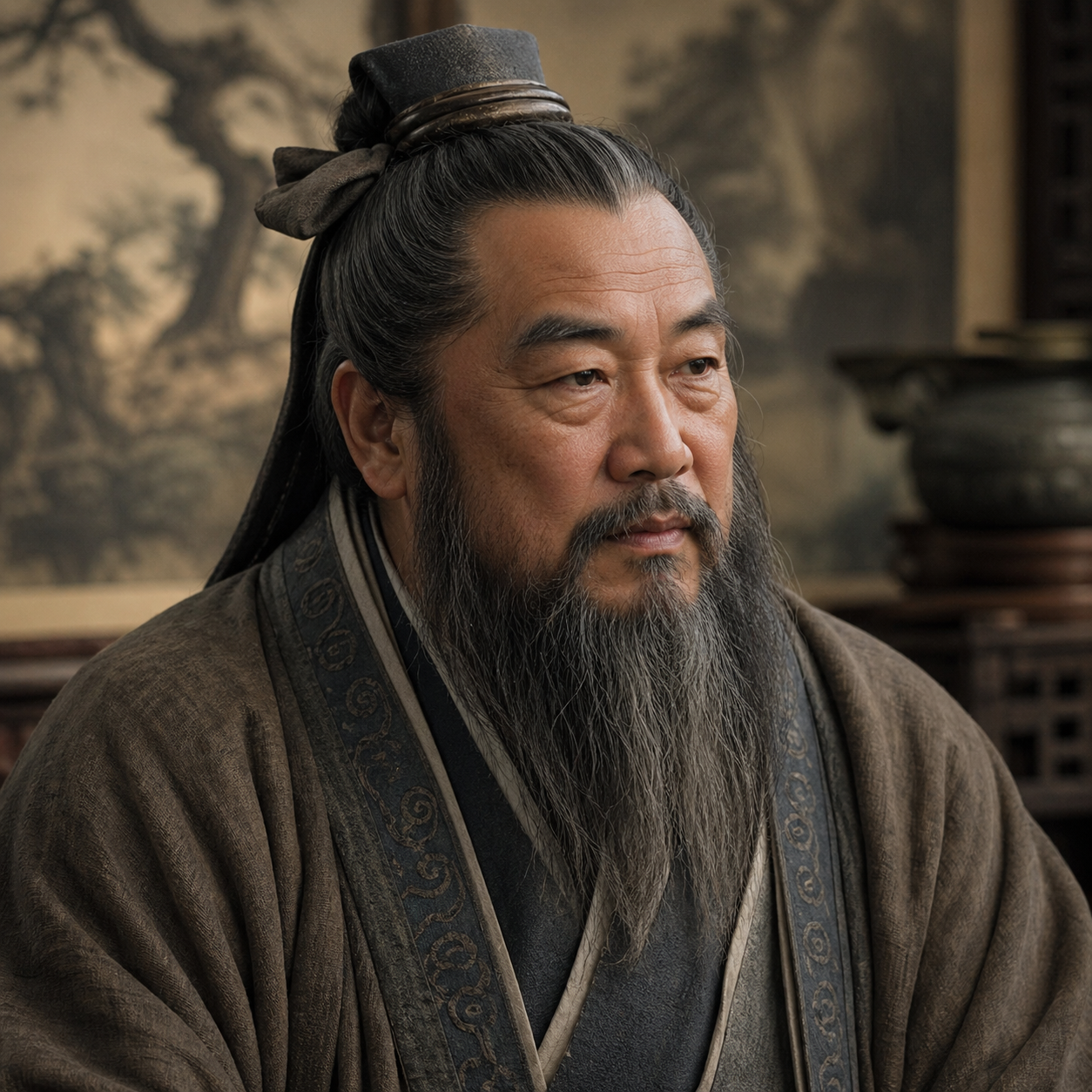
Confucius — "What the superior man seeks is in himself; what the small man seeks is in others…"
What the superior man seeks is in himself; what the small man seeks is in others.
What the superior man seeks is in himself; what the small man seeks is in others.
Click any product to generate a realistic preview. Up to 3 at a time.
* Initial load can take up to 90 seconds — revising the preview in another color is nearly instant.
"The gentleman is not concerned that he is not acknowledged, but rather that he should do something worthy of being acknowledged."
"He who speaks without modesty will find it difficult to make his words good."
"Women and people of low birth are very hard to deal with. If you are friendly with them, they get out of hand, and if you keep your distance, they resent it."
"It is man that can make the Way great, and not the Way that can make man great."
"The superior man, in the world, does not set his mind either for anything, or against anything; what is right he will follow."
Chinese philosopher and teacher whose teachings (compiled by his students in the Analects) became the foundational ethical framework of East Asian civilization for 2,500 years. Closely associated with Mencius (his most-influential follower a century later). For an intellectual contrast, see Laozi, near-contemporary Chinese sage and Tao Te Ching author — Confucius systematized social order through ritual and family hierarchy; Laozi's Taoist effortless-action philosophy argued such systems were the disease, not the cure. The two founding poles of Chinese moral philosophy — every East Asian moral tradition since has positioned itself between them.
The standard scholarly entry points to Confucius's work: Philip J. Ivanhoe (Georgetown, Chinese philosophy) — Confucian Moral Self Cultivation (2000); Edward Slingerland (UBC, Asian Studies) — Effortless Action: Wu-wei as Conceptual Metaphor (2003); Tu Weiming (Harvard, Confucian scholar) — Confucian Thought: Selfhood as Creative Transformation (1985). These are the works graduate seminars cite when teaching Confucius.
Found in 2 providers: grok,gemini
2 sources checked
A person of strong character looks inward for growth, responsibility, and fulfillment, examining their own conduct and working on self-improvement. A lesser person constantly looks outward—blaming others, seeking validation, chasing approval, or expecting circumstances to hand them what they want. The difference between maturity and immaturity is where you place the locus of control: on yourself, or on everyone else around you.
Confucius built his entire ethical system around self-cultivation, arguing that the junzi, or superior person, becomes virtuous through relentless inward work rather than external status. Born into modest circumstances around 551 BCE, he rose through discipline and learning, not lineage. He taught students to examine themselves daily, insisting that moral authority comes from personal integrity, not blaming rulers, fate, or fortune for one's shortcomings.
During the late Spring and Autumn period, the Zhou dynasty was fracturing, rival states warred constantly, and old aristocratic codes were collapsing. Many blamed chaos on corrupt rulers or cosmic misfortune. Confucius responded by shifting focus: if society was broken, individuals must rebuild themselves first. His emphasis on personal responsibility cut against an era obsessed with bloodlines, court intrigue, and shifting political blame outward rather than cultivating inner virtue.
AI-generated insights based on extensive research and information for context. Factual errors? Email [email protected].
Your cart is empty