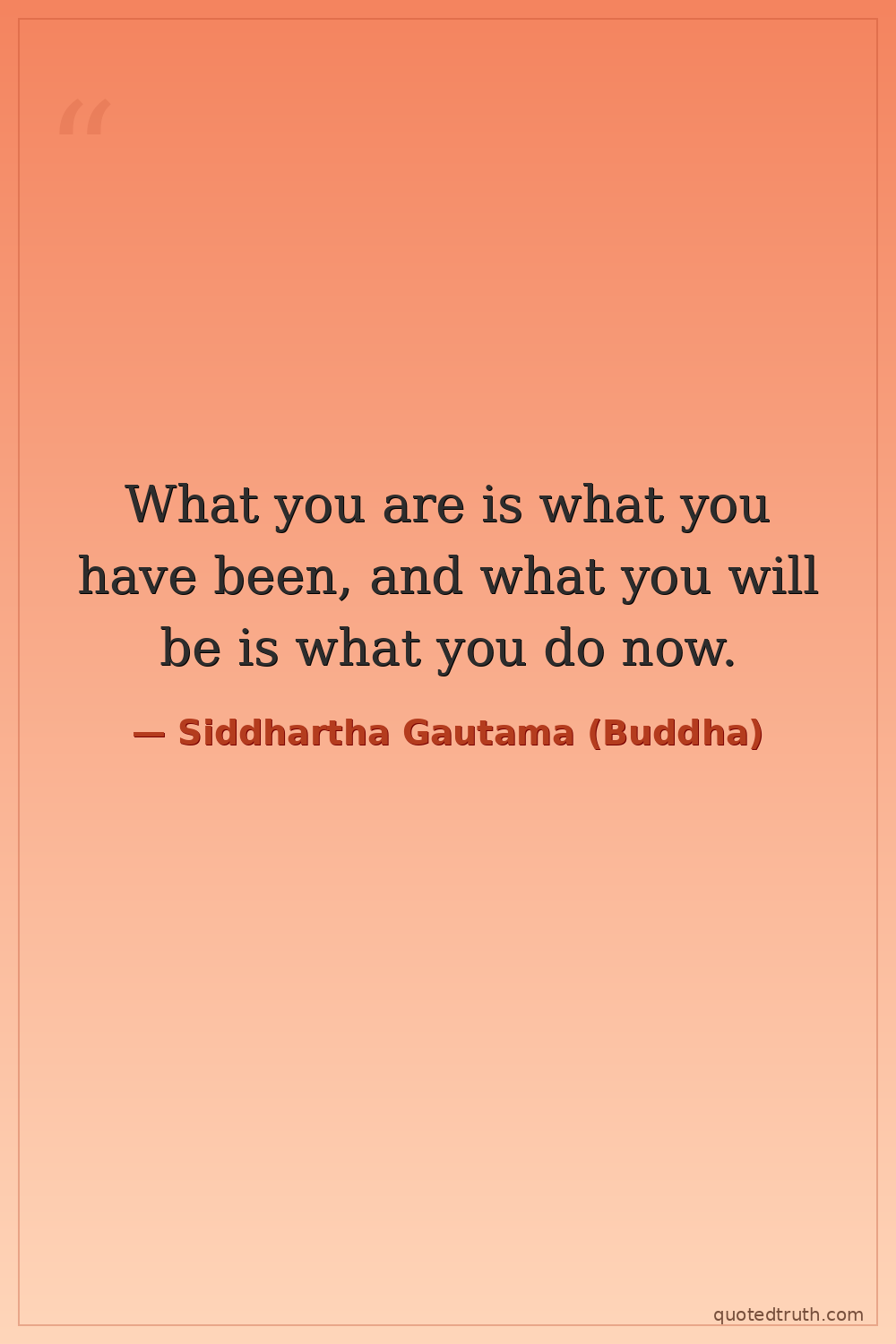
Siddhartha Gautama (Buddha) — "What you are is what you have been, and what you will be is what you do now."
What you are is what you have been, and what you will be is what you do now.
What you are is what you have been, and what you will be is what you do now.
Click any product to generate a realistic preview. Up to 3 at a time.
* Initial load can take up to 90 seconds — revising the preview in another color is nearly instant.
"If you light a lamp for someone else, it will also brighten your own path."
"Nothing can harm you as much as your own thoughts unguarded."
"It is better to travel well than to arrive."
"One who acts on truth is happy in this world and beyond."
"The wise man knows that he is a fool."
A popular distillation of the concept of karma, not a direct quote.
Date: c. 5th century BCE
GeneralFound in 1 providers: grok
1 source checked
Your current identity is the sum of past choices, and your future self is being built by the actions you take right now. Every decision, habit, and thought is shaping who you become. You cannot change what is already done, but this present moment is entirely yours to direct. The power to transform lies not in regret or anticipation, but in conscious action happening immediately.
This reflects the Buddha's core teaching on karma, the law of cause and effect he taught after his enlightenment under the Bodhi tree. Born a prince in the Shakya clan around 563 BCE, Siddhartha abandoned royal comfort to seek liberation from suffering. His Noble Eightfold Path emphasizes Right Action and Right Effort, showing that conscious present-moment choices determine rebirth, character, and liberation from samsara.
During the 6th century BCE in northern India, the Vedic religious order dominated through rigid caste hierarchy and ritual sacrifice, where birth dictated destiny. The Shramana movement challenged this, producing wandering ascetics like Buddha and Mahavira. Teaching that actions, not lineage or priestly rites, determined one's path was revolutionary. This era of the Ganges plain urbanization also birthed Jainism and Upanishadic thought, all reframing human agency against Brahminical predetermination.
AI-generated insights based on extensive research and information for context. Factual errors? Email [email protected].
Your cart is empty