Hippocrates — "When a man has a pain in his head, and it is in the back of his head, it is a si…"
When a man has a pain in his head, and it is in the back of his head, it is a sign that he will have a fever.
When a man has a pain in his head, and it is in the back of his head, it is a sign that he will have a fever.
Click any product to generate a realistic preview. Up to 3 at a time.
* Initial load can take up to 90 seconds — revising the preview in another color is nearly instant.
"Illnesses do not come upon us out of the blue. They are developed from small daily sins against Nature. When enough sins have accumulated, illnesses will suddenly appear."
"The powers of the physician are not in his drugs, but in his wisdom."
"Those diseases which medicines do not cure, iron cures; those which iron does not cure, fire cures; and those which fire does not cure, are to be reckoned wholly incurable."
"The love of humanity is the basis of medicine."
"Healing is a matter of time, but it is sometimes also a matter of opportunity."
Found in 1 providers: grok
1 source checked
A headache localized at the back of the skull can serve as an early warning sign that fever is coming. The observation links a specific symptom's location to an impending systemic illness, urging attention to bodily signals before more serious symptoms fully develop — an early form of clinical prediction based on careful symptom observation.
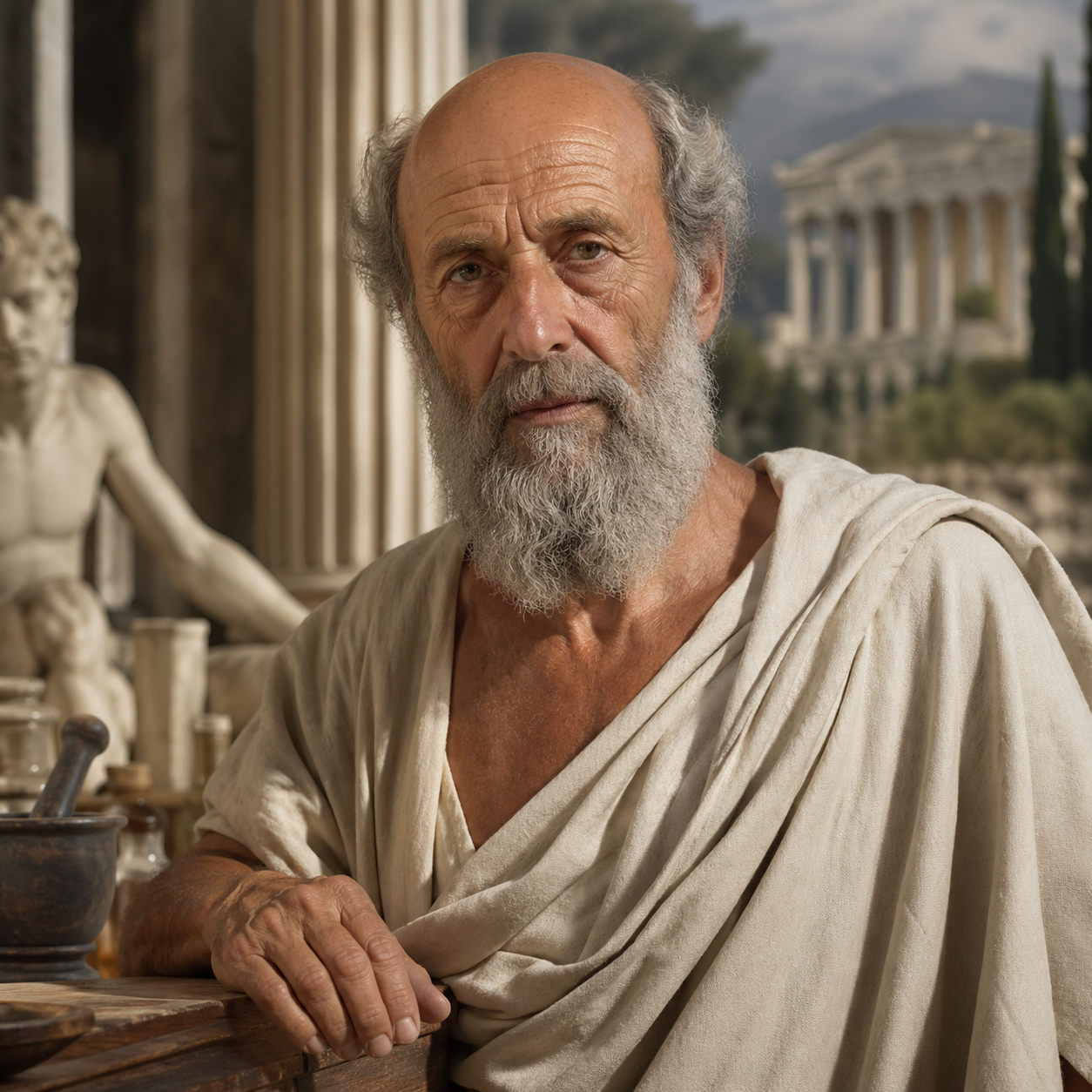
Hippocrates built medicine on systematic patient observation rather than supernatural explanation. As a physician treating patients in ancient Greece, he catalogued symptoms and their progressions, pioneering prognosis — predicting disease course. This quote reflects his hallmark practice of reading physical signs to anticipate illness, foundational to the Hippocratic corpus of clinical observation.
In ancient Greece around 400 BCE, disease was widely attributed to gods or spirits. Hippocrates and his school on Cos radically shifted medicine toward natural causes and empirical observation. Identifying physical symptom patterns as predictive tools was revolutionary — replacing temple healing and divine intervention with bedside observation, laying groundwork for rational Western medicine.
AI-generated insights based on extensive research and information for context. Factual errors? Email [email protected].
Your cart is empty