Laozi — "When the government is lazy and careless, the people are unspoiled; when the gov…"
When the government is lazy and careless, the people are unspoiled; when the government is efficient and smart, the people are discontented.
When the government is lazy and careless, the people are unspoiled; when the government is efficient and smart, the people are discontented.
Click any product to generate a realistic preview. Up to 3 at a time.
* Initial load can take up to 90 seconds — revising the preview in another color is nearly instant.
"To know that you do not know is the best. To think you know when you do not is a disease."
"He who controls others may be powerful, but he who has mastered himself is mightier still."
"Nature does not hurry, yet everything is accomplished."
"Act without action. Those who act will fail. Those who seize will lose."
"All things in the world come from being. And being comes from non-being."
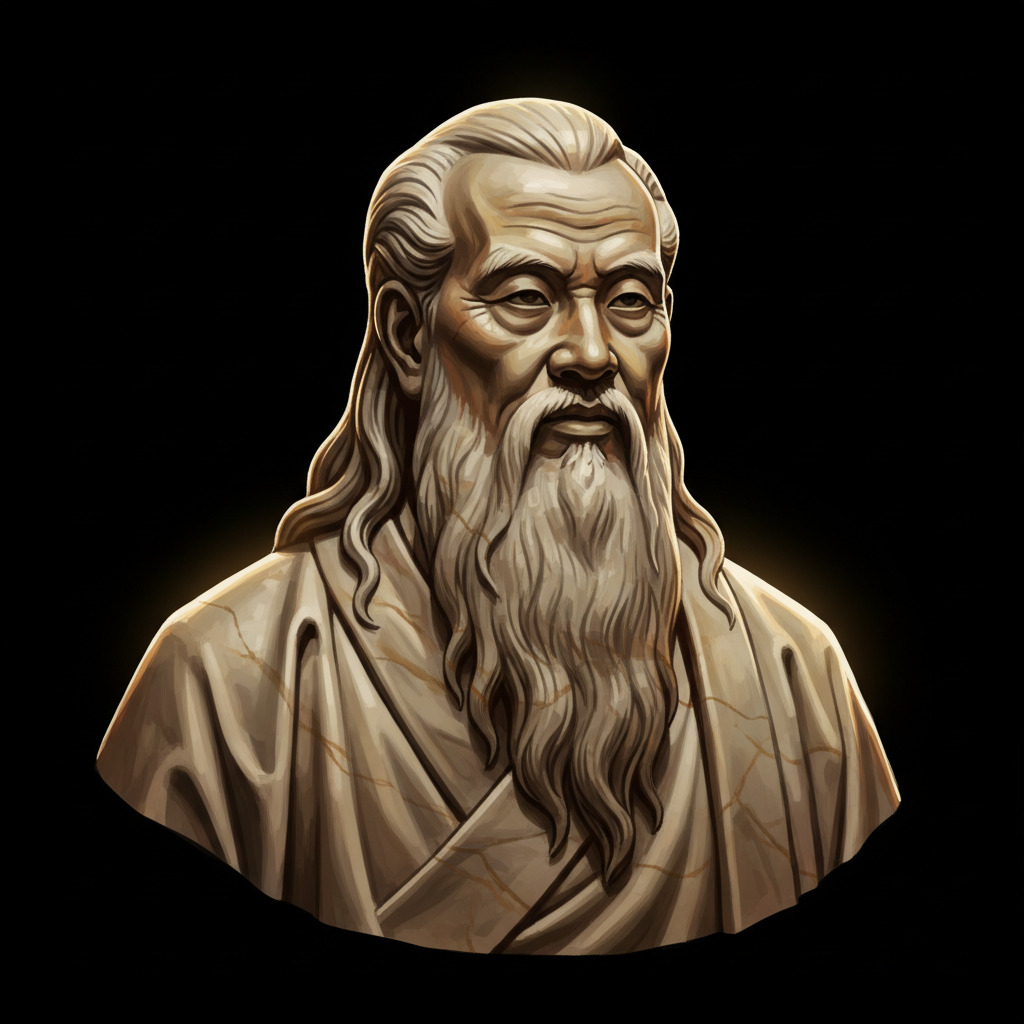
Reputed founder of Taoism and author of the Tao Te Ching, whose wu wei (effortless action) shaped East Asian philosophy. Closely associated with Zhuangzi (later Taoist who extended Laozi's framework). For an intellectual contrast, see Confucius, near-contemporary Chinese sage of social ritual and duty — Confucius systematized social order through ritual and hierarchy; Laozi argued that all such systems were the disease, not the cure — the two founding poles of Chinese moral philosophy.
Found in 1 providers: deepseek
1 source checked
Heavy-handed government creates the very problems it tries to solve. When officials constantly intervene, regulate, and optimize, people become anxious, resentful, and restless. But when rulers step back and let life unfold naturally, people remain content and genuine. Over-management breeds complaints because it treats citizens as problems to fix rather than humans to trust. The sharper the state's tools, the more friction they generate against ordinary life.
Laozi served as a keeper of royal archives in the Zhou court, observing firsthand how bureaucratic machinery wore down both rulers and ruled. Disillusioned, he reportedly left civilization on a water buffalo. His core teaching of wu wei, effortless action, rejects forced control in favor of yielding to natural rhythms. This saying distills his lifelong skepticism of ambitious governance and his belief that the wisest ruler is barely noticed.
Laozi lived during the late Zhou dynasty, an era of collapsing feudal order and rising state bureaucracies competing through legalism, taxation, and conscription. Rival kingdoms engineered increasingly intrusive administrations to mobilize peasants for war. Against this backdrop of relentless statecraft, Laozi's quiet defense of minimal government was radical. The Warring States period proved his warning prescient: efficient, ambitious regimes extracted so much from people that rebellion and exhaustion followed.
AI-generated insights based on extensive research and information for context. Factual errors? Email [email protected].
Your cart is empty