Allen Ginsberg — "Why don't you put a stop to it? 'I try, he said—That's all he could do, he looke…"
Why don't you put a stop to it? 'I try, he said—That's all he could do, he looked tired. He's a bachelor so long, and he likes lentil soup.
Why don't you put a stop to it? 'I try, he said—That's all he could do, he looked tired. He's a bachelor so long, and he likes lentil soup.
Click any product to generate a realistic preview. Up to 3 at a time.
* Initial load can take up to 90 seconds — revising the preview in another color is nearly instant.
"The only way to deal with an unfree world is to become so absolutely free that your very existence is an act of rebellion."
"Your machinery is too much for me. You made me want to be a saint."
"I am a dream, and I am a nightmare, and I am a fantasy, and I am a reality, and I am a myth, and I am a legend."
"I do not wish to escape to myself, I wish to escape from myself. I wish to obliterate my consciousness and my knowledge of independent existence, my guilts, my secretiveness."
"I didn't foresee what you felt—what more hideous gape of bad mouth came first—to you—and were you prepared? To go where? In that Dark—that—in that God? a radiance? A Lord in the Void? Like an eye in t…"
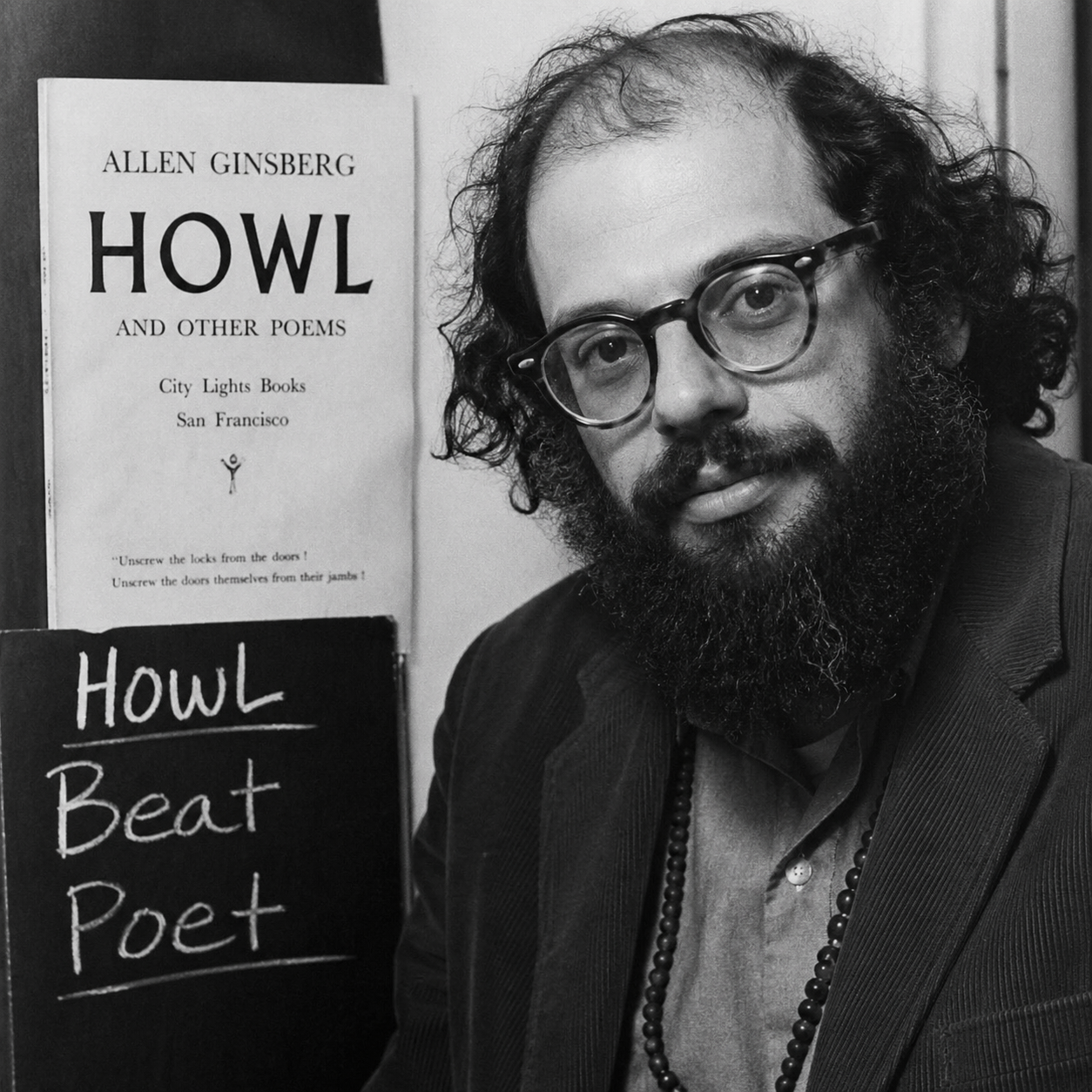
American Beat poet whose Howl (1956) faced an obscenity trial and became a counterculture manifesto. Closely associated with Jack Kerouac (Beat novelist, On the Road) and William S. Burroughs (fellow Beat, Naked Lunch). For an intellectual contrast, see T.S. Eliot, high-modernist poet of The Waste Land — Ginsberg's open-line confessional Beat verse was a deliberate rejection of Eliot's allusive academic formalism — the two halves of mid-century American poetry.
Found in 1 providers: gemini
1 source checked
Your cart is empty