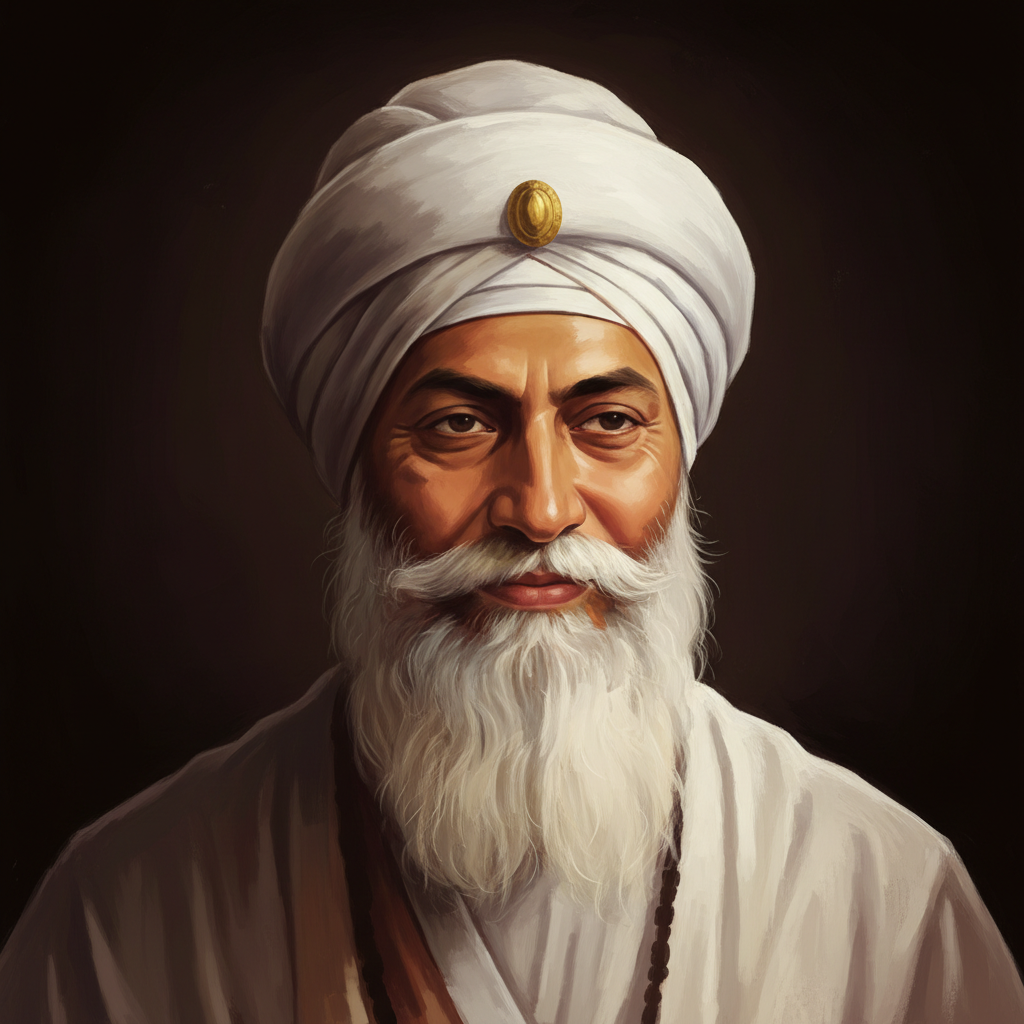
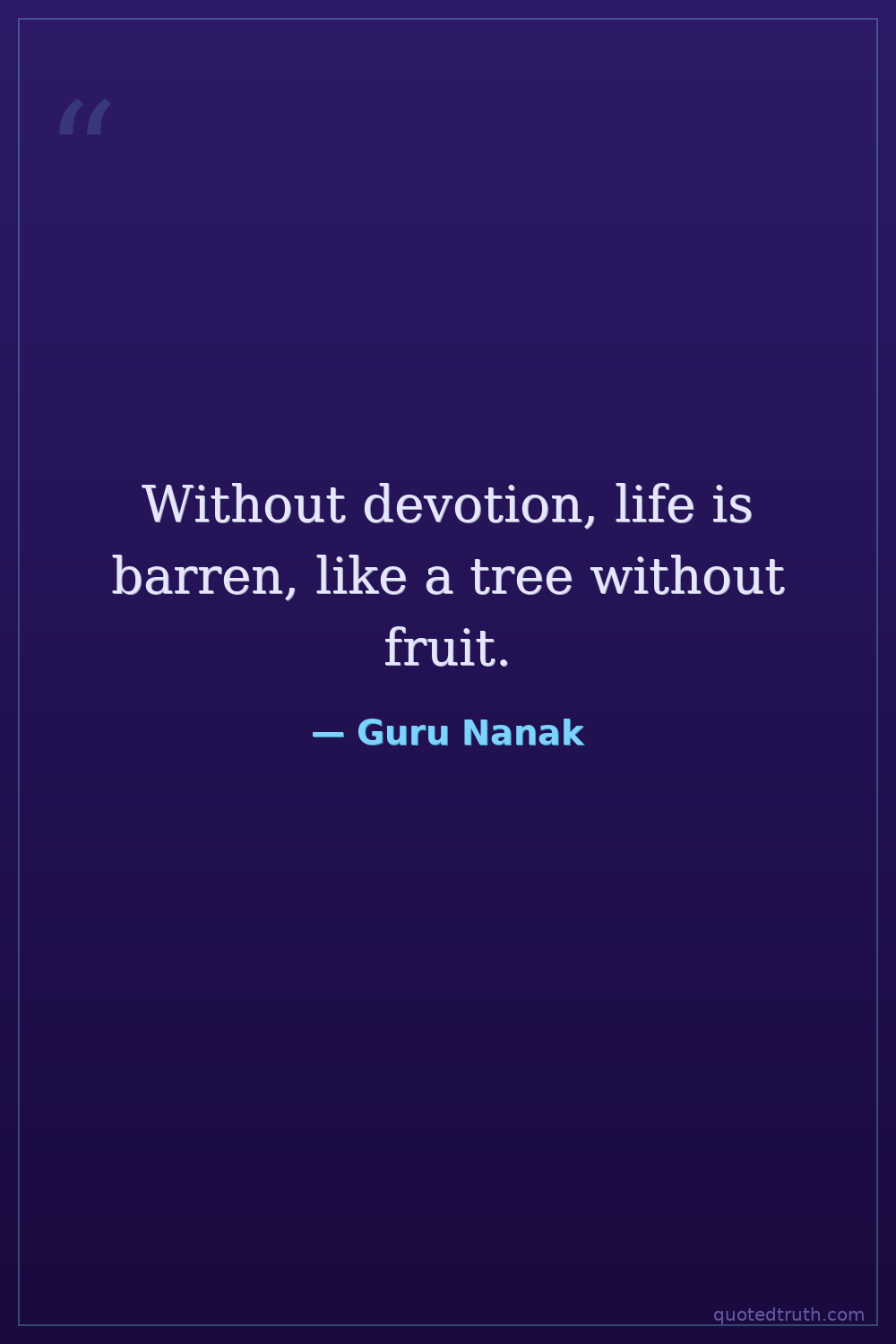
Guru Nanak — "Without devotion, life is barren, like a tree without fruit."
Without devotion, life is barren, like a tree without fruit.
Without devotion, life is barren, like a tree without fruit.
Click any product to generate a realistic preview. Up to 3 at a time.
* Initial load can take up to 90 seconds — revising the preview in another color is nearly instant.
"Through shallow intellect, the mind becomes shallow, and one eats the fly, along with the sweets."
"He who regards all men as equals is religious."
"Death would not be called bad, O people, if one knew how to truly die."
"The world is a garden, love is its flower. And sometimes, you get weeds."
"The Lord is within us, but we search for Him outside."
Founder of Sikhism and the first of the Ten Sikh Gurus, whose teachings of one universal God and rejection of caste shaped Punjab. Closely associated with Kabir (mystical poet whose verses appear in the Sikh Guru Granth Sahib). For an intellectual contrast, see Brahmanical orthodoxy, the Hindu caste-and-ritual establishment of his era — Sikhism was founded as a deliberate alternative to both Hindu ritual hierarchy and Islamic exclusivism — Nanak's universalism was a structural rejection of caste and priestly mediation.
Found in 1 providers: gemini
1 source checked
Life lived without sincere devotion or spiritual practice is empty and unproductive. Just as a fruitless tree gives nothing to those who pass by, a person consumed only by material pursuits, ego, or routine existence produces nothing of lasting worth. Real meaning comes from loving connection to the divine, which makes a life nourishing to oneself and others. Without that inner dedication, outward activity is hollow and ultimately wasted.
Guru Nanak founded Sikhism around 1500 on the principle of Naam Japna, remembering God through constant loving devotion. A former accountant turned wandering teacher, he rejected empty ritualism in both Hinduism and Islam, insisting true religion was internal. His life of four long journeys preaching one formless God, honest labor, and sharing with others embodies this metaphor: spiritual practice is the fruit that justifies human existence.
In early-modern Punjab under the Lodi sultans and early Mughals, religion had calcified into caste hierarchy, Brahminical ritual, and formulaic Islamic observance. Ordinary people paid priests, performed ceremonies, and fought sectarian battles while inner piety withered. Guru Nanak's era saw Bhakti and Sufi reform movements pushing back with devotional poetry in vernacular tongues. This saying captures that climate: outward religion was everywhere, yet lives felt spiritually barren, demanding a return to heartfelt devotion over performance.
AI-generated insights based on extensive research and information for context. Factual errors? Email [email protected].
Your cart is empty