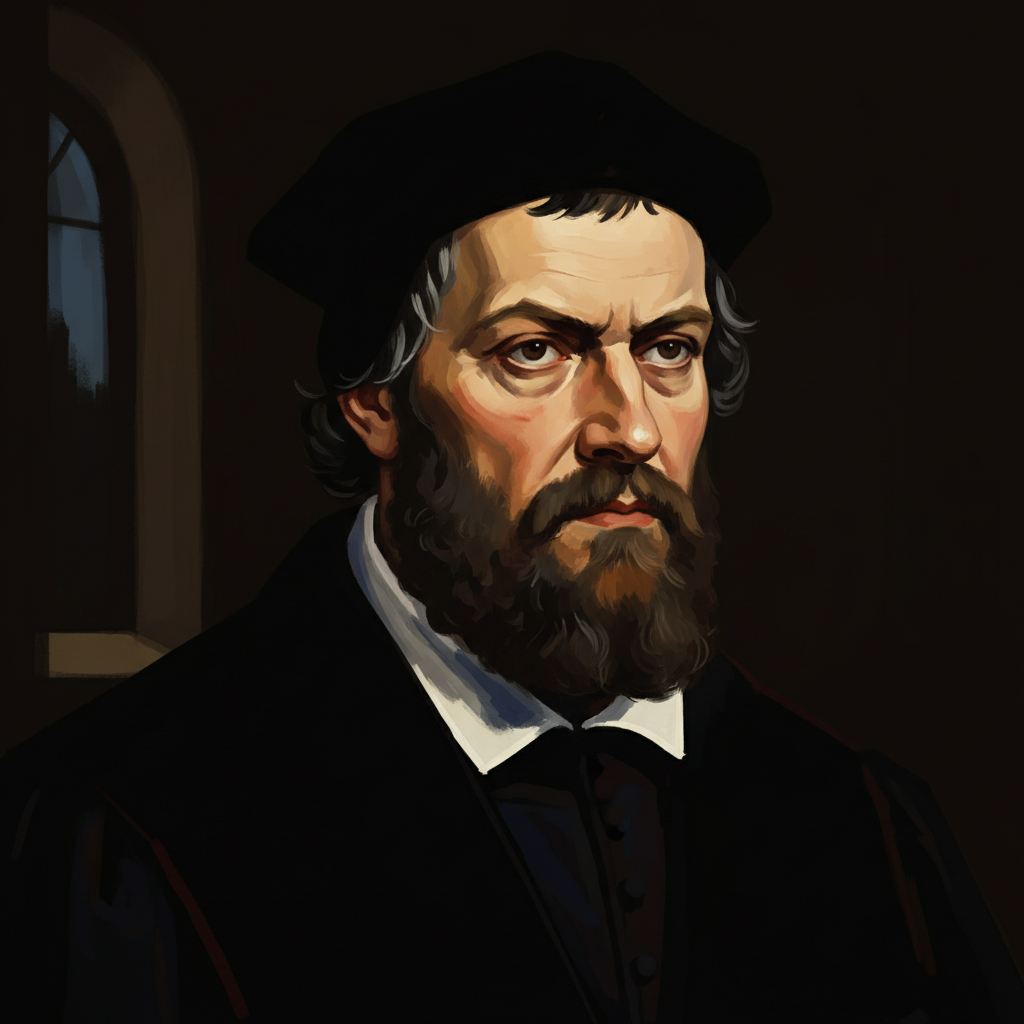
Martin Luther — "I am a peasant, a son of a peasant; my father, grandfather, all my ancestors wer…"
I am a peasant, a son of a peasant; my father, grandfather, all my ancestors were genuine peasants.
I am a peasant, a son of a peasant; my father, grandfather, all my ancestors were genuine peasants.
Click any product to generate a realistic preview. Up to 3 at a time.
* Initial load can take up to 90 seconds — revising the preview in another color is nearly instant.
"I never learned anything by being told, but only by doing."
"First, to set fire to their synagogues or schools and to bury and cover with dirt whatever will not burn, so that no man will ever again see a stone or cinder of them. This is to be done in honor of o…"
"Heretics are not to be disputed with, but to be condemned unheard, and whilst they perish by fire, the faithful ought to pursue the evil to its source, and bathe their heads in the blood of the Cathol…"
"The stomach is the greatest lord on earth."
"Where God builds a church, the Devil builds a chapel."
German theologian whose 95 Theses (1517) launched the Protestant Reformation and broke the Catholic Church's monopoly on Western Christianity. Closely associated with Philipp Melanchthon (Lutheran systematizer) and John Calvin (later Reformer who built on Luther's break). For an intellectual contrast, see Pope Leo X, Renaissance pope (1513-1521) — Leo X's indulgence sales triggered Luther's break and Leo excommunicated him in 1521 — Luther's entire Reformation is structured as a direct answer to the indulgence-funded Vatican Leo represented.
Found in 1 providers: grok
1 source checked
Luther is declaring his humble rural origins with unmistakable pride, stating that he comes from a long line of ordinary farming people who worked the land. Rather than hiding or softening this background, he embraces it as essential to who he is. He refuses any pretense of noble birth or elite pedigree, insisting plainly that common peasant stock runs through every branch of his family tree.
Luther frequently invoked his peasant roots to underscore his identity as a man of the people challenging a Church run by cardinals and aristocrats. Though his father Hans actually worked as a copper miner and smelter who climbed into the middling class, Luther emphasized the deeper farming lineage. This self-description fueled his German Bible translation, earthy sermons, and conviction that salvation belonged to plowmen and princes alike, not a clerical elite.
Early modern Germany in the 1500s was rigidly stratified: nobility, clergy, burghers, and peasants occupied fixed legal stations. The Roman Church was dominated by wealthy, educated elites, and peasants were often exploited by both lords and ecclesiastical taxes. The 1524-1525 Peasants' War erupted partly from Reformation-inspired hopes for dignity. Luther's boast of peasant blood carried enormous symbolic weight, signaling that reform rose from common German soil rather than Italian palaces.
AI-generated insights based on extensive research and information for context. Factual errors? Email [email protected].
Your cart is empty