What it means
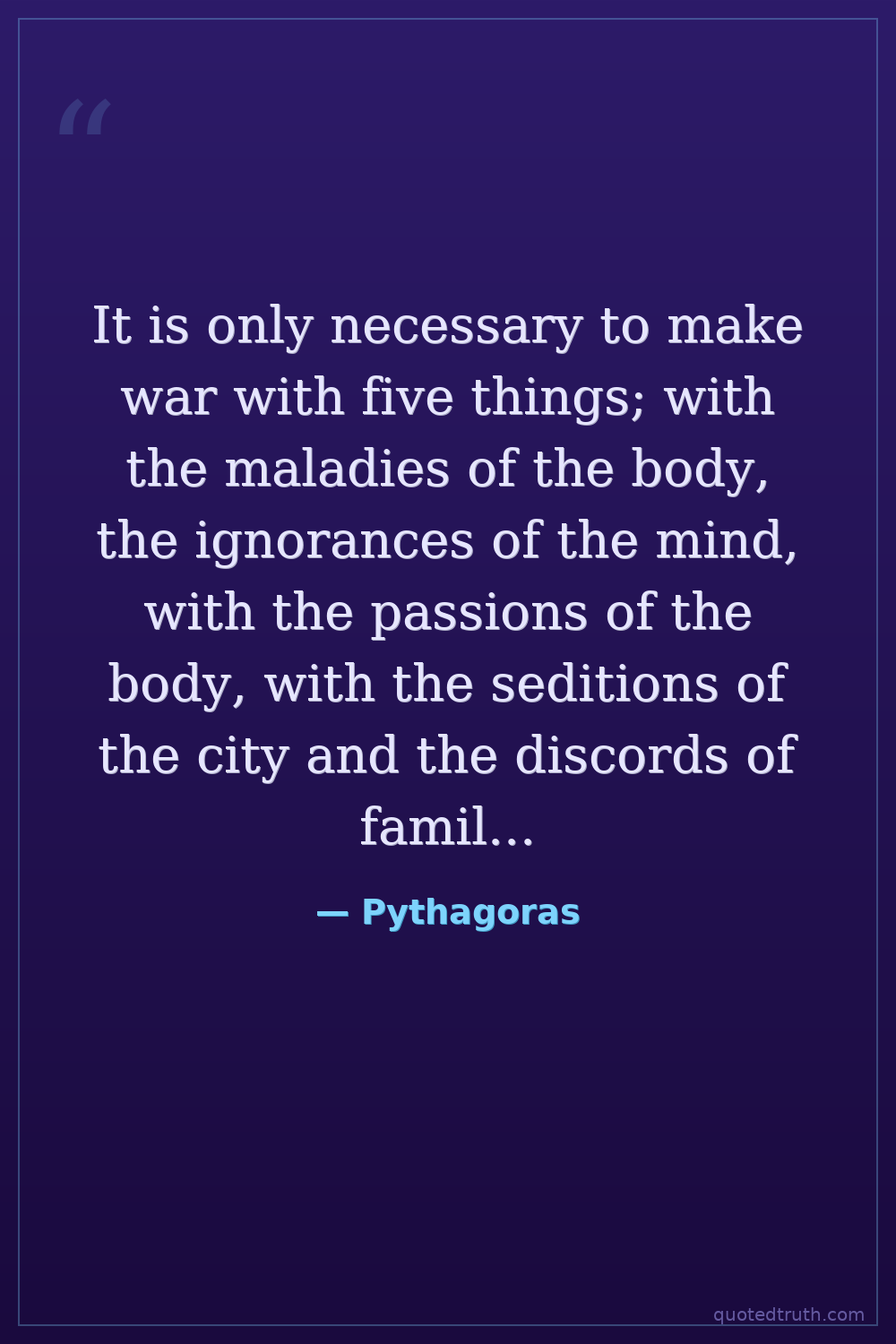
The five genuine battles worth fighting are bodily illness, mental ignorance, uncontrolled passions, civic rebellion, and family conflict. These internal and social struggles — not military conquest — actually determine human wellbeing. Redirecting aggression inward and toward community cohesion, self-mastery and collective harmony are the only wars worth waging: winning them produces flourishing; losing them destroys individuals and societies regardless of any external victories won.
Relevance to Pythagoras
Pythagoras founded a strict brotherhood in Croton with dietary rules, communal living, and rigorous intellectual discipline — this five-front framework lived out in practice. He taught that mathematical harmony governs the cosmos, extending that harmony to body, mind, and society. After political violence expelled his community from Croton, he experienced firsthand how civic sedition and family discord could undo even the most disciplined philosophical school.
The era
Sixth-century BCE Greece was consumed by warfare between city-states, internal stasis (factional civil wars that routinely destroyed communities), and emerging philosophical traditions challenging martial culture. Pythagoras lived under Samian tyranny before settling in Croton. Early Greek medicine was formalizing ideas about bodily health. Reframing war away from literal combat toward inner and civic battles was genuinely radical in a world that glorified military valor above all else.
AI-generated insights based on extensive research and information for context. Factual errors? Email [email protected].