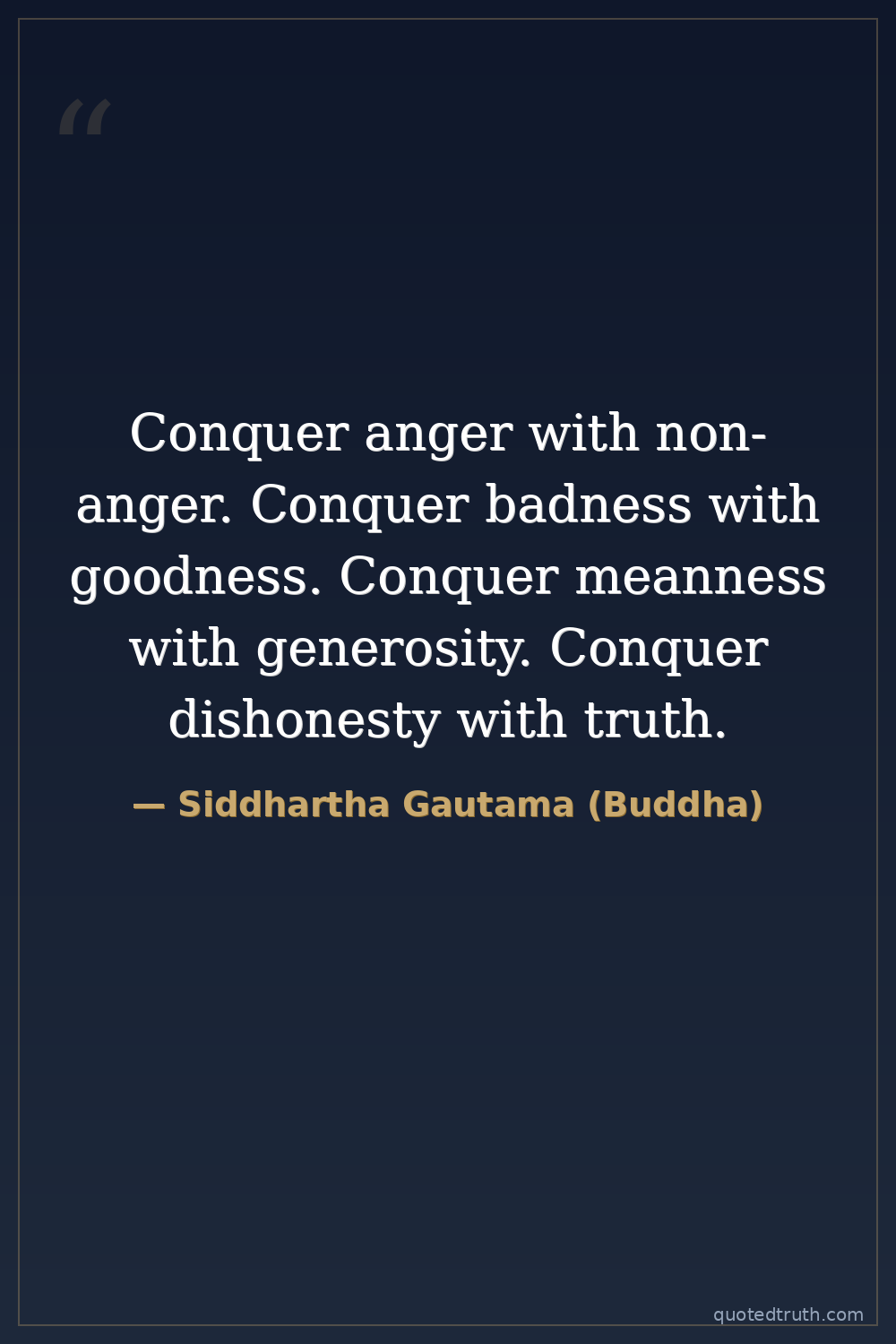
Siddhartha Gautama (Buddha) — "Conquer anger with non-anger. Conquer badness with goodness. Conquer meanness wi…"
Conquer anger with non-anger. Conquer badness with goodness. Conquer meanness with generosity. Conquer dishonesty with truth.
Conquer anger with non-anger. Conquer badness with goodness. Conquer meanness with generosity. Conquer dishonesty with truth.
Click any product to generate a realistic preview. Up to 3 at a time.
* Initial load can take up to 90 seconds — revising the preview in another color is nearly instant.
"Just as a mother would protect her only child with her life, even so let one cultivate a boundless love towards all beings."
"Ardently do today what must be done. Who knows? Tomorrow, death comes."
"The wise ones who are intent on meditation, who delight in the peace of renunciation, such mindful ones, perfect in wisdom, collect like bees the nectar of flowers."
"The wise man knows that he is a fool."
"It is better to conquer yourself than to win a thousand battles."
Found in 1 providers: grok
1 source checked
Respond to negative actions with their positive opposites rather than mirroring them. When someone attacks you with anger, stay calm. When they act cruelly, be kind. When they are stingy, give freely. When they lie, speak truthfully. Fighting fire with fire just creates more fire, but meeting hostility with its opposite breaks the cycle and transforms the situation, leaving you unburdened by the other person's poison.
The Buddha built his entire teaching around breaking cycles of suffering through awareness and ethical action. After leaving his princely life and achieving enlightenment under the Bodhi tree, he taught that craving, hatred, and delusion are the roots of suffering. This saying captures his Middle Way and core precepts on right speech, right action, and loving-kindness (metta), which he considered essential antidotes to the mental poisons that keep beings trapped in samsara.
In 5th-6th century BCE northern India, the Buddha lived during a time of intense social stratification under the Vedic caste system, frequent tribal warfare between small kingdoms, and ritualistic Brahmin religion centered on animal sacrifice. His message of nonviolence, ethical restraint, and compassion toward all beings was radical, rejecting both caste privilege and vengeance-based justice. It aligned with the broader Sramana movement questioning Vedic orthodoxy and offered commoners a path to liberation independent of priests.
AI-generated insights based on extensive research and information for context. Factual errors? Email [email protected].
Your cart is empty