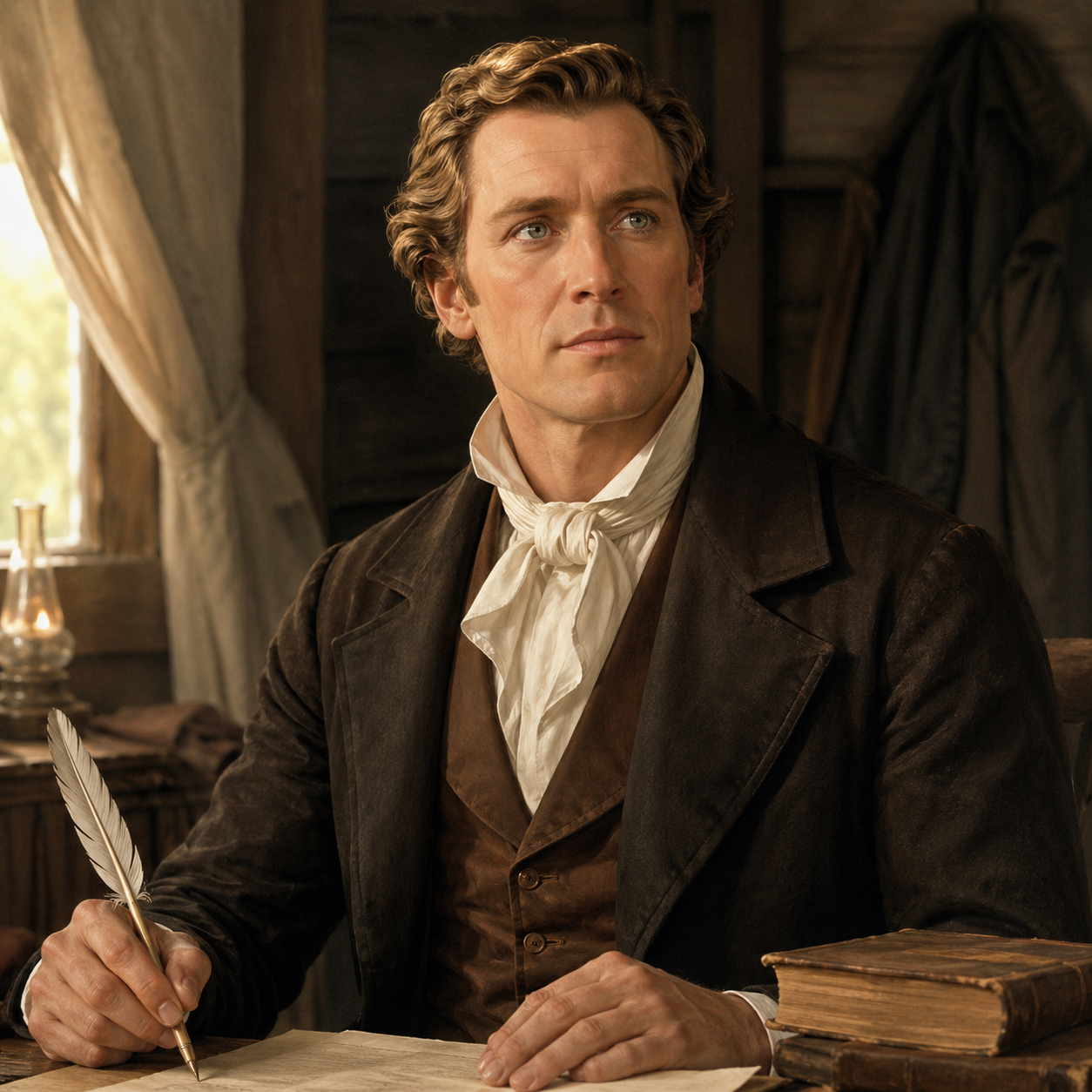
Joseph Smith — "I had a vision of the Father and the Son, and the Father said, 'This is My Belov…"
I had a vision of the Father and the Son, and the Father said, 'This is My Beloved Son. Hear Him!'
I had a vision of the Father and the Son, and the Father said, 'This is My Beloved Son. Hear Him!'
Click any product to generate a realistic preview. Up to 3 at a time.
* Initial load can take up to 90 seconds — revising the preview in another color is nearly instant.
"I combat the errors of ages; I meet the violence of mobs; I cope with the cunning of devils and all hell is enraged against me."
"It is our divine destiny to be heirs of eternal life, to become 'priests and kings . . . [and] gods, even the sons of God . . . [and to] dwell in the presence of God . . . forever and ever.'"
"I am willing to die for a cause, but not for a lie."
"I am a prophet of God, and I am not afraid of man."
"I have seen God, and I know that he lives."
Joseph Smith—History 1:17 (First Vision account)
Date: 1820 (recorded later)
Love & RelationshipsFound in 1 providers: grok
1 source checked
A young man prays in a grove, uncertain which Christian denomination is true, and receives a divine answer: God the Father and Jesus Christ appear to him personally. The Father's command — 'Hear Him' — delegates all religious authority to the Son. The core claim is that God speaks directly to individuals, that divine revelation is ongoing, and that personal encounter supersedes inherited institutional doctrine.
Joseph Smith was fourteen during this reported 1820 vision, the foundational event of the Church of Jesus Christ of Latter-day Saints. It established him as a modern prophet and anchored his theology of a corporeal, distinct Godhead — directly contradicting Trinitarian Christianity. His translation of the Book of Mormon, his prophetic office, and the entire institutional church he built flow from the divine authority he claimed this single moment conferred.
Upstate New York in the early 1800s was the 'burned-over district,' repeatedly swept by Protestant revivals during the Second Great Awakening. Competing denominations — Methodists, Baptists, Presbyterians — aggressively recruited converts, creating genuine spiritual confusion for many families. Which church was 'true' was an urgent social and theological question. Smith's vision emerged directly from this ferment, claiming to resolve denominational conflict through direct divine authority rather than scripture interpretation or tradition.
AI-generated insights based on extensive research and information for context. Factual errors? Email [email protected].
Your cart is empty