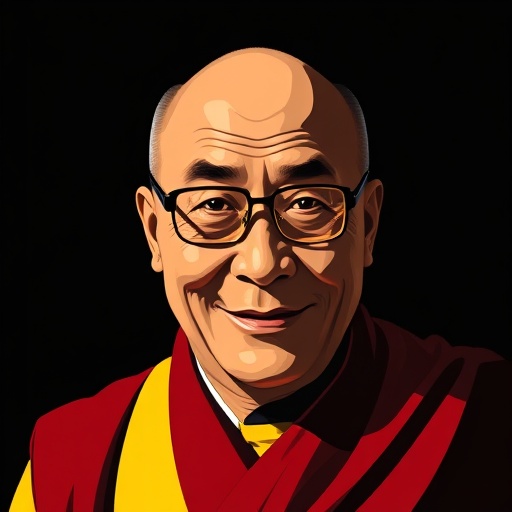
Dalai Lama (14th) — "Sometimes I feel very sad when I see so much suffering in the world. But then I …"
Sometimes I feel very sad when I see so much suffering in the world. But then I remember that I have a responsibility to help.
Sometimes I feel very sad when I see so much suffering in the world. But then I remember that I have a responsibility to help.
Click any product to generate a realistic preview. Up to 3 at a time.
* Initial load can take up to 90 seconds — revising the preview in another color is nearly instant.
"I find that the great thing in this world is not so much where we stand, as in what direction we are moving."
"The very motion of our life is towards happiness."
"If scientific analysis were conclusively to demonstrate certain claims in Buddhism to be false, then we must accept the findings of science and abandon those claims."
"The 21st century should be a century of dialogue, not violence."
"We need to learn to live together in peace and harmony, and not just tolerate each other."
Found in 1 providers: grok
1 source checked
Sadness in response to the world's pain is honest and appropriate — but it doesn't have to be the end of the story. This quote draws a direct line from feeling grief to choosing action. Rather than being consumed by helplessness, the speaker turns sorrow into motivation. Responsibility isn't a burden imposed from outside; it's the natural response of someone who genuinely cares about reducing suffering.
Tenzin Gyatso fled Tibet in 1959 after China's military crackdown and has spent over six decades in exile watching his homeland's culture systematically dismantled. Despite witnessing mass suffering he couldn't stop, he built a global movement centered on compassion and nonviolence. His Bodhisattva commitment — vowing to return life after life until all beings are free from suffering — is the spiritual bedrock behind this quote's turn from grief to duty.
The late 20th and early 21st centuries delivered suffering at scale: genocide in Rwanda and Bosnia, the September 11 attacks, wars in Afghanistan and Iraq, climate disasters, and a global poverty crisis affecting billions. In this environment of compassion fatigue and political cynicism, a spiritual leader openly admitting sadness — then pivoting to personal responsibility rather than institutional blame — offered a model of engaged, non-paralyzing response to overwhelming global pain.
AI-generated insights based on extensive research and information for context. Factual errors? Email [email protected].
Your cart is empty