Pope Urban II — "Let us avenge the injuries of God."
Let us avenge the injuries of God.
Let us avenge the injuries of God.
Click any product to generate a realistic preview. Up to 3 at a time.
* Initial load can take up to 90 seconds — revising the preview in another color is nearly instant.
"Oh, how admirable is that salting! Truly, you must strive by the salt of wisdom to correct these foolish people, hastening open-mouthed after the pleasures of this world, lest putrefied by sins and un…"
"Let those who have been exhausting themselves to the detriment both of body and soul now strive for a twofold reward."
"We command all of you to prepare yourselves for the journey."
"What shall I say of the appalling violation of women, of which it is more evil to speak than to keep silent?"
"Let no delay postpone the journey."
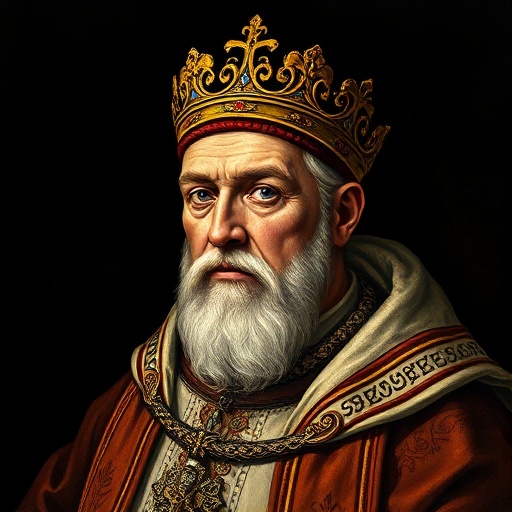
Pope (1088-1099) whose Council of Clermont speech (November 1095) launched the First Crusade — the founding event of nine centuries of Christian-Muslim military conflict. Closely associated with Pope Gregory VII (his predecessor on papal-imperial reform). For an intellectual contrast, see Saladin, Kurdish-Muslim Sultan of Egypt and Syria (1138-1193) — Saladin recaptured Jerusalem in 1187, undoing the First Crusade Urban II launched 92 years earlier. Saladin's chivalrous treatment of Christian prisoners became the canonical Muslim counter-image to Crusader brutality. The cleanest before/after pairing of the Crusades' moral arc.
Found in 1 providers: grok
1 source checked
A call to take action against those seen as having wronged or dishonored God, framing violent retribution as a sacred obligation. The speaker urges listeners to treat offenses against divine authority as personal injuries demanding a response, transforming warfare into an act of devotion and righteousness rather than mere conquest or political ambition.
Urban II spoke these words at the Council of Clermont in 1095, launching the First Crusade. As pope, he wielded spiritual authority to mobilize Christian Europe militarily. His life's work centered on reforming the Church and asserting papal supremacy, and framing the Crusade as God's cause—not man's—was his masterstroke of sacred legitimacy over political warfare.
In 1095, the Seljuk Turks had captured Jerusalem and were threatening Byzantine Christian lands. Western Europe's feudal nobility needed a unifying moral cause beyond dynastic war. The Church held supreme moral authority, and the concept of holy war—sanctioned violence in God's name—was newly formalized. Urban's words channeled centuries of religious fervor into coordinated military action.
AI-generated insights based on extensive research and information for context. Factual errors? Email [email protected].
Your cart is empty