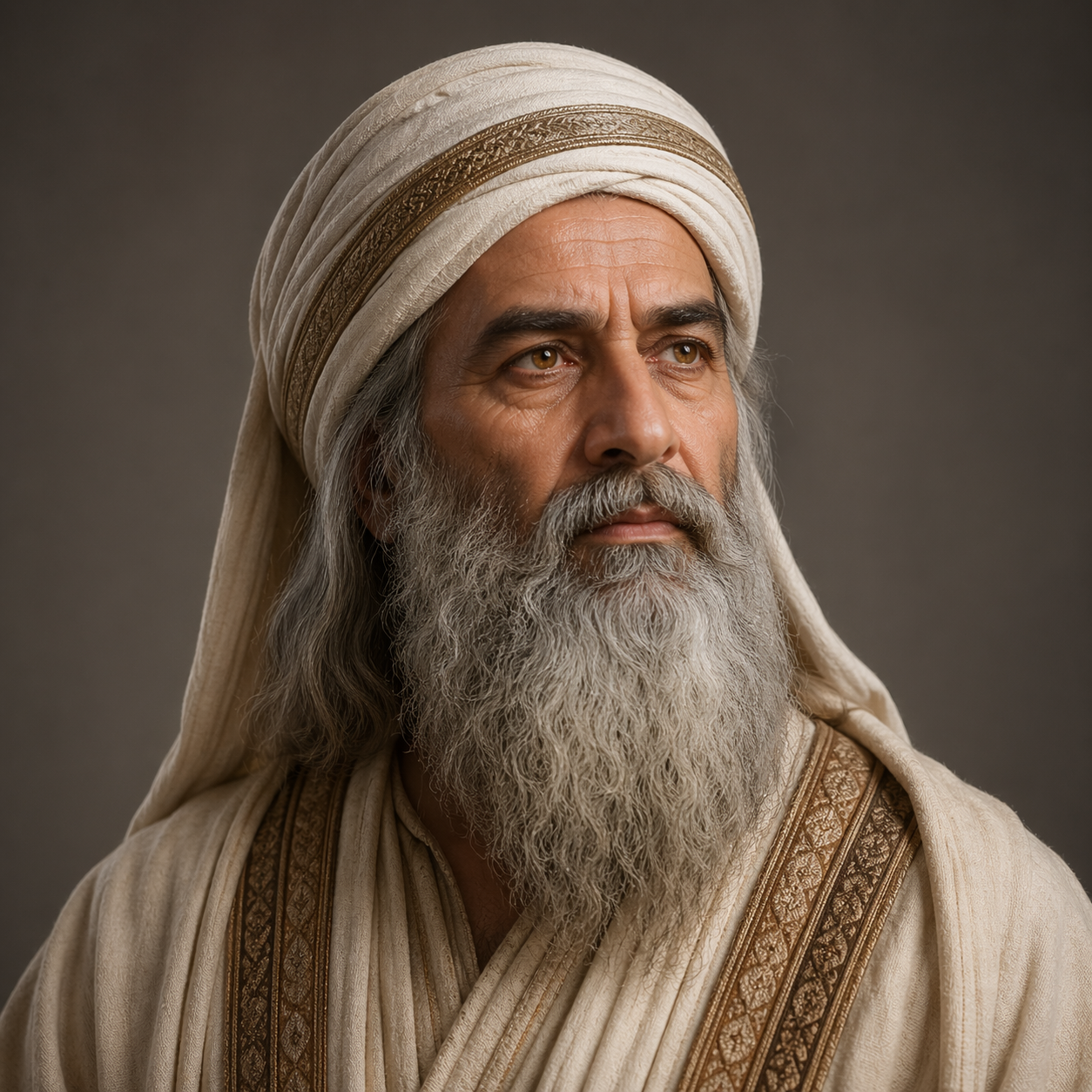
Zoroaster — "The deceitful shall be destroyed, but the righteous shall attain the best existe…"
The deceitful shall be destroyed, but the righteous shall attain the best existence.
The deceitful shall be destroyed, but the righteous shall attain the best existence.
Click any product to generate a realistic preview. Up to 3 at a time.
* Initial load can take up to 90 seconds — revising the preview in another color is nearly instant.
"Truth is the best of all things. As righteousness, it is happiness."
"I seek to know from Thee, O Mazda, what is the reward of the one who brings forth good for the world, and what is the punishment of the one who brings forth evil?"
"Oh Mazda, I shall reveal your message to the seekers of knowledge. And shall tell them that the destiny of a false doer is pain. And the destiny of a righteous doer is happiness."
"Doing good to others is not a duty. It is a joy, for it increases your own health and happiness."
"May the divine light guide us in all our thoughts, words, and deeds."
Iranian prophet who founded Zoroastrianism, the first major religion of cosmic dualism between good (Ahura Mazda) and evil (Angra Mainyu). Closely associated with The Buddha (near-contemporary Eastern moral-cosmological revolutionary). For an intellectual contrast, see Friedrich Nietzsche, German philosopher of 'beyond good and evil' — Nietzsche appropriated Zarathustra's name for Thus Spoke Zarathustra (1883) precisely to invert the original's moral cosmology — the historical Zoroaster founded the good-versus-evil framework Nietzsche's character announces the end of.
Found in 1 providers: deepseek
1 source checked
People who lie, cheat, and act with bad intent will ultimately face ruin, while those who live honestly and do good will reach the finest possible life. It frames existence as a moral ledger where character decides outcome, not luck or power. Honesty is not just ethical preference but the path to genuine flourishing, while deception carries its own built-in collapse over time.
Zoroaster built his entire religion around the cosmic struggle between Asha (truth, order) and Druj (the Lie, chaos). As a priest-prophet who rejected the polytheistic rituals of his day, he taught that every person chooses a side through thoughts, words, and deeds. This line is essentially his core thesis: the righteous reach the 'House of Song,' the deceitful fall into ruin, reflecting his judgment-based ethics.
Zoroaster lived in ancient Persia, likely around 1500–1000 BCE, amid tribal Indo-Iranian societies driven by cattle raids, blood feuds, and ritual sacrifice to many gods. Law was weak and deception common in nomadic power struggles. Into this chaos he introduced a revolutionary monotheism under Ahura Mazda, moral accountability after death, and a final judgment—ideas that later shaped Judaism, Christianity, and Islam, reframing truthfulness as a cosmic, not merely social, duty.
AI-generated insights based on extensive research and information for context. Factual errors? Email [email protected].
Your cart is empty