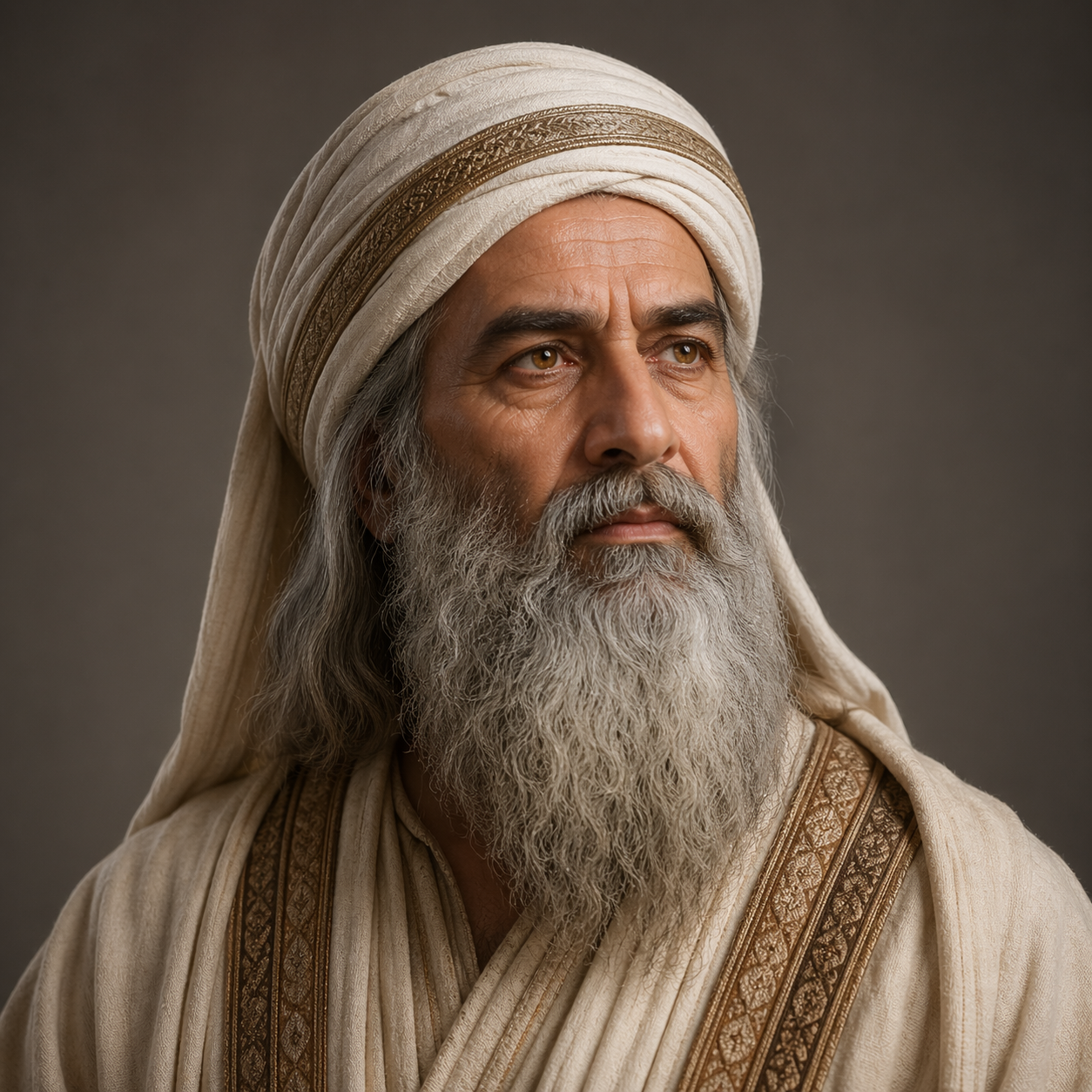
Zoroaster — "Truth is the best of all things. As righteousness, it is happiness."
Truth is the best of all things. As righteousness, it is happiness.
Truth is the best of all things. As righteousness, it is happiness.
Click any product to generate a realistic preview. Up to 3 at a time.
* Initial load can take up to 90 seconds — revising the preview in another color is nearly instant.
"Whoso causes affliction to the righteous, him shall the evil spirit hold captive."
"The path to wisdom is through constant learning and reflection."
"The liar shall perish, but the truthful shall dwell in the House of Song."
"When, O Mazda, shall the dawn of the days of existence rise, when shall the world be restored to its purity?"
"Evil is connected to lie or drûj. The Avestan word drûj means literally 'a tangle of trickery, deceit and lies.' Evil is what is not original and real."
Iranian prophet who founded Zoroastrianism, the first major religion of cosmic dualism between good (Ahura Mazda) and evil (Angra Mainyu). Closely associated with The Buddha (near-contemporary Eastern moral-cosmological revolutionary). For an intellectual contrast, see Friedrich Nietzsche, German philosopher of 'beyond good and evil' — Nietzsche appropriated Zarathustra's name for Thus Spoke Zarathustra (1883) precisely to invert the original's moral cosmology — the historical Zoroaster founded the good-versus-evil framework Nietzsche's character announces the end of.
The Gathas, Yasna 27, 14 (Ahuna Vairya prayer, interpretation)
Date: c. 1500-1000 BCE
PhilosophicalFound in 1 providers: gemini
1 source checked
Truth stands above every other value a person can pursue, and living truthfully is not just morally correct but is itself the path to genuine well-being. When you align your thoughts, words, and actions with what is real and right, you are not sacrificing joy for virtue. Righteousness and happiness are the same experience seen from two angles, so honesty becomes its own reward rather than a burden endured for some later payoff.
Zoroaster built his entire religion around Asha, the cosmic principle of truth and right order, opposed to Druj, the lie. As a priest-prophet who rejected the ritualism of his era, he taught that ethical choice, good thoughts, good words, good deeds, is how mortals join the divine order. This saying distills his core doctrine: truth is not merely accurate speech but a metaphysical alignment that generates blessedness in the living person.
Zoroaster preached in Bronze Age Iran, likely between 1500 and 1000 BCE, amid polytheistic tribal cults centered on blood sacrifice, cattle raiding, and appeasing many gods. Oral cultures prized sworn oaths because contracts, inheritance, and tribal peace depended on a person's word. By elevating truth to the supreme good and tying it directly to happiness, Zoroaster offered a revolutionary ethical monotheism that reframed religion around personal moral responsibility rather than ritual appeasement.
AI-generated insights based on extensive research and information for context. Factual errors? Email [email protected].
Your cart is empty