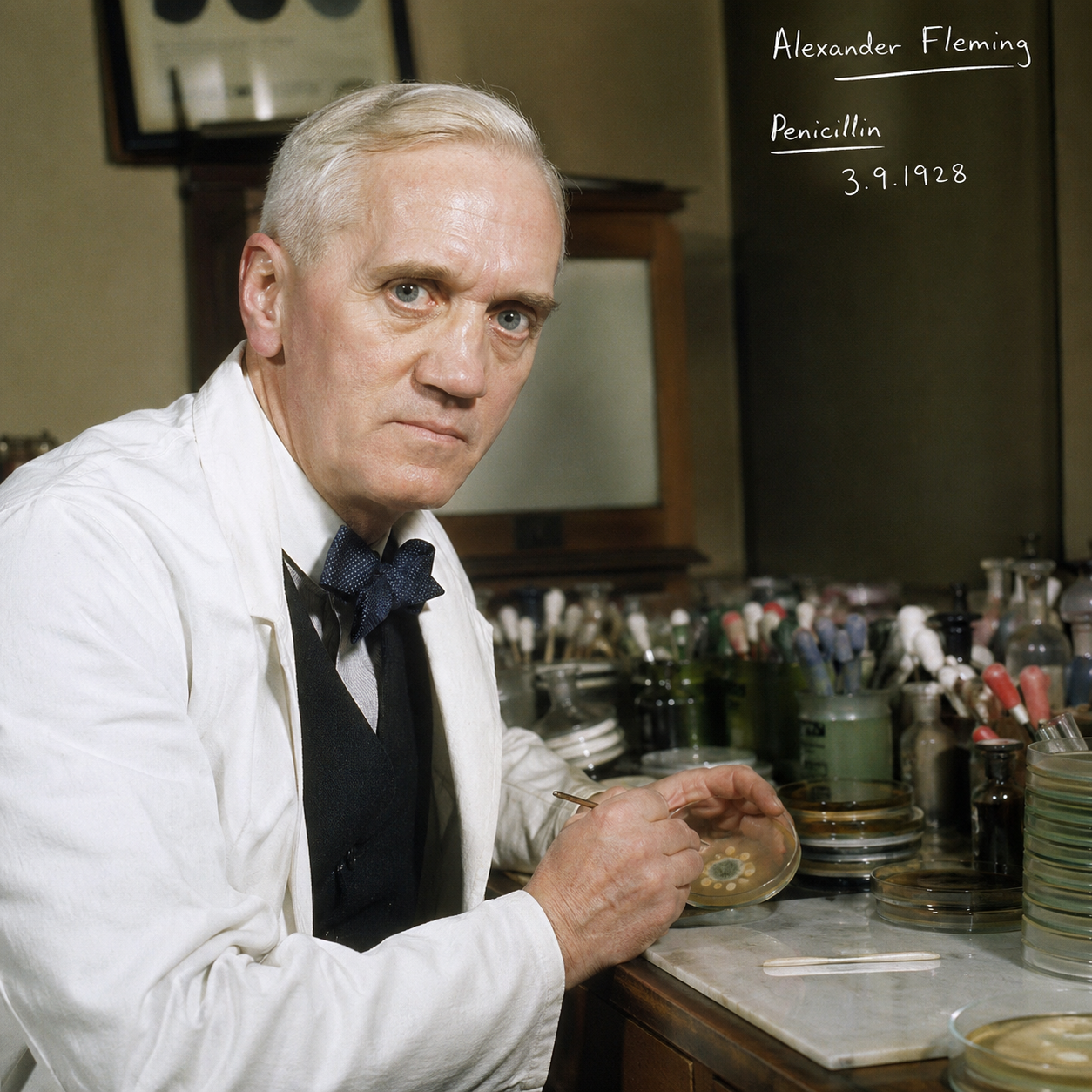
Alexander Fleming — "It is not difficult to make microbes resistant to penicillin in the laboratory b…"
It is not difficult to make microbes resistant to penicillin in the laboratory by exposing them to concentrations not sufficient to kill them.
It is not difficult to make microbes resistant to penicillin in the laboratory by exposing them to concentrations not sufficient to kill them.
Click any product to generate a realistic preview. Up to 3 at a time.
* Initial load can take up to 90 seconds — revising the preview in another color is nearly instant.
"When I woke up just after dawn on September 28, 1928, I certainly didn't plan to revolutionize all medicine by discovering the world's first antibiotic, or bacteria killer. But I suppose that was exac…"
"A good gulp of hot whisky at bedtime—it's not very scientific, but it helps."
"Penicillin cures, but wine makes people happy."
"Some people have been very enthusiastic about penicillin, others less so."
"I am very grateful for the recognition I have received, but the real credit belongs to the mould."
Found in 1 providers: deepseek
1 source checked
If you expose bacteria to penicillin doses too weak to kill them, they adapt and become resistant to the drug. Survival pressure drives evolution: the strongest microbes survive, reproduce, and pass on resistance. Incomplete treatment is therefore dangerous—it trains pathogens to overcome the very medicine designed to destroy them, rendering future treatment far more difficult.
Fleming discovered penicillin in 1928 after observing mold killing bacteria on a contaminated petri dish. This observation came directly from his meticulous laboratory work. He witnessed resistance emerging experimentally and issued this warning in his 1945 Nobel Prize lecture, demonstrating his characteristic scientific caution and moral responsibility toward public health consequences of his own discovery.
Fleming spoke these words in 1945, just as penicillin mass production began following WWII battlefield use. Antibiotics were revolutionary—miracle drugs saving millions from previously fatal infections. Yet commercial availability created new dangers: patients stopping doses early, doctors over-prescribing. Fleming's warning proved prophetic as resistant strains emerged within years, launching the ongoing antibiotic resistance crisis still worsening today.
AI-generated insights based on extensive research and information for context. Factual errors? Email [email protected].
Your cart is empty