Edward Jenner — "It is the lot of man to suffer; but it is also his lot to alleviate the sufferin…"
It is the lot of man to suffer; but it is also his lot to alleviate the sufferings of others.
It is the lot of man to suffer; but it is also his lot to alleviate the sufferings of others.
Click any product to generate a realistic preview. Up to 3 at a time.
* Initial load can take up to 90 seconds — revising the preview in another color is nearly instant.
"The cow-pox is a mild disease, and never fatal; the small-pox is a formidable one, and often fatal. The cow-pox is not infectious; the small-pox is highly so."
"I shall not attempt to give a detail of all the cases that have come under my observation, but shall select a few of the most striking, and such as will, I trust, be sufficient to convince the candid …"
"The greatest happiness consists in doing good to others."
"The disease has hitherto been confined to particular districts; and it has been observed, that where the Cow Pox has prevailed, the Small Pox has been much less frequent, and much less fatal."
"I have often been surprised at the credulity of mankind; but I have also been surprised at their obstinacy."
Found in 1 providers: grok
1 source checked
Suffering is an unavoidable part of human existence, but that very fact creates a moral obligation — we are not meant to simply endure pain passively. We also carry a responsibility to reduce the pain of those around us. The capacity to help others is itself part of what it means to be human, transforming shared vulnerability into shared purpose.
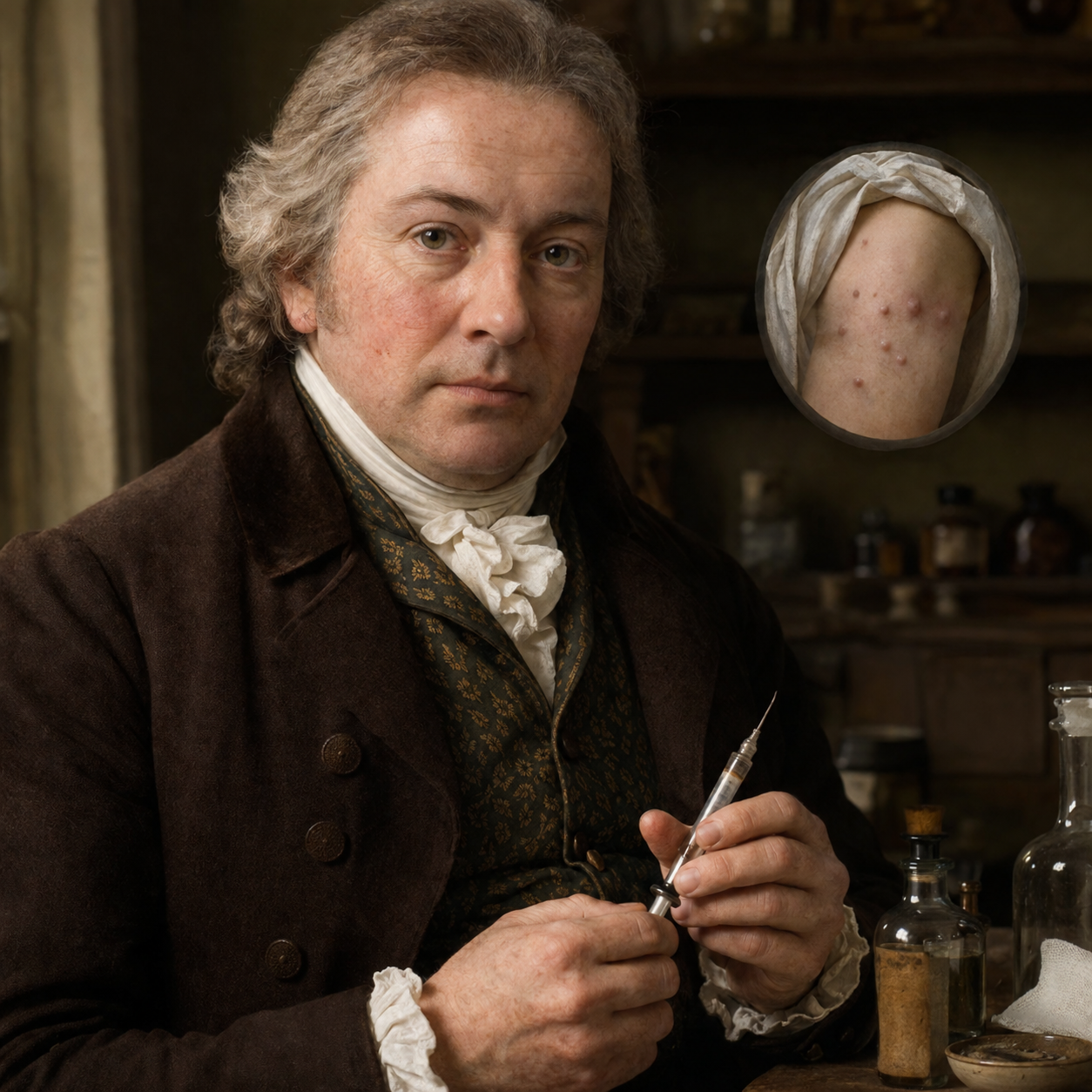
Jenner spent decades observing suffering from smallpox — a disease that killed 30% of its victims and disfigured survivors. His patient work with cowpox inoculation, often against fierce medical establishment resistance, embodied this belief. He reportedly vaccinated the poor for free and refused to patent his discovery, prioritizing relief of suffering over personal gain.
In late 18th-century England, smallpox killed hundreds of thousands annually across Europe. Enlightenment thinking was reshaping medicine from superstition toward empirical science, but most suffering was still considered divine will or fate. Jenner's era was beginning to accept that humans could intervene against disease — a radical shift that made alleviating suffering a scientific and moral project, not mere resignation.
AI-generated insights based on extensive research and information for context. Factual errors? Email [email protected].
Your cart is empty