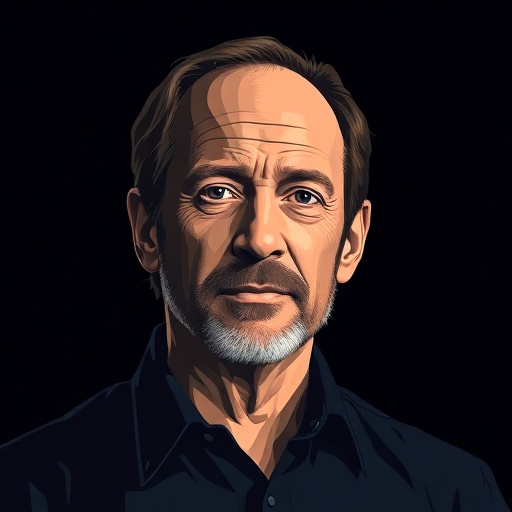
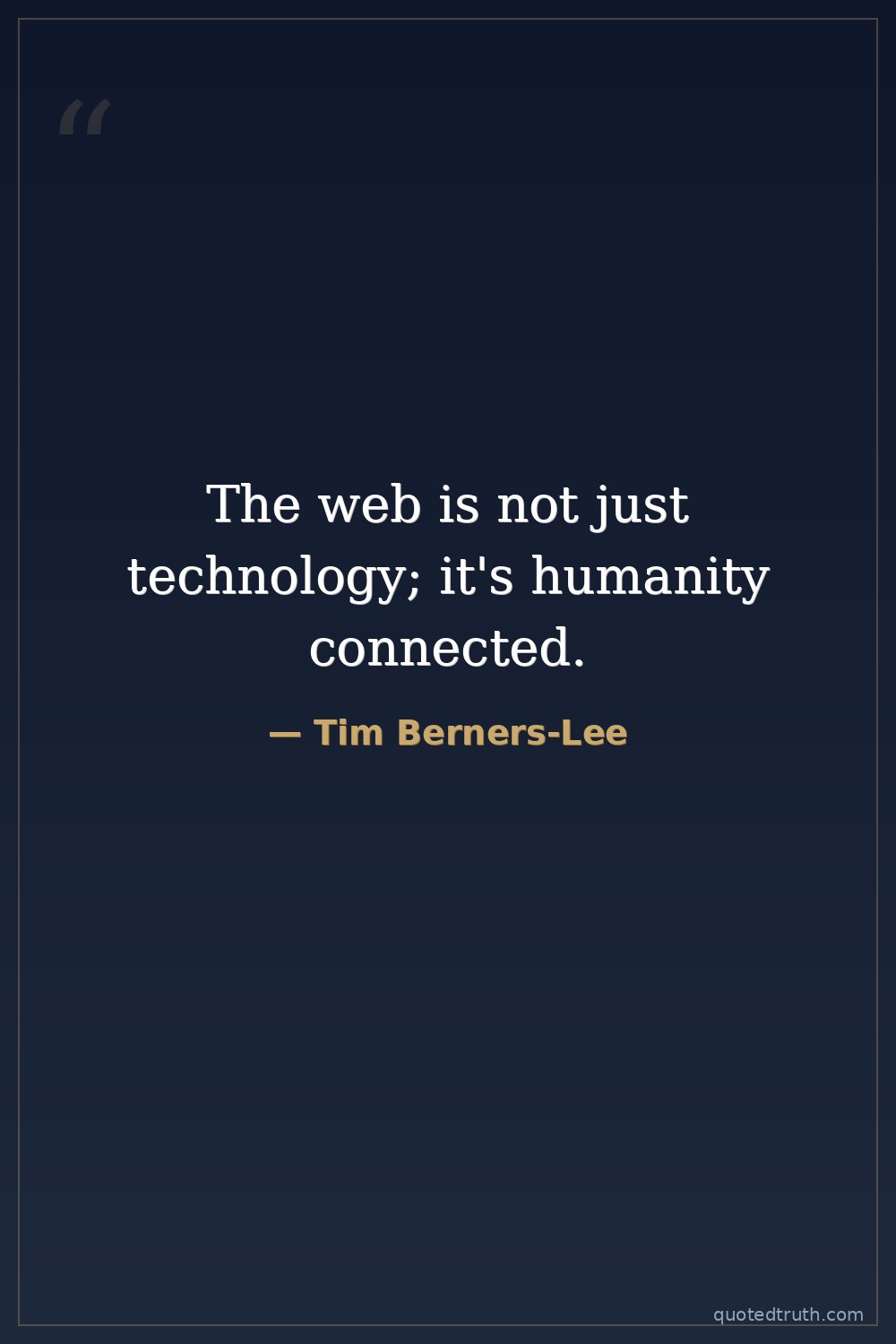
Tim Berners-Lee — "The web is not just technology; it's humanity connected."
The web is not just technology; it's humanity connected.
The web is not just technology; it's humanity connected.
Click any product to generate a realistic preview. Up to 3 at a time.
* Initial load can take up to 90 seconds — revising the preview in another color is nearly instant.
"I'm concerned about the way the web is being used to spread misinformation and manipulate people."
"The original idea of the web was that it should be a collaborative space where you can communicate through sharing information."
"I'm not interested in making money from the web. I'm interested in making it work for everyone."
"I want the web to be a place where everyone can thrive, where everyone can learn, and where everyone can contribute."
"I'm not a fan of the term 'information superhighway.' It implies a one-way flow of information, which is not what the web is about."
British computer scientist who invented the World Wide Web at CERN in 1989 and founded the W3C, championing open web standards. Closely associated with Vint Cerf (TCP/IP co-creator and 'father of the internet') and Marc Andreessen (Mosaic browser creator and Netscape co-founder). For an intellectual contrast, see Mark Zuckerberg, Facebook (Meta) founder — Zuckerberg's walled-garden Facebook is the canonical contemporary opposite of Berners-Lee's open-web vision; Berners-Lee's Solid project and 'recapture the web' essays are explicitly written as a rebuttal to the platform-monopoly model Facebook pioneered.
Found in 1 providers: grok
1 source checked
Technology is only the scaffolding. What matters is the people on either end of the connection, sharing ideas, collaborating, and building relationships. A network of cables, protocols, and browsers has no value on its own. The real substance of the web is the human exchange it enables, the conversations, communities, and shared knowledge that flow through it. Strip away the machines and what remains is us, linked together.
Berners-Lee invented the World Wide Web in 1989 at CERN and deliberately released it royalty-free in 1993 so anyone could use it. Through the W3C and later the Solid project and Contract for the Web, he has fought for open standards, user data ownership, and equal access. He consistently frames his creation as a social tool, not a commercial product, insisting the web's purpose is empowering people, not extracting value from them.
By the 2000s and 2010s, the web had shifted from an open academic network into walled gardens run by Google, Facebook, and Amazon, harvesting user data for advertising. Surveillance capitalism, misinformation, and platform monopolies threatened the original vision. Berners-Lee spoke out repeatedly during this period, warning that corporate capture was hollowing out the web's human purpose and pushing initiatives to restore decentralization and individual control over personal information.
AI-generated insights based on extensive research and information for context. Factual errors? Email [email protected].
Your cart is empty