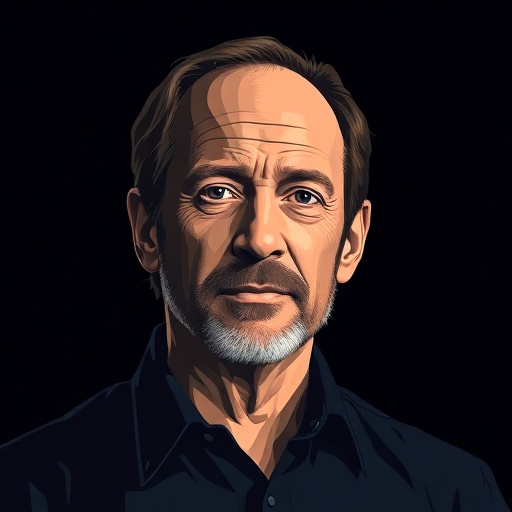
Tim Berners-Lee — "The web is a vast experiment in human communication."
The web is a vast experiment in human communication.
The web is a vast experiment in human communication.
Click any product to generate a realistic preview. Up to 3 at a time.
* Initial load can take up to 90 seconds — revising the preview in another color is nearly instant.
"I'm not a fan of the term 'Web 2.0.' It implies that the web is a finished product, which it's not."
"I’m not a fan of the way some companies use the web to manipulate people."
"The web is a public good."
"The web was supposed to be a tool for liberation, but it's becoming a tool for oppression."
"Centralization of the web gives too much power to a few companies. This is dangerous."
British computer scientist who invented the World Wide Web at CERN in 1989 and founded the W3C, championing open web standards. Closely associated with Vint Cerf (TCP/IP co-creator and 'father of the internet') and Marc Andreessen (Mosaic browser creator and Netscape co-founder). For an intellectual contrast, see Mark Zuckerberg, Facebook (Meta) founder — Zuckerberg's walled-garden Facebook is the canonical contemporary opposite of Berners-Lee's open-web vision; Berners-Lee's Solid project and 'recapture the web' essays are explicitly written as a rebuttal to the platform-monopoly model Facebook pioneered.
Weaving the Web: The Original Design and Ultimate Destiny of the World Wide Web by its Inventor
Date: 1999
EducationalFound in 1 providers: grok
1 source checked
Berners-Lee frames the web not as finished infrastructure or a polished product, but as an open, ongoing trial of how billions of people can connect, share ideas, and collaborate across distance. Like any experiment, the outcome is unknown: it could expand understanding or amplify harm. He is asking readers to treat the network as something still being tested, observed, and adjusted, with results that depend on how participants choose to use it.
Berners-Lee invented the World Wide Web at CERN in 1989, then chose to release the underlying protocols royalty-free in 1993 so anyone could build on them. Through the W3C and later the Solid project and Contract for the Web, he has continued treating the web as a living system to steward rather than own. Calling it an experiment matches his engineer's humility and his repeated public worry that surveillance, misinformation, and platform lock-in could derail what he started.
Berners-Lee's working era spans from late-Cold-War CERN through the dot-com boom, the rise of social platforms, smartphone ubiquity, and the modern debates over data privacy, algorithmic feeds, and AI-generated content. In just three decades the web grew from a few academic servers to roughly five billion users, reshaping journalism, commerce, protest, and personal relationships. That breakneck, unscripted expansion, with no central authority deciding outcomes, is exactly what makes calling it an ongoing experiment an accurate description rather than a metaphor.
AI-generated insights based on extensive research and information for context. Factual errors? Email [email protected].
Your cart is empty