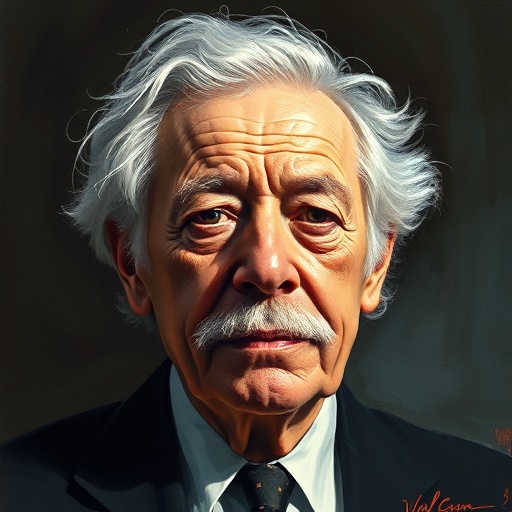
Linus Pauling — "The only way to get a good idea is to get a lot of ideas and throw the bad ones …"
The only way to get a good idea is to get a lot of ideas and throw the bad ones away.
The only way to get a good idea is to get a lot of ideas and throw the bad ones away.
Click any product to generate a realistic preview. Up to 3 at a time.
* Initial load can take up to 90 seconds — revising the preview in another color is nearly instant.
"The greatest adventure is to live your dreams."
"The only thing that stands between a man and what he wants from life is often merely the will to try it and the faith to believe that it is possible."
"Just one living cell in the human body is, more complex than New York City."
"There is no such thing as a 'safe' dose of radiation."
"The best way to learn is to teach."
Attributed, often cited as a general principle of his scientific method.
Date: Unknown, likely mid-20th century
WisdomFound in 2 providers: grok,deepseek
2 sources checked
Creative output depends on volume. You cannot reliably produce one brilliant idea by thinking carefully once — instead, generate ideas freely and in large numbers, then ruthlessly evaluate and discard the weak ones. Quality emerges through filtering, not from cautious initial thinking. This challenges the myth of lone-genius inspiration, replacing it with a systematic process that treats ideation as raw material requiring refinement.
Pauling embodied prolific intellectual output across chemistry and beyond. He proposed major theoretical frameworks — resonance structures, electronegativity scales, the alpha helix — knowing most would require revision. His vitamin C megadose advocacy, though later disputed, showed the same willingness to champion bold hypotheses. Winning two Nobel Prizes in unrelated fields reflects a mind that generated ideas across domains and refined rather than restrained them.
The mid-20th century was science's most productive era: Cold War competition poured unprecedented funding into research, brainstorming was formalized as a workplace methodology by Alex Osborn in 1953, and laboratory teams replaced the solo inventor model. Scientific progress depended on generating competing hypotheses rapidly. This made Pauling's framing — volume first, judgment second — not just philosophical but operationally true for how innovation actually functioned.
AI-generated insights based on extensive research and information for context. Factual errors? Email [email protected].
Your cart is empty