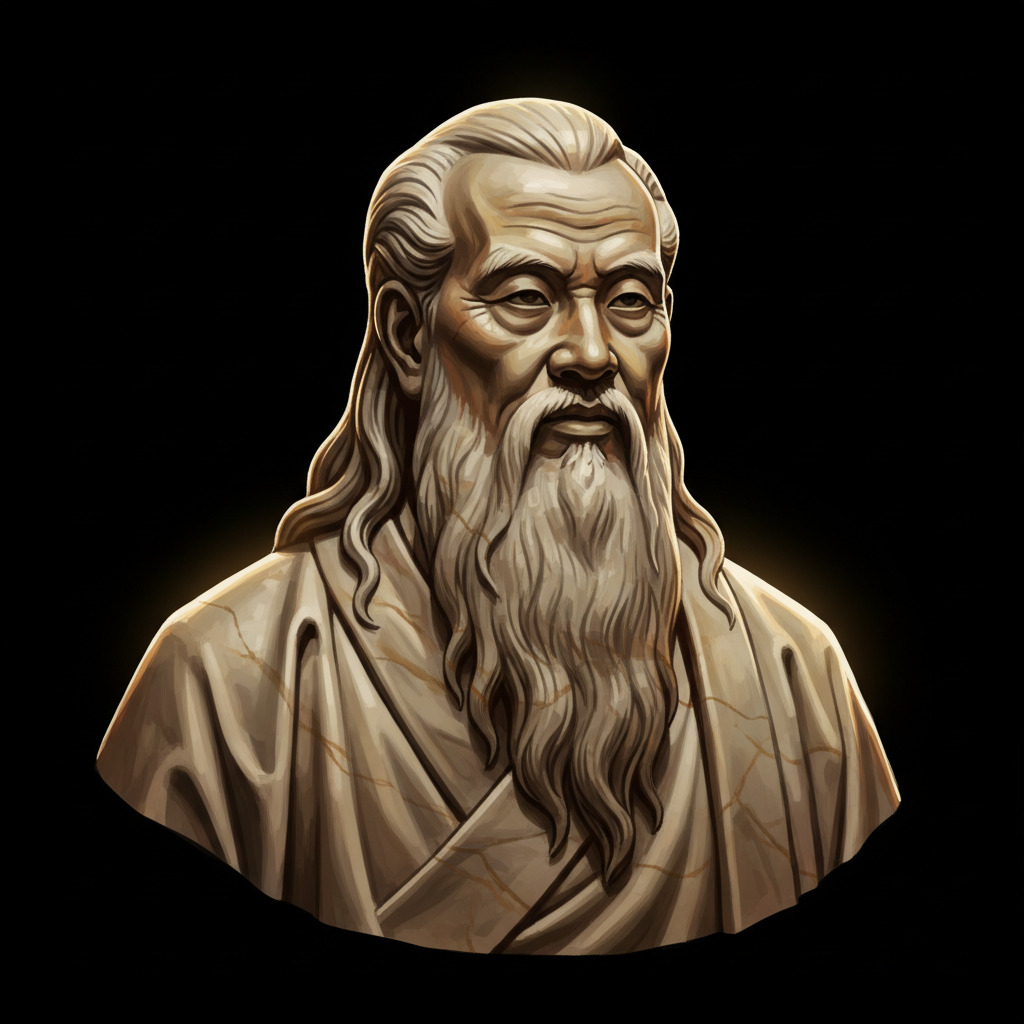
Laozi — "If you realize that all things change, there is nothing you will try to hold on …"
If you realize that all things change, there is nothing you will try to hold on to. If you are not afraid of dying, there is nothing you cannot achieve.
If you realize that all things change, there is nothing you will try to hold on to. If you are not afraid of dying, there is nothing you cannot achieve.
Click any product to generate a realistic preview. Up to 3 at a time.
* Initial load can take up to 90 seconds — revising the preview in another color is nearly instant.
"Those who have the courage to dare will perish. Those who have the courage not to dare will live."
"The more prohibitions there are, the poorer the people become. The more sharp weapons the people have, the more troubled the state becomes. The more cunning and skill man possesses, the more peculiar …"
"The sage puts his own person last, and yet it is found in the foremost place; he treats his person as foreign to him, and yet it is preserved."
"If you want to awaken all of humanity, then awaken all of yourself. If you want to eliminate the suffering in the world, then eliminate all that is dark and negative in yourself. Truly, the greatest g…"
"The softest thing in the world can overcome the hardest thing in the world."
Reputed founder of Taoism and author of the Tao Te Ching, whose wu wei (effortless action) shaped East Asian philosophy. Closely associated with Zhuangzi (later Taoist who extended Laozi's framework). For an intellectual contrast, see Confucius, near-contemporary Chinese sage of social ritual and duty — Confucius systematized social order through ritual and hierarchy; Laozi argued that all such systems were the disease, not the cure — the two founding poles of Chinese moral philosophy.
Found in 1 providers: gemini
1 source checked
Everything in life is temporary, so clinging to possessions, status, or relationships only creates suffering when they inevitably shift. Accepting impermanence frees you from grasping. The second half goes further: if you stop fearing death itself, no threat can control you. Without fear of loss or ending, you act with complete freedom and courage, making any goal reachable because nothing holds you back.
Laozi, the legendary founder of Taoism, taught wu wei (effortless action) and alignment with the Tao, the natural flow of existence. His Tao Te Ching repeatedly urges letting go of desire, rigidity, and ego. This saying captures his core conviction that attachment and fear are the root obstacles to wisdom, while yielding and acceptance unlock genuine power.
Laozi lived during China's turbulent late Zhou dynasty, likely the 6th century BCE, an age of constant warfare, political collapse, and social upheaval preceding the Warring States period. Death and loss were daily realities. Competing schools like Confucianism emphasized strict ritual and hierarchy. Laozi's counter-message, embracing change and releasing fear, offered war-weary people a radical spiritual alternative grounded in nature rather than court politics.
AI-generated insights based on extensive research and information for context. Factual errors? Email [email protected].
Your cart is empty