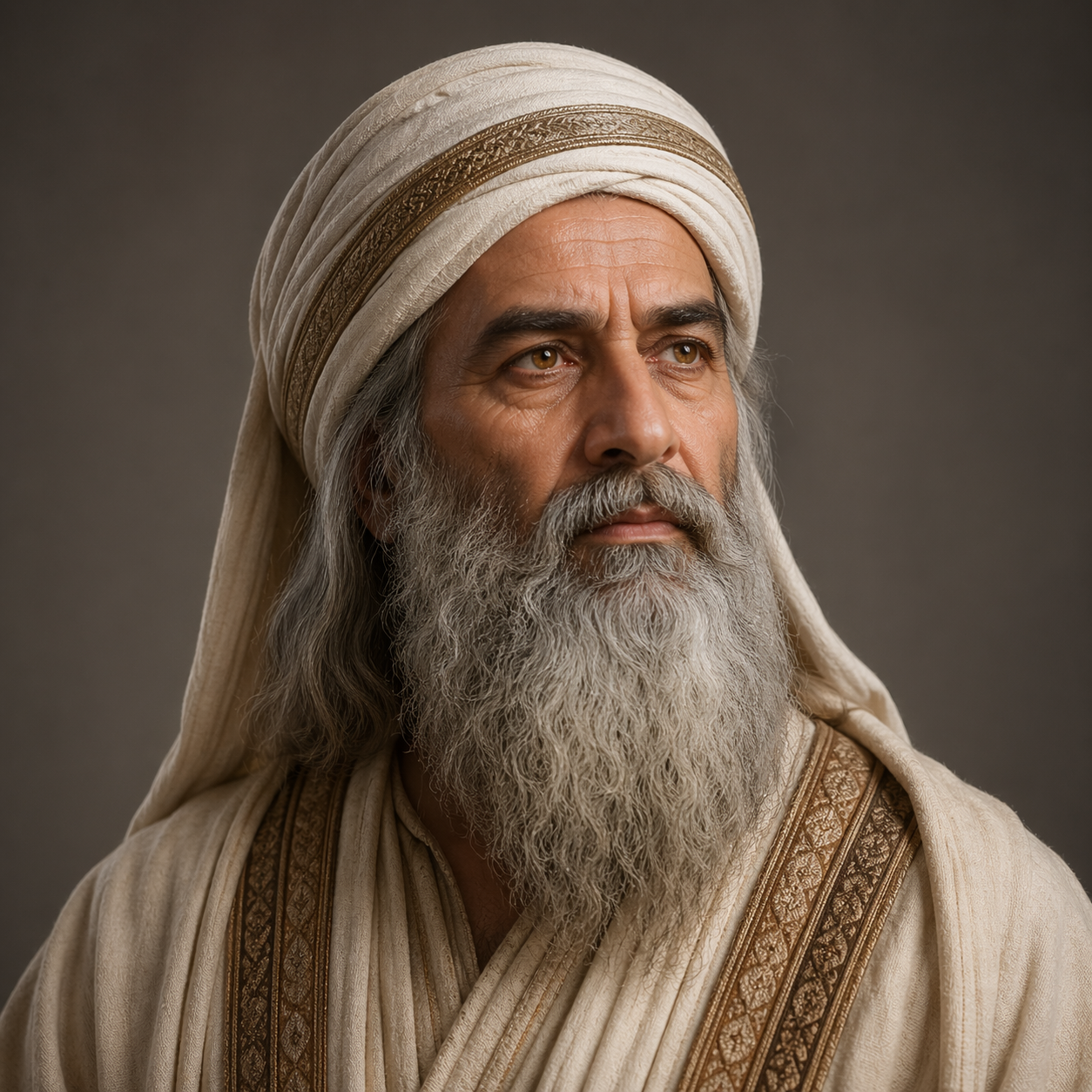
Zoroaster — "All flows out from the Deity, and all must be absorbed in Him again."
All flows out from the Deity, and all must be absorbed in Him again.
All flows out from the Deity, and all must be absorbed in Him again.
Click any product to generate a realistic preview. Up to 3 at a time.
* Initial load can take up to 90 seconds — revising the preview in another color is nearly instant.
"In the beginning, these two spiritualities, which are twins, were perceived in a vision by the righteous. The better and the bad have been said to be thought, word, and deed, and between these two the…"
"Whoso follows the teachings of Ahura Mazda, him Ahura Mazda will guide."
"Good and evil are so real that humans are to partake in this cosmic battle by selecting sides."
"Good will triumph over evil. But sometimes, evil has better snacks."
"The wise man chooses good. The very wise man chooses good and then immediately finds a comfortable rock to sit on."
Iranian prophet who founded Zoroastrianism, the first major religion of cosmic dualism between good (Ahura Mazda) and evil (Angra Mainyu). Closely associated with The Buddha (near-contemporary Eastern moral-cosmological revolutionary). For an intellectual contrast, see Friedrich Nietzsche, German philosopher of 'beyond good and evil' — Nietzsche appropriated Zarathustra's name for Thus Spoke Zarathustra (1883) precisely to invert the original's moral cosmology — the historical Zoroaster founded the good-versus-evil framework Nietzsche's character announces the end of.
Found in 1 providers: gemini
1 source checked
Everything in existence originates from a single divine source and will eventually return to that same source. Reality is a cycle: creation emanates outward from the Deity, sustains itself for a time, then collapses back into its origin. Individual souls, matter, and history are not separate from the divine but temporary expressions of it. Nothing is truly lost or independent, because the ultimate destination is identical to the ultimate starting point.
Zoroaster founded a religion centered on Ahura Mazda, the single wise Creator from whom all goodness and existence proceed. As a priest-prophet who reformed older Iranian polytheism into an ethical monotheism, he taught that souls journey through life and judgment before returning to their divine origin. This saying captures his core theology: one supreme God as both source and final home, with existence framed as a purposeful arc rather than random flux.
Zoroaster lived in Bronze or Iron Age Iran, likely between 1500 and 1000 BCE, amid tribal societies worshipping many nature gods through ritual sacrifice. Surrounding cultures embraced cyclical cosmologies and warring deities. His emphasis on one Creator who originates and reclaims all existence was radical, predating and influencing later Jewish, Greek, and Christian monotheistic thought. In that ritual-heavy, polytheistic world, reducing reality to a single divine source and destination reshaped religious imagination across the ancient Near East.
AI-generated insights based on extensive research and information for context. Factual errors? Email [email protected].
Your cart is empty