Quentin Tarantino — "I like it when somebody tells me a story, and I actually really feel that that's…"
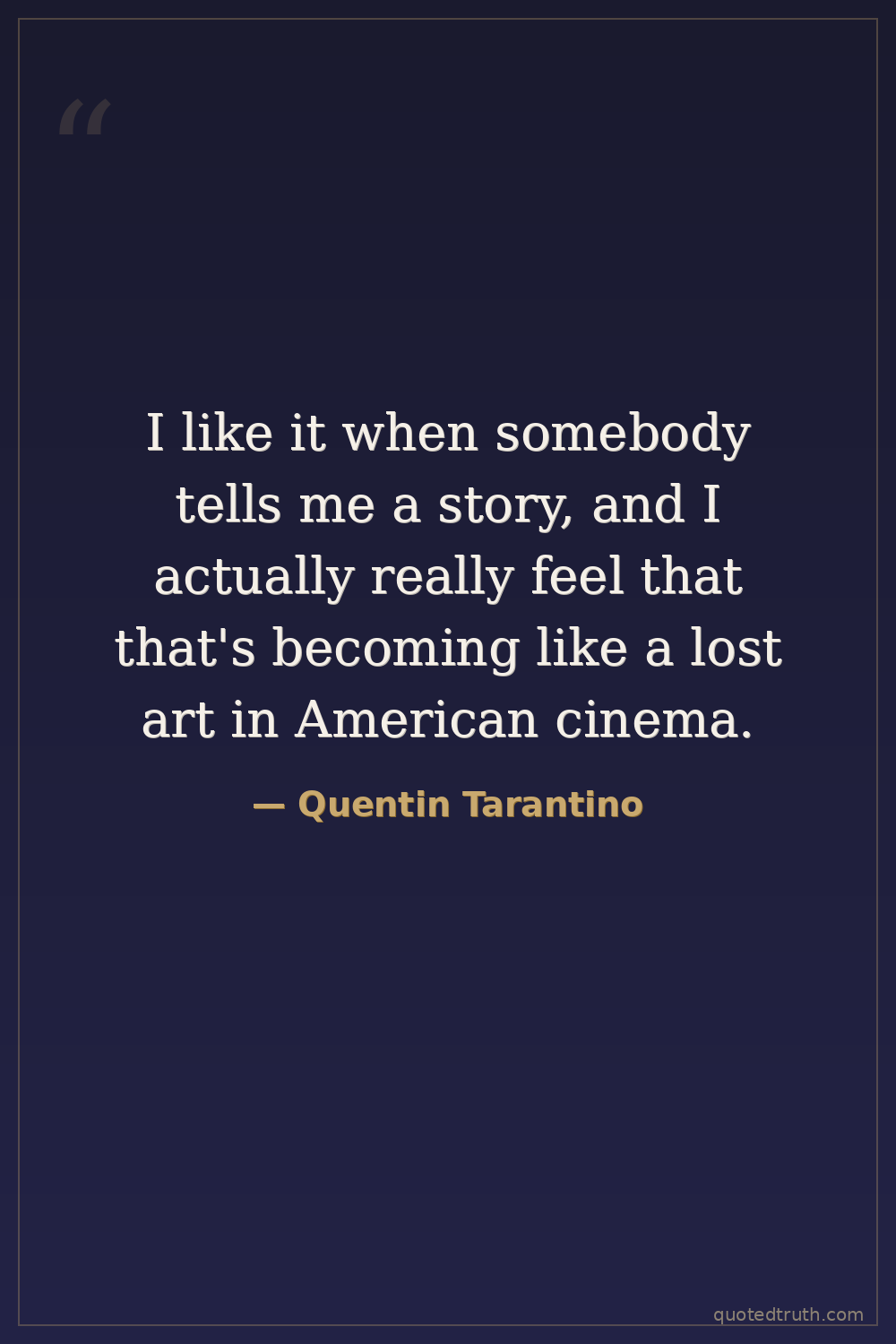
I like it when somebody tells me a story, and I actually really feel that that's becoming like a lost art in American cinema.
I like it when somebody tells me a story, and I actually really feel that that's becoming like a lost art in American cinema.
Click any product to generate a realistic preview. Up to 3 at a time.
* Initial load can take up to 90 seconds — revising the preview in another color is nearly instant.
"I'm a big fan of ensemble casts."
"Social critics don't mean a thing to me. It's really easy to ignore them, because I believe in what I'm doing 100%. So any naysayers for the public good can just fuck off."
"I'm not a big fan of sequels."
"Bruce had nothing but disrespect for American stuntmen and was always hitting them. ... I can understand his daughter having a problem with it, everyone else could 'go suck a d***.'"
"There are two kinds of violence. First, there's cartoon violence like Lethal Weapon. There's nothing wrong with that. I'm not ragging on that. But my kind of violence is tougher, rougher, more disturb…"
American filmmaker (Pulp Fiction, Kill Bill, Inglourious Basterds) whose intertextual genre-collage redefined 1990s independent cinema. Closely associated with Robert Rodriguez (frequent collaborator (From Dusk Till Dawn, Sin City)) and Paul Thomas Anderson (1990s indie-auteur peer). For an intellectual contrast, see Stanley Kubrick, meticulous formalist filmmaker (1928-1999) — Kubrick's films erase influences into singular monolithic vision through year-long shoots and 100-take perfectionism; Tarantino's foreground every reference as a deliberate tribute — the two opposite ways auteurist cinema can be made.
Found in 1 providers: gemini
1 source checked
Your cart is empty