Francis Crick — "A good scientist is a person with original ideas. A good engineer is a person wh…"
A good scientist is a person with original ideas. A good engineer is a person who makes a design that works.
A good scientist is a person with original ideas. A good engineer is a person who makes a design that works.
Click any product to generate a realistic preview. Up to 3 at a time.
* Initial load can take up to 90 seconds — revising the preview in another color is nearly instant.
"If you are honest, you will find that you are often wrong. But if you are not honest, you will never find out."
"The greatest joy in science is to understand something that no one else has understood before."
"One of the most striking features of the human mind is its ability to believe what it wants to believe."
"It is not the strongest of the species that survives, nor the most intelligent that survives. It is the one that is most adaptable to change."
"If, for example, a certain protein consistently appears in the urine of schizophrenics, one would be foolish not to take notice."
Found in 1 providers: grok
1 source checked
Science and engineering demand different things from practitioners. A scientist's worth lies in generating original ideas — fresh perspectives that advance understanding, even before practical use is clear. An engineer succeeds when their design actually functions reliably in the real world. The quote cleanly separates creative intellectual contribution from applied execution, arguing that originality defines scientific excellence while functionality and practicality define engineering excellence. Both roles are vital but operate by fundamentally different standards of success.
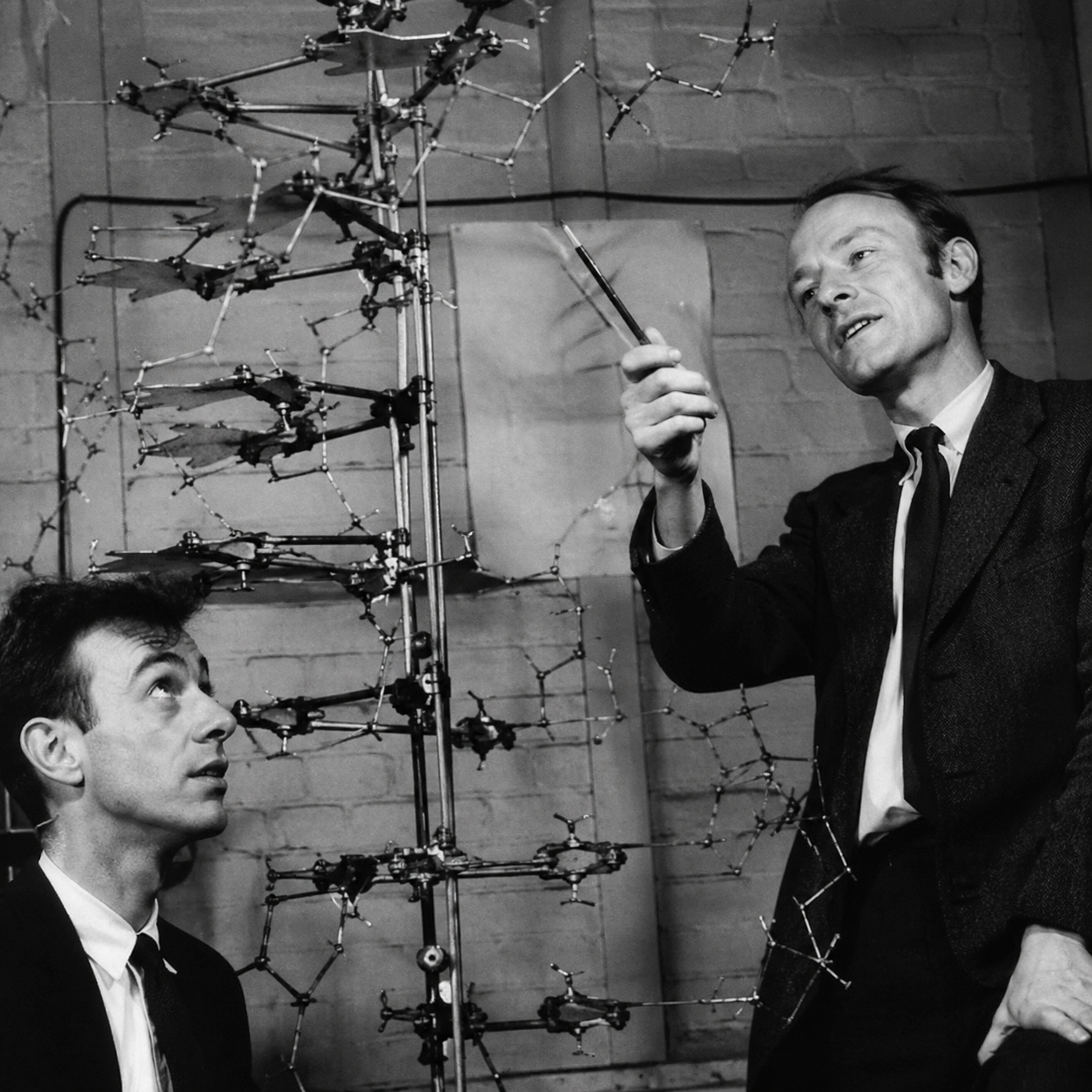
Crick embodied the scientist he described: a physicist who pivoted to biology and brought genuinely original conceptual thinking to the structure of DNA. His breakthrough with Watson wasn't methodical engineering — it was a theoretical leap, constructing a double-helix model from incomplete crystallography data. Throughout his career, from DNA to consciousness research at the Salk Institute, Crick prioritized bold hypotheses over cautious evidence accumulation, consistently championing the primacy of original ideas as the defining mark of scientific greatness.
Crick worked through the Cold War era, when government investment blurred science and engineering into a single enterprise — NASA, nuclear programs, and early computing demanded both simultaneously. Funding increasingly rewarded applied results, creating pressure on pure researchers to justify work by practical output. Crick's distinction arrived as universities and defense agencies wrestled with whether scientists should be judged by utility. The tension remains sharp today as Silicon Valley routinely conflates product-building with scientific discovery.
AI-generated insights based on extensive research and information for context. Factual errors? Email [email protected].
Your cart is empty