Martin Luther — "A man must have a good digestion to be a good preacher."
A man must have a good digestion to be a good preacher.
A man must have a good digestion to be a good preacher.
Click any product to generate a realistic preview. Up to 3 at a time.
* Initial load can take up to 90 seconds — revising the preview in another color is nearly instant.
"Let whoever can stab, strangle and kill them like mad dogs."
"Therefore, dear Lords, help here, save here, release here, stab, smite, strangle here, whoever can. And if you die in it, blessed are you; for you die in obedience to God's Word and command (Rom. 13) …"
"The law of God is not given to make us righteous, but to show us our unrighteousness."
"You people are more stupid than a block of wood."
"The world is a great book, of which they who never stir from home read only one page."
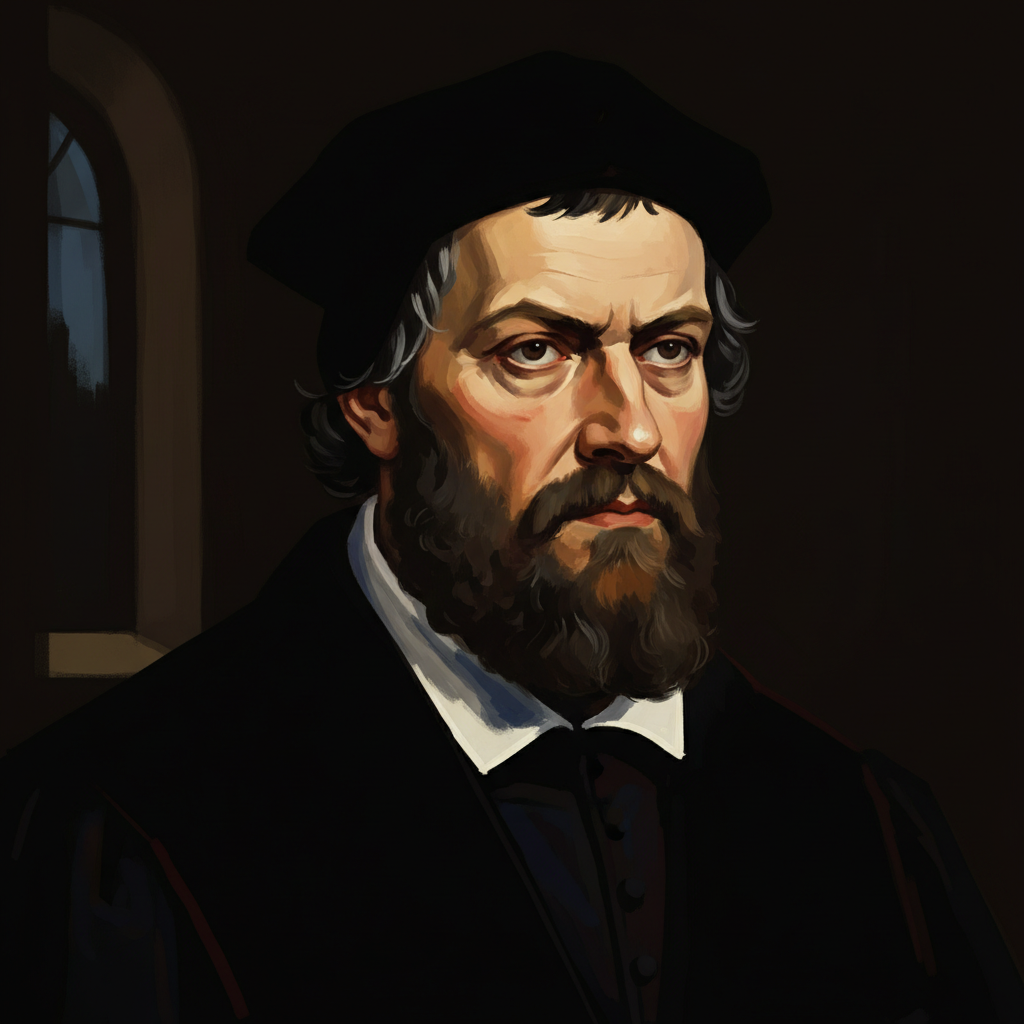
German theologian whose 95 Theses (1517) launched the Protestant Reformation and broke the Catholic Church's monopoly on Western Christianity. Closely associated with Philipp Melanchthon (Lutheran systematizer) and John Calvin (later Reformer who built on Luther's break). For an intellectual contrast, see Pope Leo X, Renaissance pope (1513-1521) — Leo X's indulgence sales triggered Luther's break and Leo excommunicated him in 1521 — Luther's entire Reformation is structured as a direct answer to the indulgence-funded Vatican Leo represented.
Found in 1 providers: grok
1 source checked
Effective preaching depends on physical well-being, not just spiritual zeal or intellectual preparation. A speaker whose body is uncomfortable, sluggish, or in pain cannot deliver a sermon with energy, clarity, or conviction. Luther is making the earthy point that the mind and soul operate through the body, so caring for basic bodily functions like digestion is a practical prerequisite for demanding mental and spiritual work, including public speaking that moves listeners.
Luther notoriously wrestled with chronic constipation, kidney stones, and gut ailments, often writing and even drafting parts of the Reformation from the privy. He rejected monastic asceticism that despised the body, preaching instead that eating, drinking, and bodily health were gifts from God. As Germany's most demanding preacher, often delivering multiple sermons weekly, he knew firsthand that physical suffering could sabotage pulpit delivery, making this remark less a joke than lived experience.
In early sixteenth-century Europe, clergy were expected to fast, mortify the flesh, and treat bodily needs as obstacles to holiness. Luther's Reformation, launched with the 1517 Ninety-Five Theses, rejected this split between sacred and physical life, affirming marriage, beer, food, and ordinary labor as God-honoring. Preaching itself was the central weapon of the Reformation, replacing the Latin Mass, so a preacher's stamina and voice carried enormous theological weight in a largely illiterate, sermon-hungry German population.
AI-generated insights based on extensive research and information for context. Factual errors? Email [email protected].
Your cart is empty