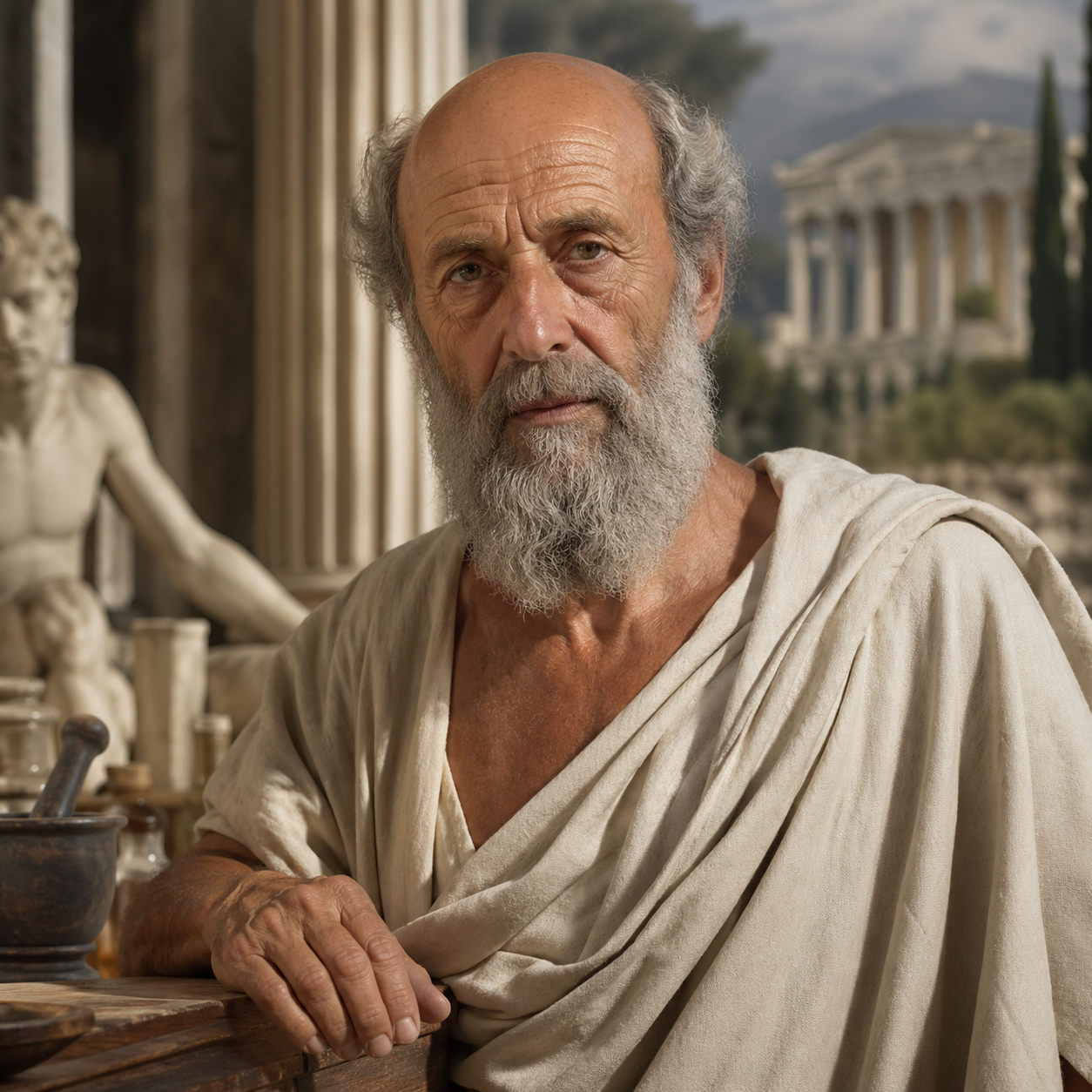
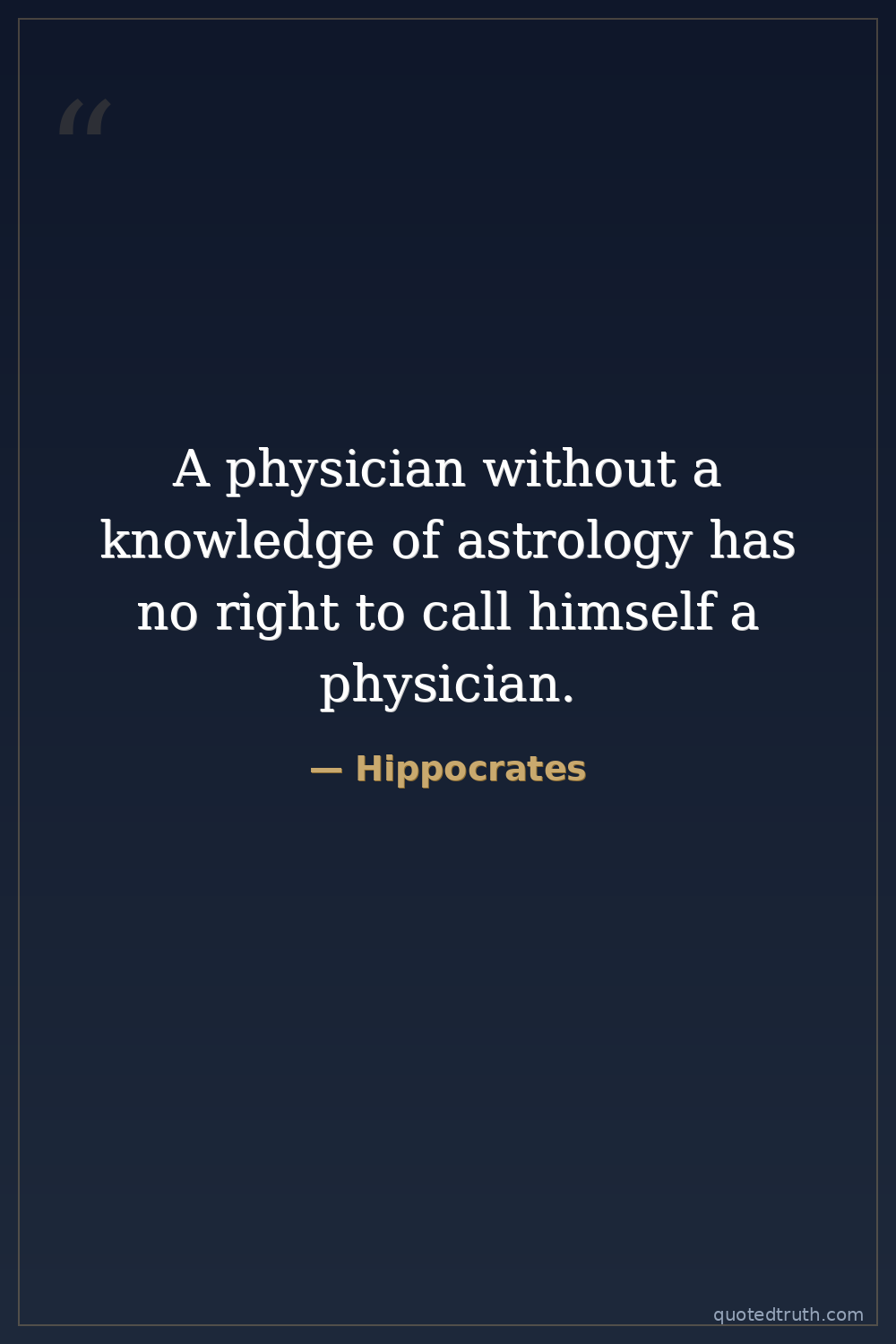
Hippocrates — "A physician without a knowledge of astrology has no right to call himself a phys…"
A physician without a knowledge of astrology has no right to call himself a physician.
A physician without a knowledge of astrology has no right to call himself a physician.
Click any product to generate a realistic preview. Up to 3 at a time.
* Initial load can take up to 90 seconds — revising the preview in another color is nearly instant.
"As to diseases, make a habit of two things — to help, or at least, to do no harm."
"The physician must be a gentle hand, a sharp eye, and a clean heart."
"Everything in excess is opposed to nature."
"The art of healing comes from nature, not from the physician."
"The greatest joy in life is to be healthy."
Attributed, reflecting the ancient belief in celestial influences on health.
Date: c. 400 BC
EducationalFound in 1 providers: grok
1 source checked
Medicine cannot be practiced in isolation from the forces shaping the natural world. In ancient thinking, celestial bodies directly governed bodily health through seasons, humors, and climate patterns. A doctor ignoring those cosmic influences misses a foundational layer of diagnosis. Essentially: understanding nature's rhythms—from seasonal cycles to environmental shifts—is a prerequisite for treating the human body effectively, not an optional philosophical detour.
Hippocrates grounded medicine in naturalistic observation. His treatise Airs, Waters, and Places maps disease patterns directly to climate, geography, and seasons—all governed by celestial cycles in ancient thinking. His humoral theory tied bodily balance to environmental rhythms linked to stellar movements. Rejecting astrology would have meant rejecting the very seasonal and environmental framework underpinning his empirical, observation-based medical practice.
In 5th-century BC Greece, astronomy and astrology were a single discipline. Celestial observation tracked seasons, predicted weather, and explained epidemic patterns. Hippocrates practiced where malaria, plague, and fevers followed seasonal cycles ancient physicians mapped against stellar calendars. No boundary existed between natural philosophy and medicine—understanding the cosmos meant understanding nature, and understanding nature was the only path to understanding disease.
AI-generated insights based on extensive research and information for context. Factual errors? Email [email protected].
Your cart is empty